

The complete guide
How To Choose Golf Tees, And Why Height Matters More Than You Think
The small thing that quietly costs you distance
Most golfers spend hours thinking about shafts, lofts and ball models, then grab whatever tee is sitting in the car door. That is a shame, because the tee is the one piece of equipment that sets the exact starting position of every drive. It controls where the ball meets the face and whether your club is still travelling down or already moving up at impact. A few millimetres of height change the number on the launch monitor.
The usual problem is simple. People tee the ball too low with a driver. They learned the habit years ago when driver heads were small and a low tee felt safer. Heads got bigger, faces got taller, and the habit stayed. The result is a drive struck slightly below centre with a downward blow, which spins too much and flies lower than it should. You can fix that for the price of a bag of tees.
Why 3 1/4 inches became the standard driver length
A 3 1/4 inch tee gives you the room to set the ball so roughly half of it sits above the top line of the driver at address. That is the position most coaches recommend. From there the club naturally catches the ball a touch after the low point of the swing arc, which is what people mean by hitting up on it. Hitting up adds carry with no extra effort.
You do not always push the tee in the same amount. On soft ground in winter you might press it almost fully home and still get the height you want. On a baked summer tee box, you might only manage the tip. Having a longer tee means you have the option. A short tee gives you no room to adjust upward, which is why players who carry only one length usually choose the longer one.
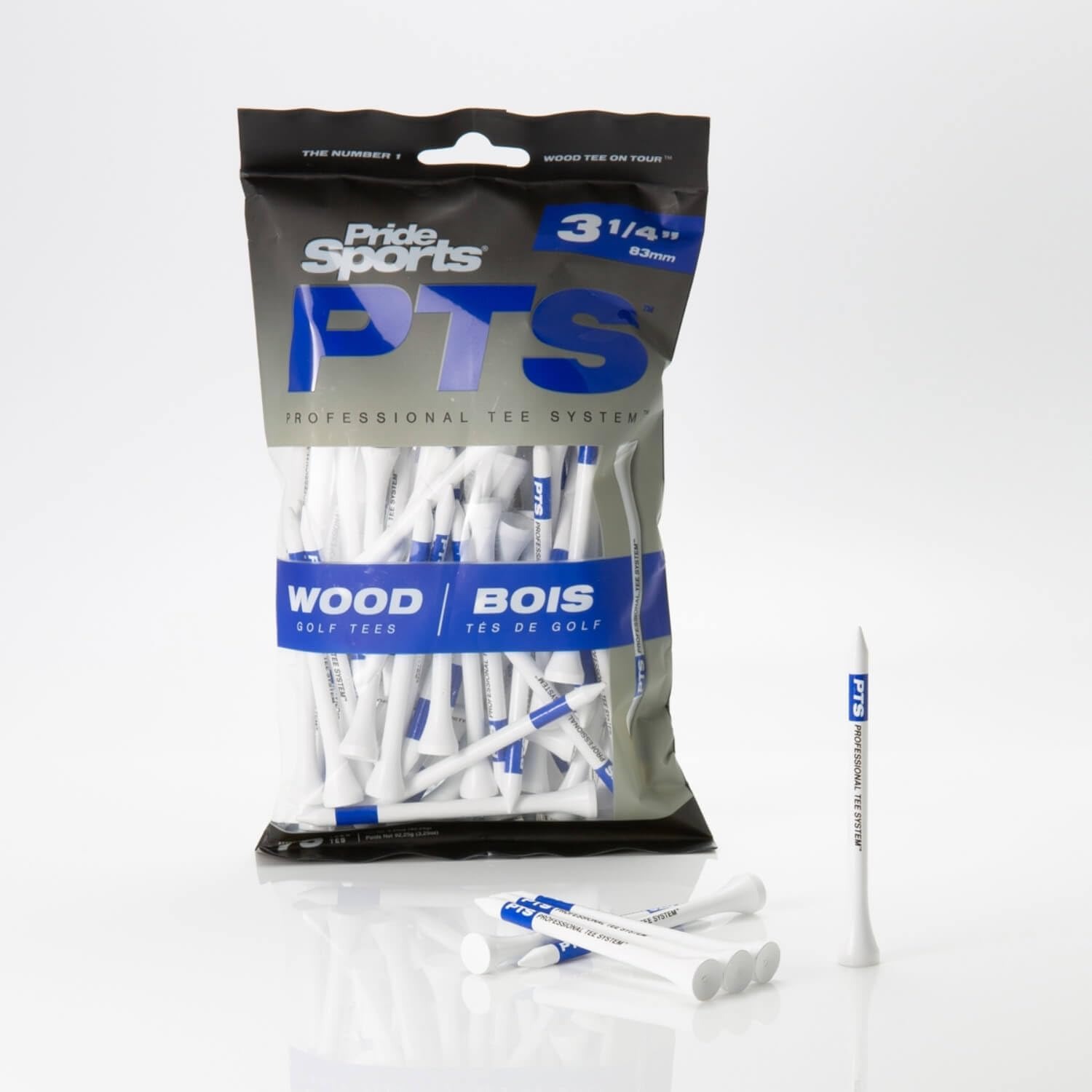
If you are hunting for the best 3 1/4 inch tees, this is the shape of what you are buying: a standard length with a reasonably deep cup and a shaft that can go deep or stay high depending on conditions.
Hardwood versus the alternatives
Tees come in wood, plastic, and a few newer composites with flexible prongs. Each has a trade-off.
Wood is the traditional choice and the one most clubs prefer. It breaks instead of flying off in one piece, it is biodegradable, and it feels familiar at address. Hardwood in particular holds its line better in firm ground than cheap softwood, which tends to bend and fray before it ever gets into the turf.
Plastic lasts longer and rarely snaps, but a broken plastic tee can leave sharp pieces behind and some courses discourage them. Brush and prong tees claim to reduce friction, although most players will struggle to measure the difference on the course. For the majority of golfers looking for the best hardwood golf tees, plain wood in a sensible length does the job and costs very little.
What the colour bar is actually for
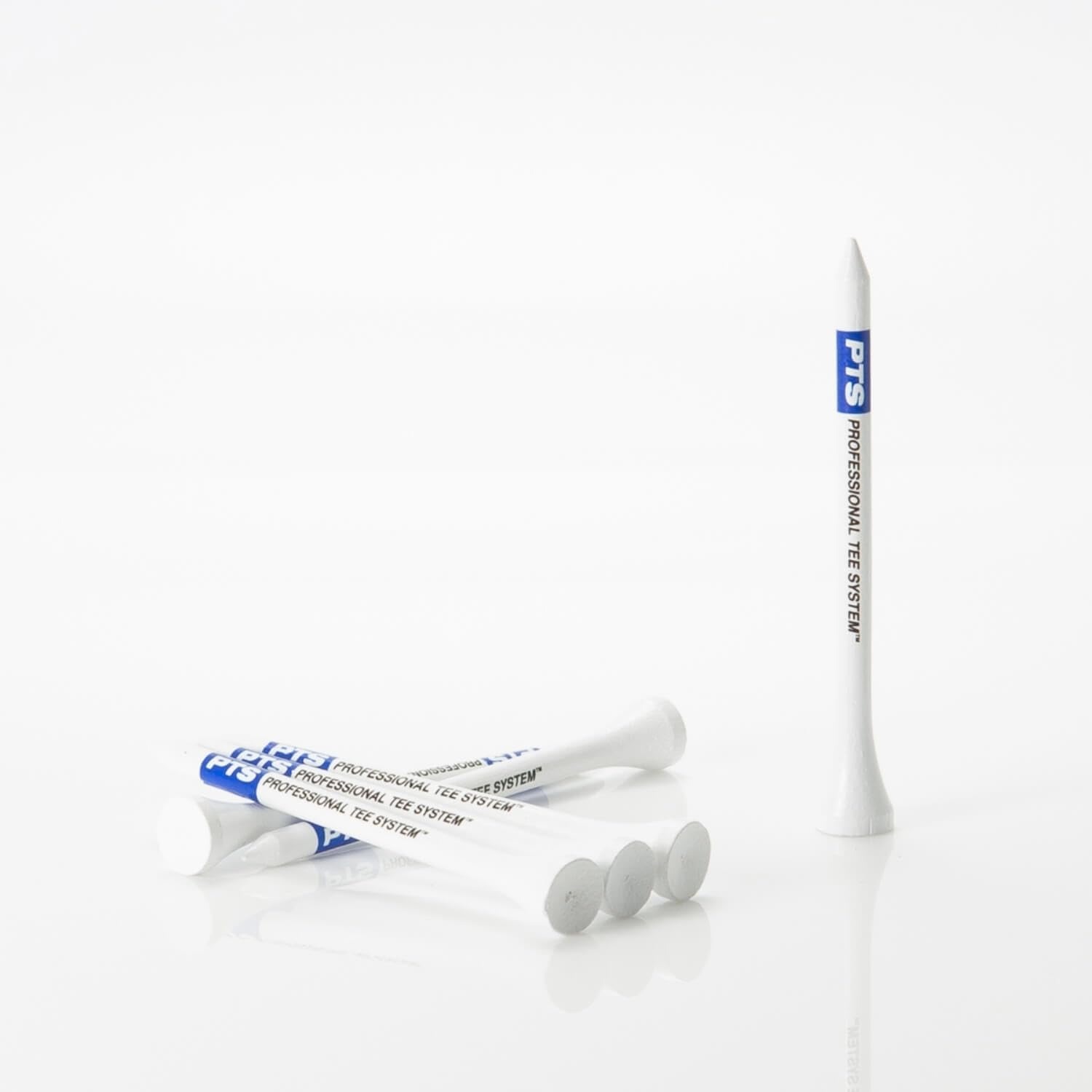
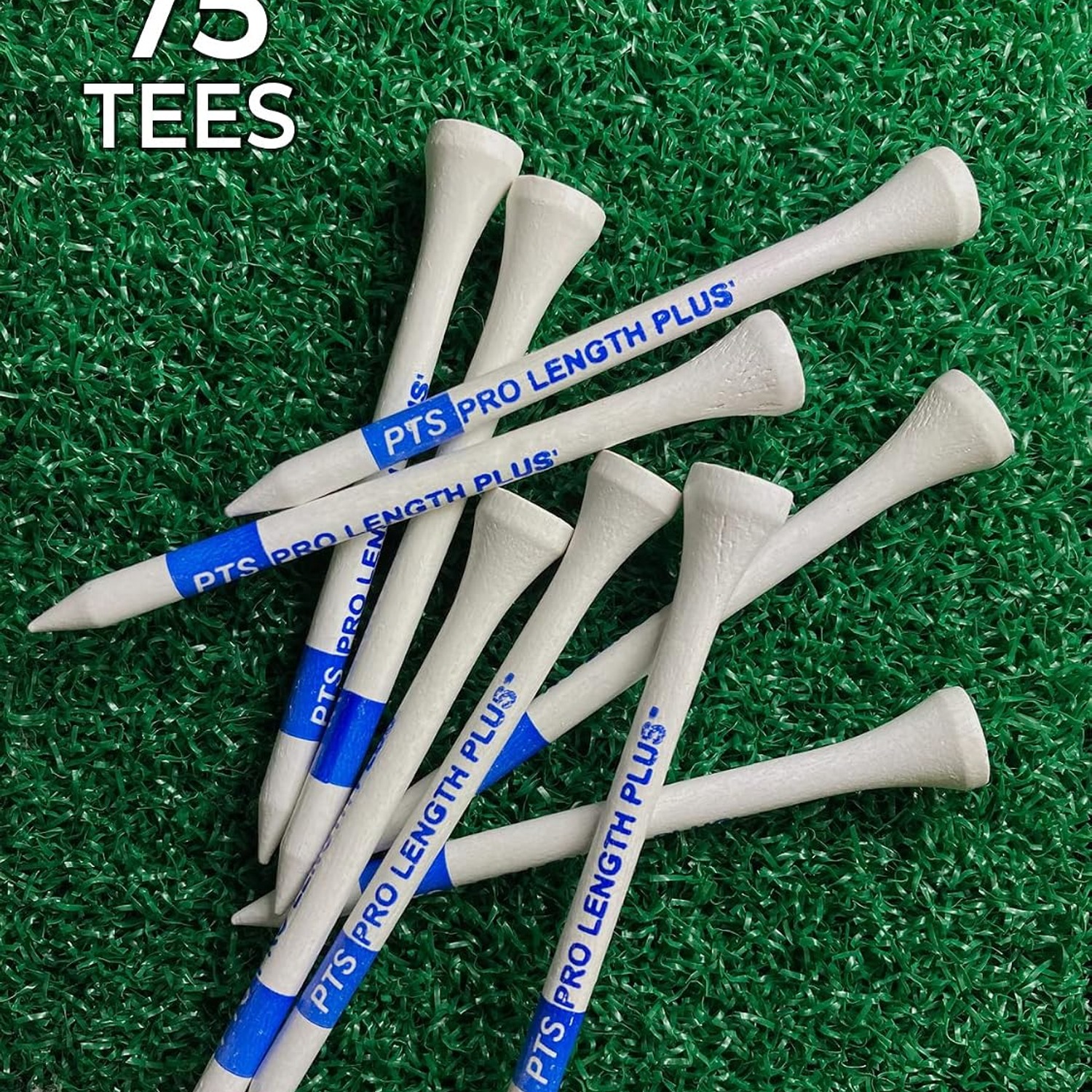
The painted band around the tee is not decoration. It is a length code. When you have several sizes rattling around a bag pocket, the band tells you which tee you have pulled out without holding it up next to another one. On these tees the band is blue on a white body.
It sounds trivial until you are on the first tee with a group waiting. You reach in, see the colour you want, and get on with it. Players who carry two lengths, long for the driver and short for everything else, get the most benefit from colour coded golf tees.
Buying in bulk is not just about price
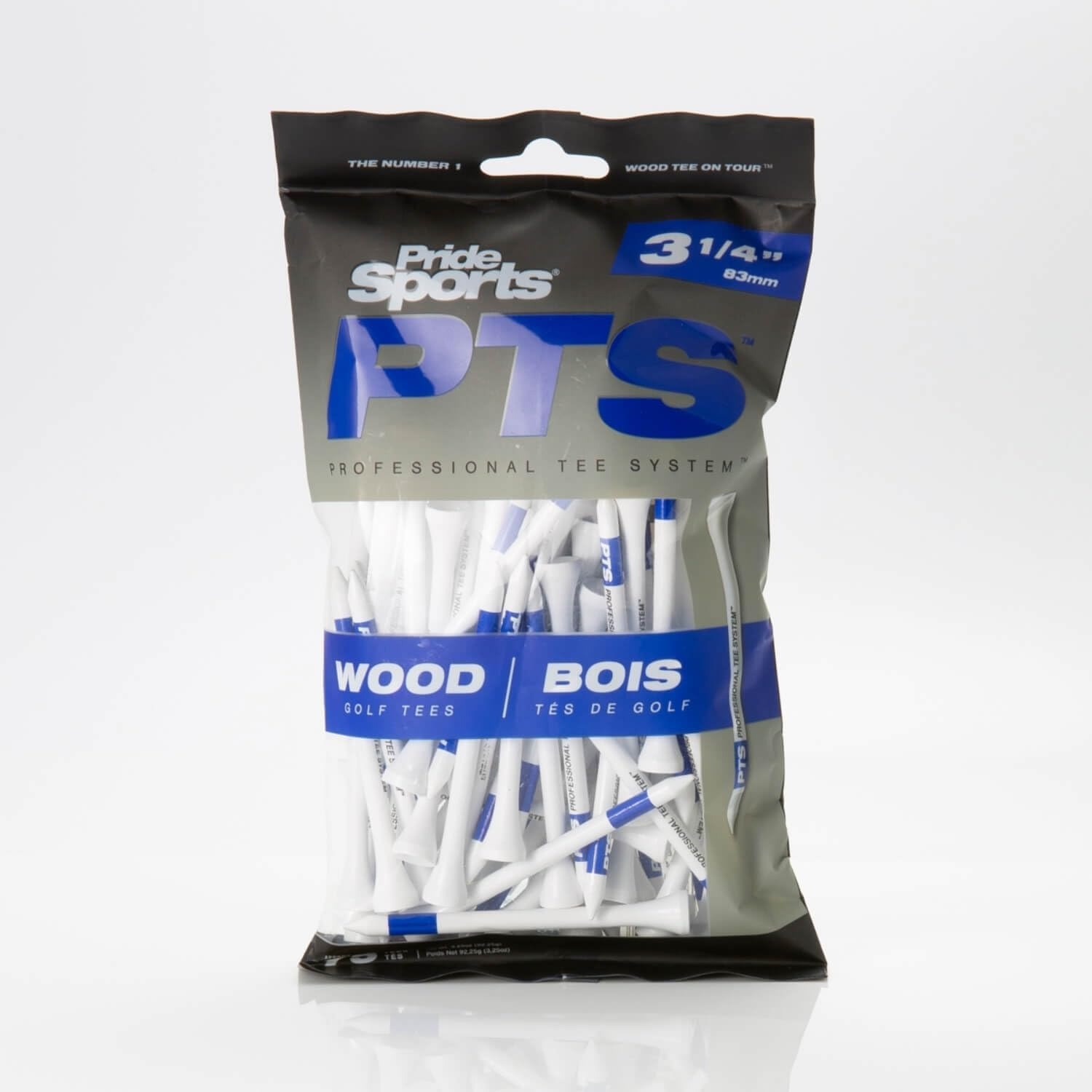
Tees are consumable. You will break some, lose more, and leave the odd one in the grass when your mind is on a bad drive. A 75 count bag changes your relationship with that. Instead of rationing a handful and getting annoyed every time one snaps, you simply reach for another.
Bulk packs also help if you share a bag with family, run junior sessions, or hit a lot of range balls off grass. Keep a small handful in the bag and leave the rest at home or in the car boot. Anyone who has played a long par five, broken two tees and then discovered an empty pocket on the next tee box understands why bulk golf tees are worth having.
Who this length suits
These are a good fit if you play a modern 440cc to 460cc driver, tee the ball reasonably high, and want a single length that covers the longest club in the bag. They also suit players who are working on a higher launch, since the extra height makes the upward strike easier to find.
They are less ideal as your only tee if you play a lot of short par threes and like a very low iron tee. You can press these most of the way into the ground, but a dedicated short tee is tidier for that job. Plenty of golfers carry both and use the colour band to tell them apart.
Juniors with shorter drivers often prefer a lower tee height, and the age range on this product is listed as adult. That does not stop a junior using one, it just means the length may be more than they need.
Getting the height right on the course
Here is a quick way to check. Address the ball with your driver sitting behind it, then look down. If the equator of the ball sits at or just above the crown of the club, you are in a good spot. If the whole ball disappears behind the face, the tee is too low. If the ball looks like it is floating well clear of the head, you have gone too high and you risk sliding under it.
Try one height for a full round rather than changing every hole. Flight and contact patterns only tell you something useful once you have hit a few drives from the same setup.
Looking after them
Wooden tees do not need much. Wipe the soil off before they go back in the bag, especially after a wet round. Damp wood left in a sealed pocket can swell and stain, and swollen wood splits more easily next time.
Keep them in the bag they came in or in a dedicated pocket so they are not crushed under a rangefinder or a wedge. Bin any tee that has cracked near the cup, since a split head can mark a clubface. Store them somewhere dry over winter and they will be fine next spring.
One safety note. The tip of a golf tee is pointed. Keep loose tees out of reach of small children and pets, and avoid leaving them scattered in a car footwell.
The short version
A tee is cheap, but it decides where the ball starts. A 3 1/4 inch hardwood tee gives you room to set the ball high enough for a modern driver, which usually means a better launch and a little more carry. The colour band saves you time when you carry more than one length, and a 75 count bag means you can break a few without caring.
If you mostly hit driver off the tee and you have been teeing low out of habit, this is one of the easiest changes you can make. Buy a bag, set the ball a touch higher than feels natural, and watch what happens to the flight.