
The complete guide
How to Choose a Telescopic Golf Ball Retriever That Actually Works
The problem nobody talks about on the first tee
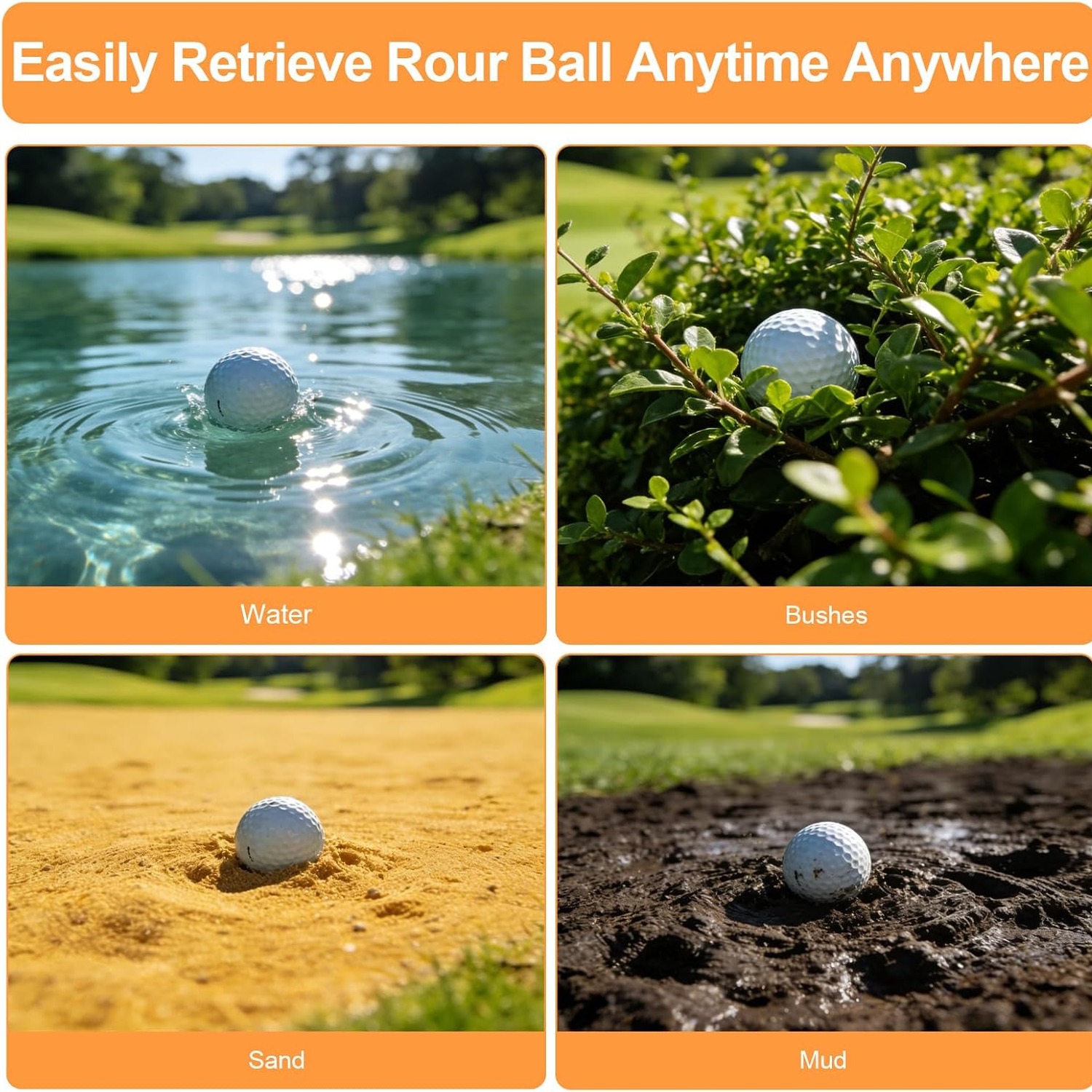
Golf balls are not cheap, and the ones you lose are rarely lost properly. They are usually sitting twenty centimetres into a pond, perfectly visible, perfectly clean, perfectly out of reach. Or they are a metre into a bramble on a steep bank where going in means scratched arms and a muddy knee.
Most golfers end up doing one of three things. They write the ball off and drop another. They take their shoes off and wade in, which slows everyone down and is genuinely risky on slippery banks. Or they get creative with a club head, which is how perfectly good irons end up scratched, bent or dropped in the water alongside the ball.
A telescopic golf ball retriever solves this without drama. You extend the shaft, drop the head over the ball, and draw it back. The whole thing takes five seconds and you stay on dry ground. Over a season, a retriever that saves a few balls a round pays for itself many times over, and that is before you count the shoes, the trousers and the time.
How a telescopic retriever works
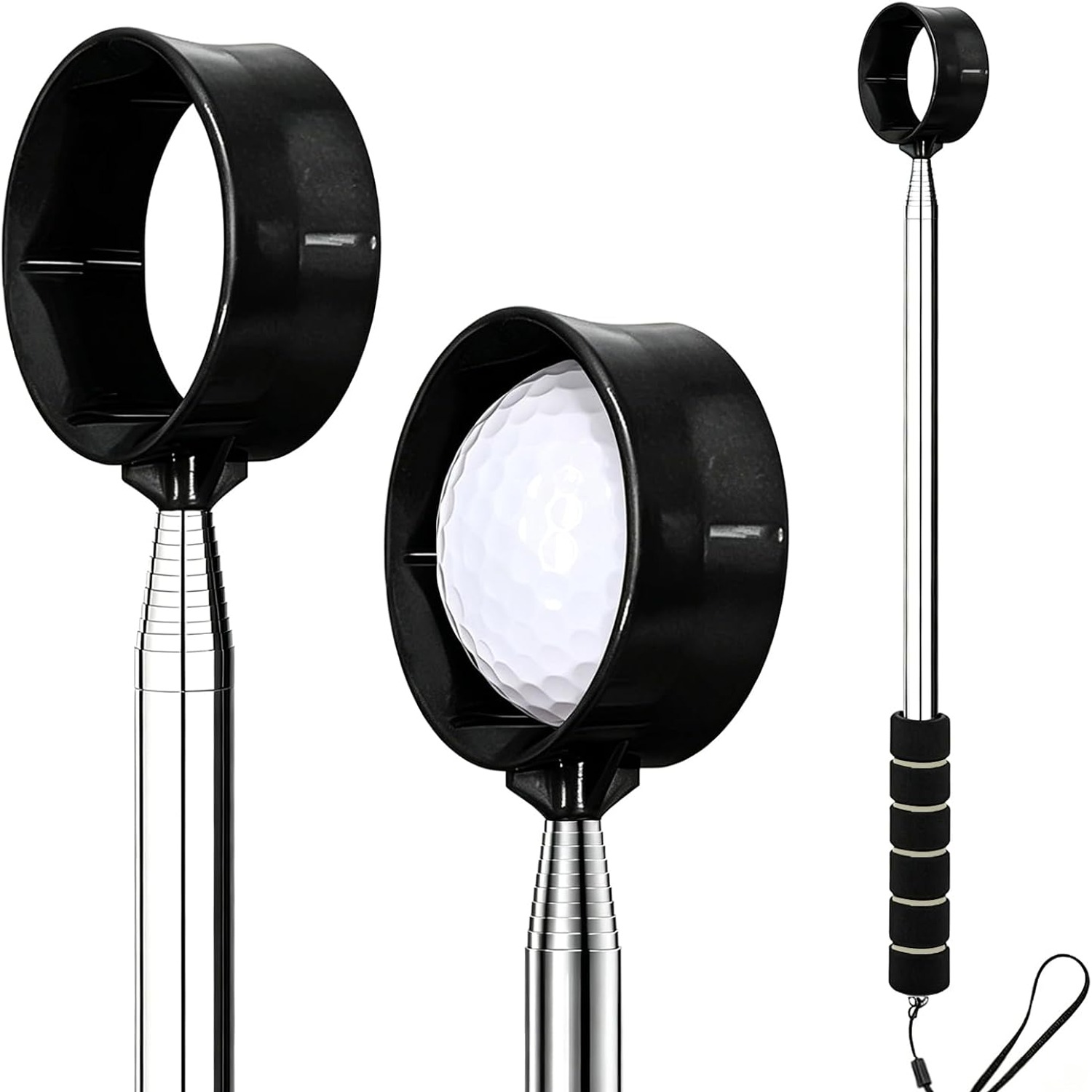
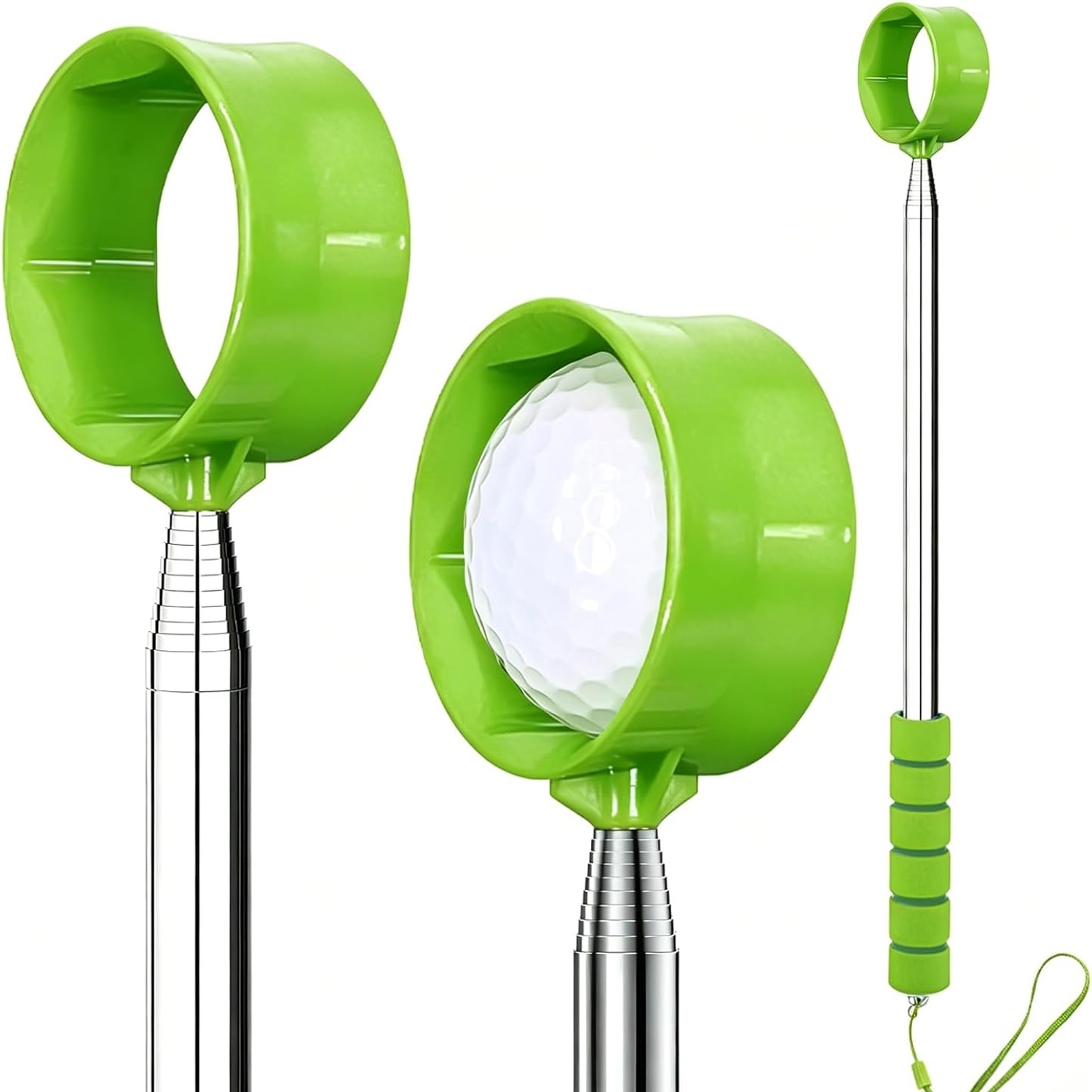
The design is simple, which is exactly why it is reliable. A series of tubes slide inside each other, each one slightly narrower than the last. You pull them out until they seat, and friction between the sections holds the length. At the far end sits the pickup head, a shaped cup sized to take a standard golf ball.
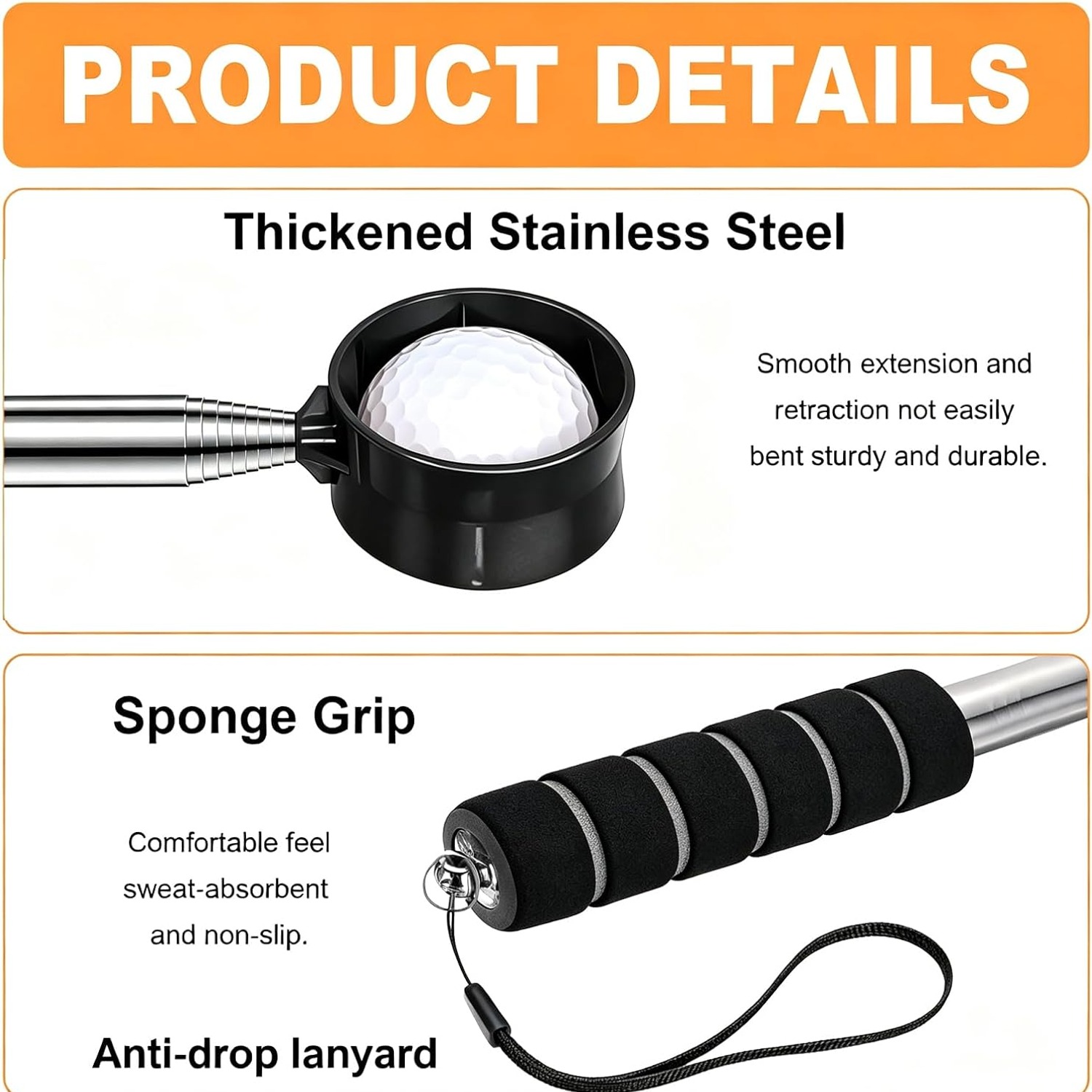
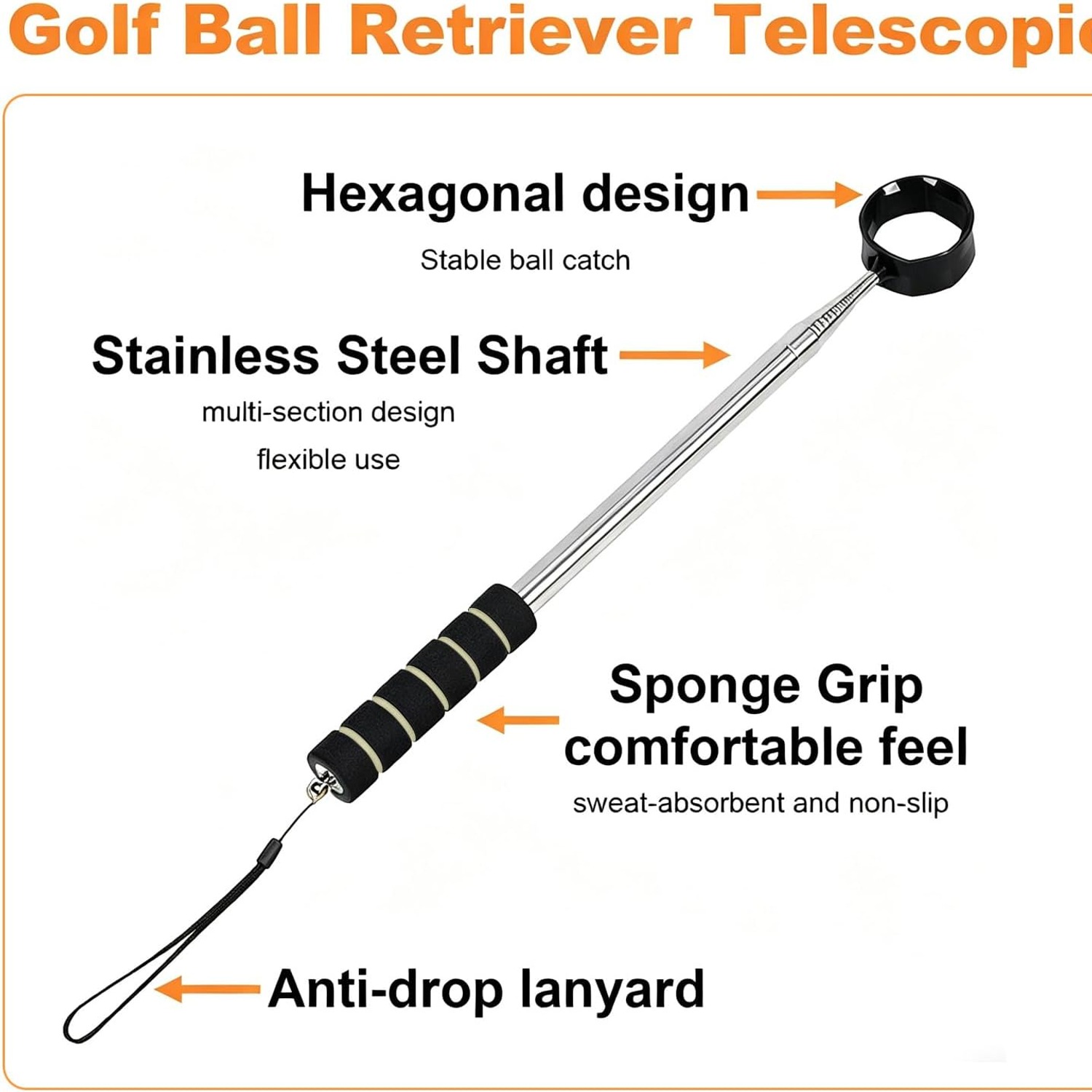
This particular retriever uses a thickened stainless steel shaft. That matters more than it sounds. Thin-walled poles flex badly once you get past about two metres, and a floppy shaft at full extension makes precise scooping almost impossible. You end up nudging the ball further away instead of collecting it. Thicker steel tubing holds a straighter line, so the head goes where you point it.
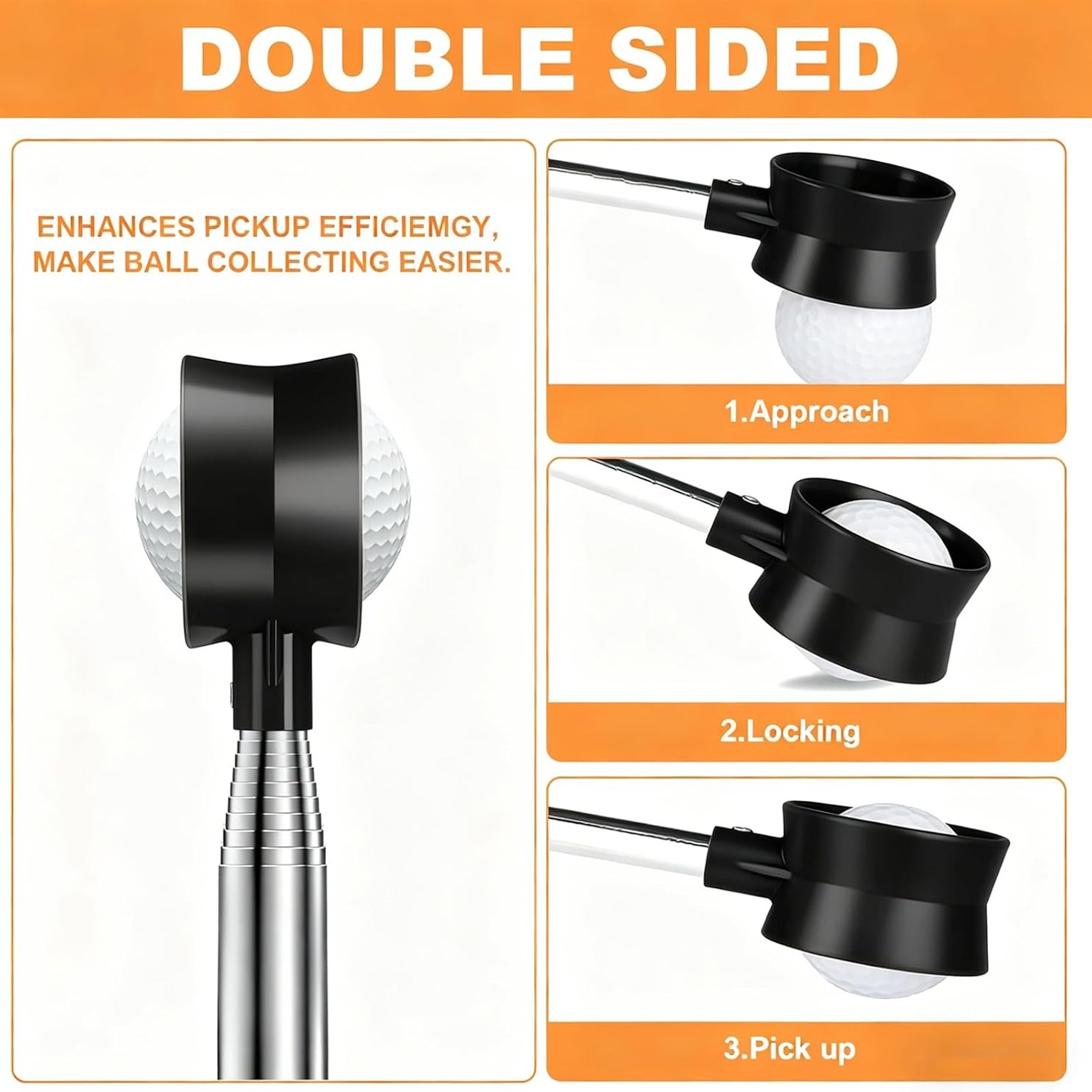
The head here is double-sided, which means both faces will take a ball. On a single-sided retriever you have to twist the whole shaft until the open side of the cup faces the ball, and at nine feet that twist is hard to judge. With both sides live you just lower it and go. It is a small design decision that makes the thing noticeably less annoying to use.
The grip is sponge, shaped to sit in the hand without pressure points. Sponge has two advantages over hard plastic. It absorbs sweat so the shaft does not get slippery, and it cushions the hand, which matters if you are holding a nine foot lever out over water.
Who gets the most out of one
If your home course has water, you already know the answer. Courses built around ponds and creeks eat balls at a steady rate, and a good golf ball retriever for water hazards changes the maths of playing them.
It also suits anyone who would rather not bend, kneel or scramble. Sore backs, replaced knees and stiff hips are common in golf, and crouching at the edge of a slick bank is exactly the kind of movement people are told to avoid. Reaching with a pole is far kinder on the body.
Juniors and beginners benefit for a different reason. New golfers lose a lot of balls, and watching them disappear is demoralising. Getting them back keeps the round moving and keeps the cost of learning down.
And then there is the group that just hates waste. Perfectly good balls sitting in a ditch bother some people on principle. If that is you, an extendable golf ball retriever will get used every single round.
What to look for when you are comparing
Reach is the first filter. Short retrievers in the four to six foot range only help when the ball is almost at your feet. Nine feet is a genuinely useful working length, because it covers the reed margin on most ponds and gets you down a typical bank without leaning out dangerously. More length always sounds better, but very long poles get heavy and wobbly, and they are harder to stow.
Shaft rigidity comes second. Ask what the shaft is made of and how thick it is. Stainless steel resists both bending and corrosion, which is the right combination for a tool that spends its life getting dunked in water. Thin aluminium is lighter but flexes more and dents easily.
The head design is third. Look for a cup sized specifically for standard golf balls, because a head that is slightly too large lets balls roll straight back out. Double-sided pickup is a real advantage at distance. Avoid overly complex locking or clamping heads, since more moving parts means more things to jam with grit.
Then consider the grip. This is where cheap retrievers cut corners. A bare plastic handle gets slick the moment your hands sweat or the shaft comes out wet. Sponge or rubber with some texture is much better.
Finally, think about packed size. A retriever is only useful if it is with you. At roughly 44 cm collapsed, this one fits a golf bag without a fight. If a retriever is too long to stow, it tends to live in the boot of the car, which is the same as not owning one.
Getting the technique right
There is a knack, and it takes about three goes to learn. Approach the ball from slightly to one side rather than directly head on. If you come in straight, the leading edge of the head tends to push the ball away before it can cup it. Coming in at an angle lets the head slide past the ball and then draw it in.
For balls in water, let the head sink until it is below the ball, then lift. Water helps you here, because balls float slightly off the bottom in soft silt and the cup gets under them easily.
For balls in rough or under bushes, you are using the head almost like a rake. Slide it under the grass, get the ball seated, then lift cleanly rather than dragging. Dragging through thick grass is how heads get strained.
Keep your lower hand low on the grip and lift with the forearm. The further apart your hands, the more control you have over the far end.
Looking after it
This is a low-maintenance tool, but a little care doubles its life. Rinse the head and shaft with fresh water after any pond retrieve, since silt and algae work into the joints and make the sections stiff.
Dry it before you collapse it. Water trapped inside the tubes is the enemy of smooth extension and the main reason cheaper retrievers seize up. Wipe the shaft with a cloth, let the sponge grip air out, then push the sections home.
Store it collapsed, in a dry spot, with nothing heavy resting against it. Do not leave it extended and leaning in a corner, since even a thickened stainless steel shaft will take a set if it is loaded sideways for months.
If a section ever feels gritty, a wipe along the tube with a damp cloth followed by a thorough dry usually sorts it. Avoid heavy oils, which attract more dirt than they repel.
The short version
A nine foot telescopic golf ball retriever is one of the cheapest pieces of golf gear that genuinely changes your round. It saves balls, it saves time, and it keeps you out of water and brambles where you have no business being.
Look for real reach, a rigid stainless steel shaft, a head sized for standard balls, and a grip that holds up when it gets wet. Make sure it packs down small enough to actually live in your bag.
Then use it. The first time you lean out and pull a nearly new ball off the bottom of a pond without getting a shoe wet, you will wonder why you waited.