
The complete guide
How to Choose a Bag (Buyer's Guide)
The problem with owning only one golf bag
Most golfers buy a bag for their biggest round and then use it for everything. That means a cart bag with fourteen dividers, a full-length rain hood and a dozen pockets gets dragged to the driving range for a bucket of balls. It gets carried round a par 3 course where the longest hole is 140 metres. It gets loaded into a boot already full of a child's booster seat and shopping.
None of that is a disaster. It is just more effort than the golf deserves. A loaded cart bag can weigh several kilos before you add a single club, and the weight sits on one shoulder for the whole walk. By the back nine you feel it in your neck and your swing gets lazy.
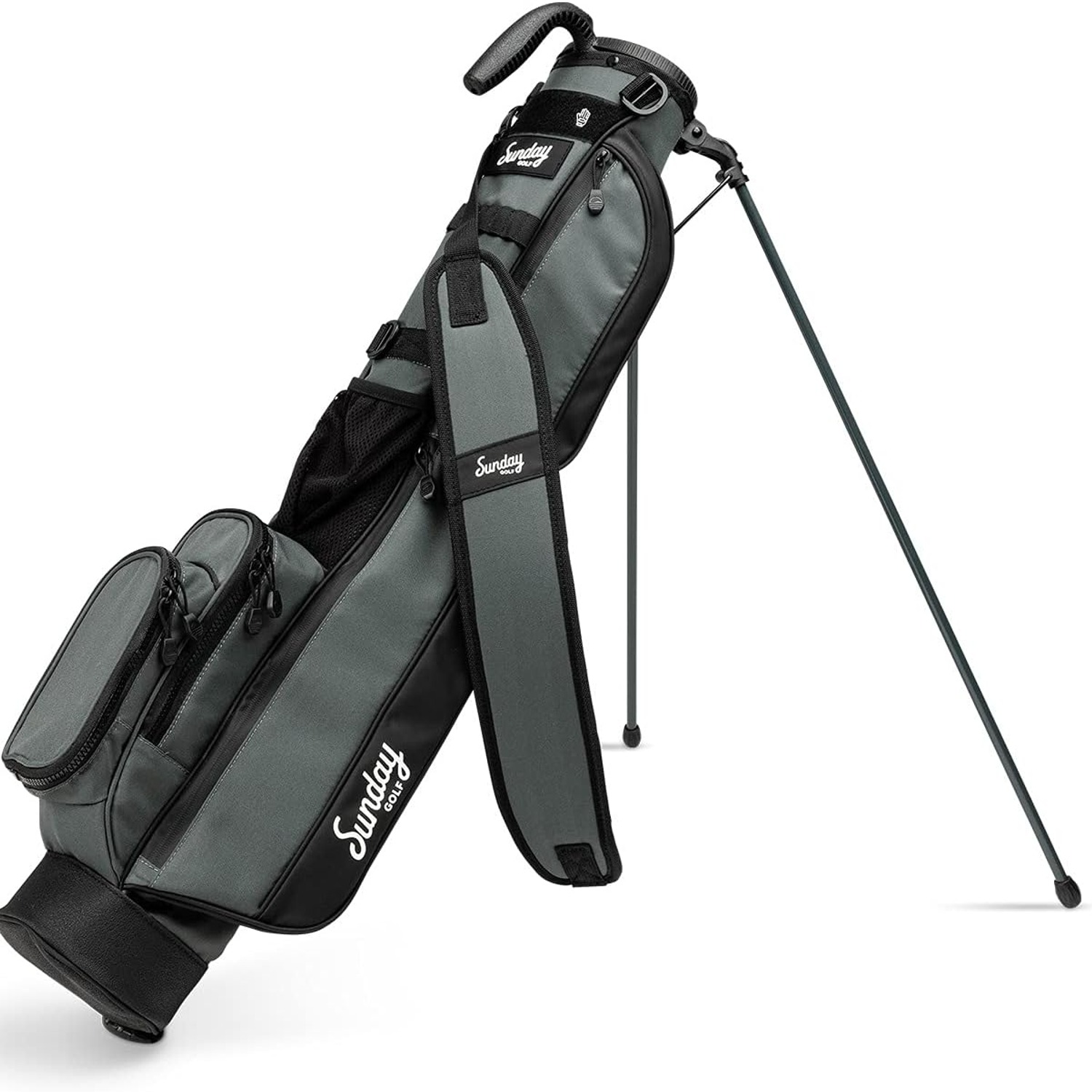
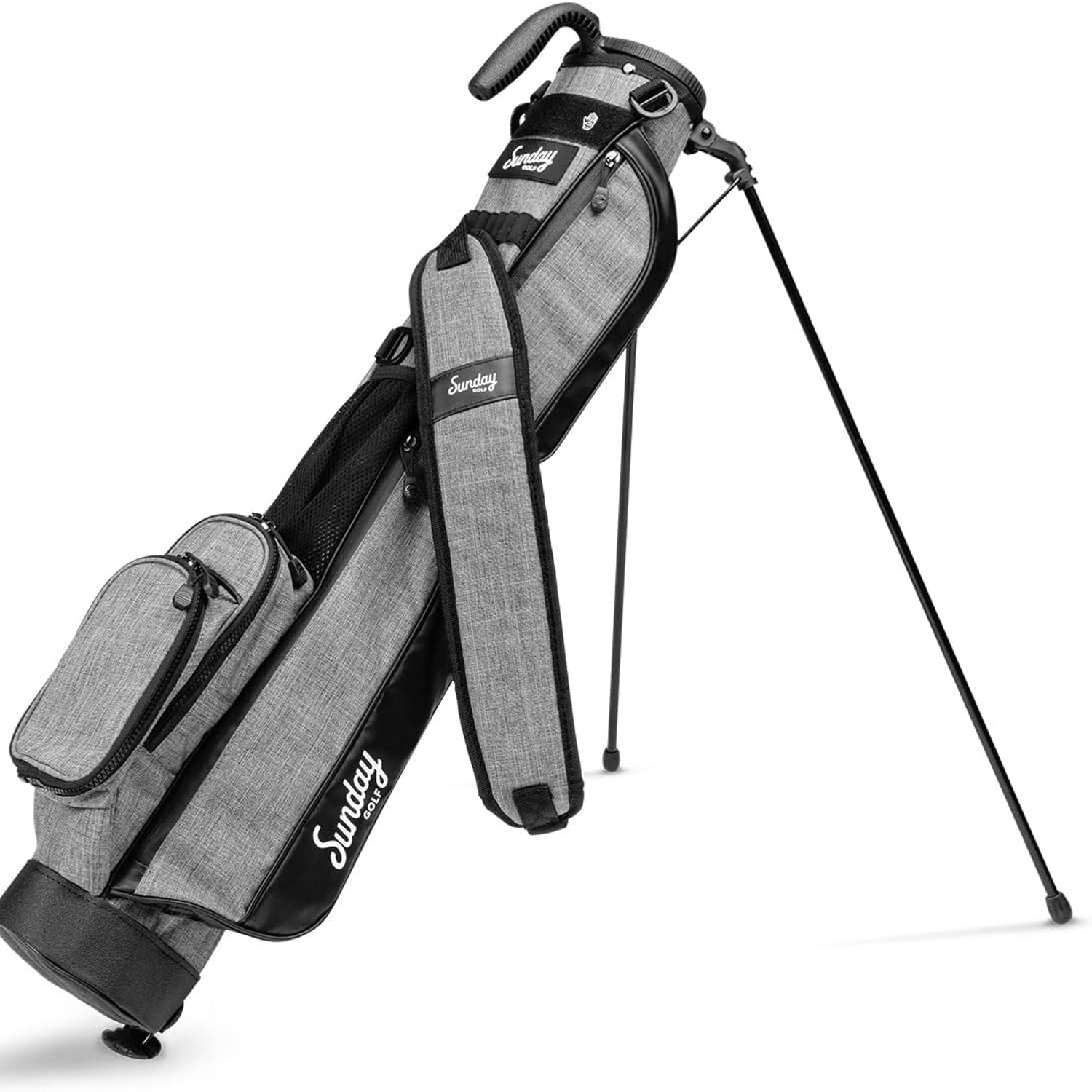
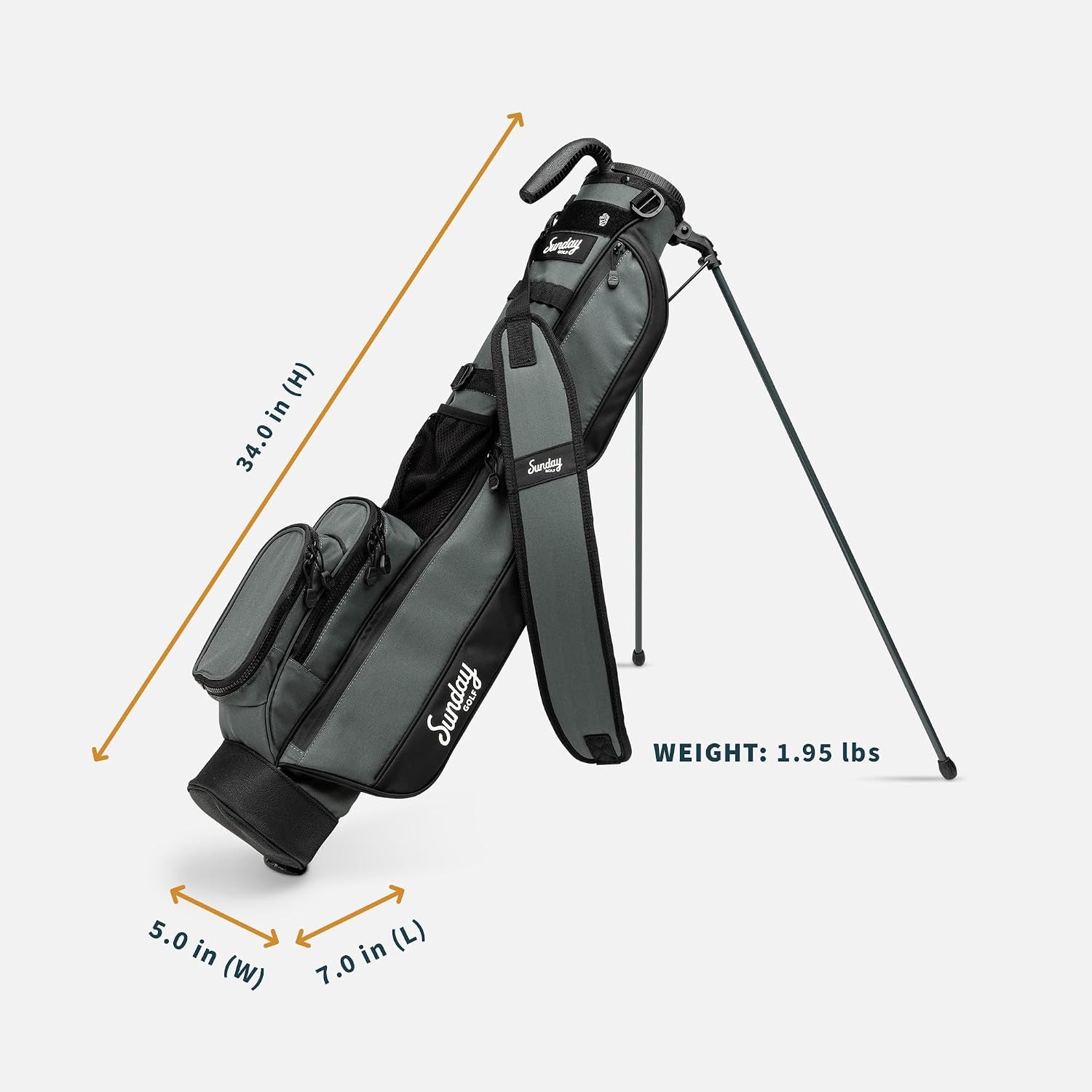
A sunday golf bag solves a narrow problem well. It carries the clubs you actually use on a short round, it stands up on its own, and it weighs almost nothing. The comes in at 0.86 kg empty with a frame 81.3 cm tall and a base measuring 19.1 cm by 14 cm. Those numbers tell you most of what you need to know. It is a bag you forget you are carrying.
How a lightweight stand bag works
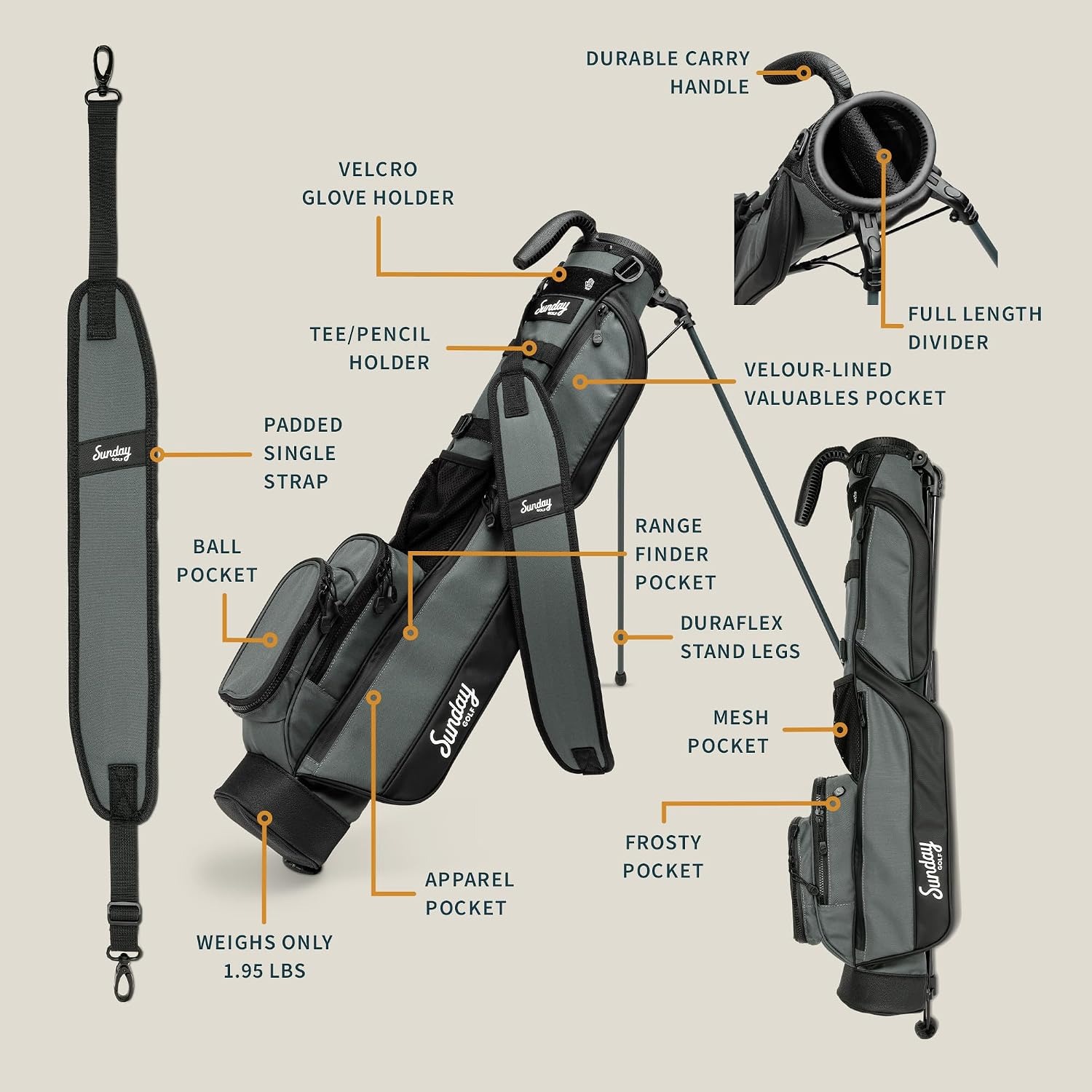
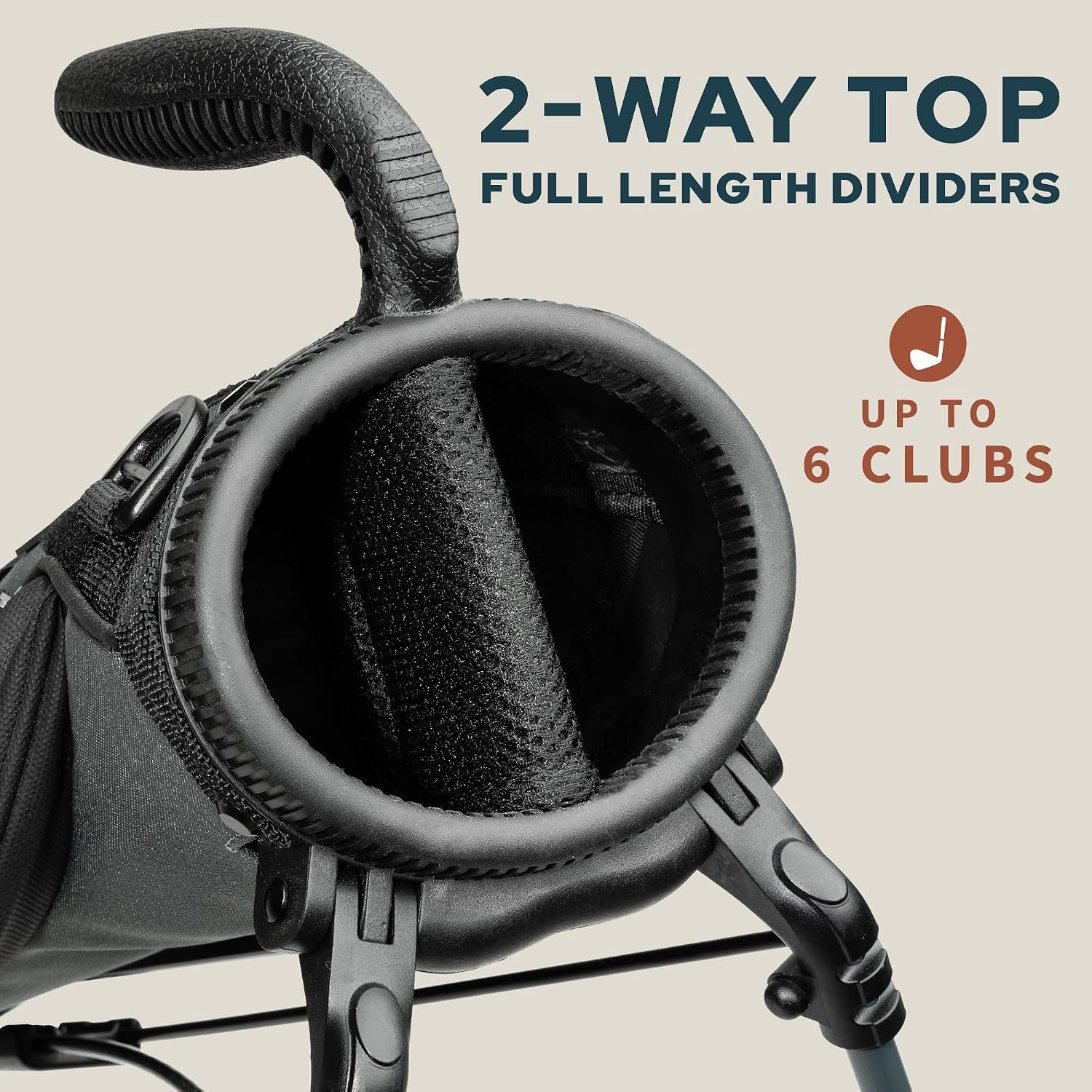
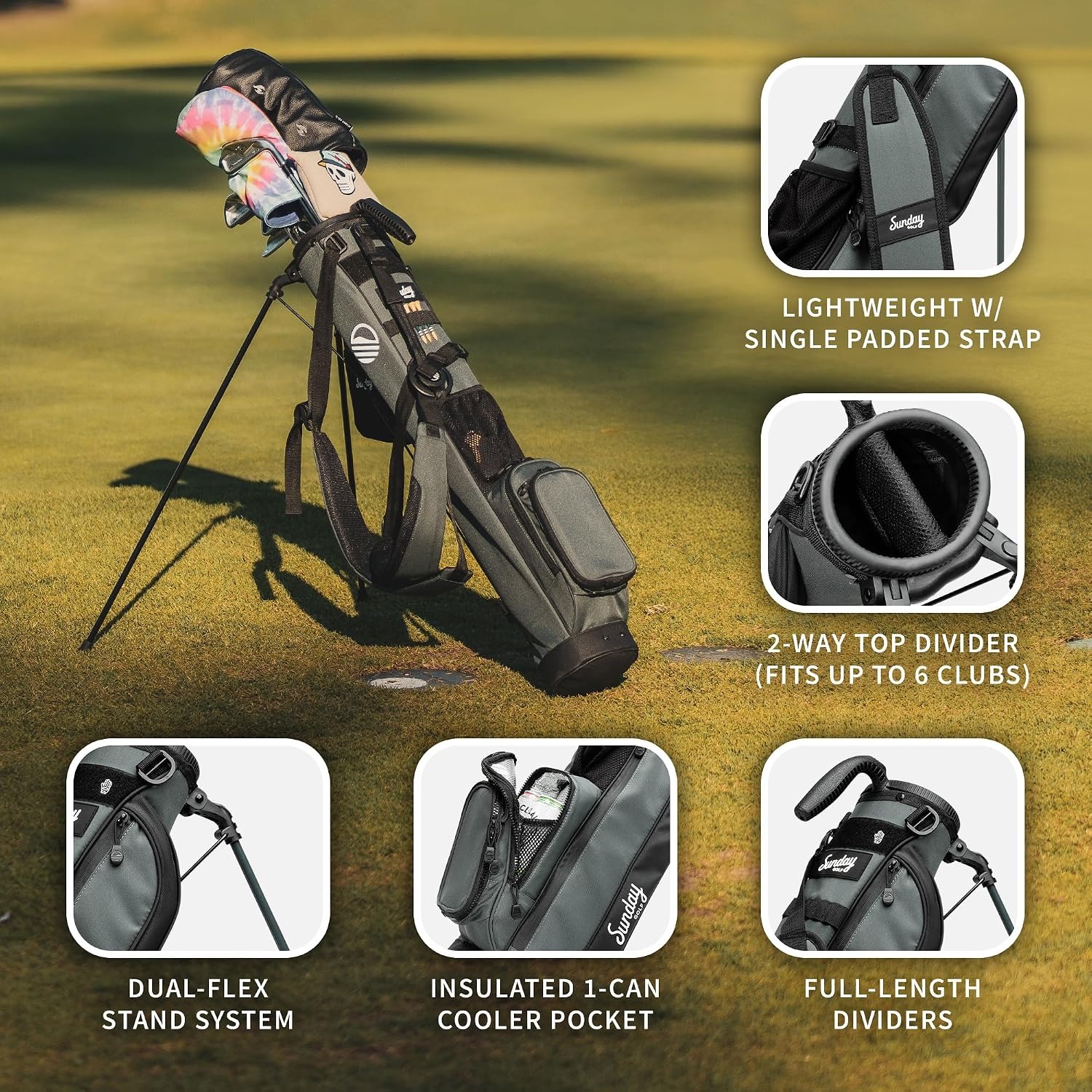
The design strips out everything that adds weight without adding much use. Instead of fourteen individual dividers, there are two, splitting the top into a dual compartment. Your clubs still stay sorted into groups, grips do not braid together, and you can pull a wedge out without dragging two irons with it. You lose the ability to give every club its own slot, which matters less than you might think when you are only carrying six or seven.
The stand is the other piece that earns its place. A kick stand sits at the base and props the bag at an angle when you set it down. Without one, a small bag either lies flat on wet grass or leans against a bench. With one, your grips stay dry and you can grab a club one-handed. On a dewy morning that is the difference between a dry grip and a slippery one at the first tee.
Pockets are kept to six. There is enough room for balls, tees, a glove, a windshirt, sunscreen and a scorecard. One pocket is lined with velour for valuables, which is where your phone, keys, wallet or sunglasses go. The lining stops a screen getting scuffed by zip teeth and grit. There is also a cooler pouch rated for two cans or one bottle, which sounds like a gimmick until you have walked nine holes in the sun with a warm drink.
The shell is polyester in grey. It is a practical fabric for golf. It sheds light rain, wipes clean after a muddy round, and does not show every grass mark the way a pale canvas would.
Who it suits
This is the right bag if a lot of your golf is short, casual or practice based. Pitch and putt, par 3 and executive courses almost never need more than a few wedges, a mid iron, maybe a hybrid and a putter. Carrying fourteen clubs round those layouts is just exercise with extra steps. The best par 3 golf bag is the one you barely notice.
It also suits range regulars. If you practise two or three times a week, hauling the full set out of the car every time gets old fast. Taking four or five clubs in a 0.86 kg bag takes ten seconds and your back is fresher for it. Among the options people consider, this sits firmly in the category of a driving range golf bag that actually makes practice easier.
Beginners get good value from it too. A new golfer often owns a half set anyway, and a smaller bag matches that reality instead of leaving six empty slots. Golfers coming back from injury or an operation sometimes use one as a bridge, playing nine holes with a short set until strength returns.
There are people it does not suit. If you play weekly competitions where you want every club available, you need a full carry or cart bag and this would be a second bag rather than a replacement. If you always ride a motorised cart and never carry, the weight saving does not help you much. And if you carry a lot of gear, like a rangefinder, a full rain suit, a towel and a dozen balls, six pockets will feel tight.
How to choose between a sunday bag and a carry bag
Start with the golf you actually played in the last two months, not the golf you intend to play. Count the rounds that were nine holes or fewer, and count your range trips. If more than half your sessions fit on one hand's worth of clubs, a sunday bag earns its space.
Then look at weight. Full carry bags with dual straps often sit around two to three kilos empty. A sunday bag at under a kilo saves you more than you would guess once clubs, balls and a drink go in. That saving compounds over eighteen holes of walking.
Think about where it lives. A bag 81.3 cm tall and 19.1 cm wide at the base fits in a hatchback boot with room left over. A tour bag usually claims the whole boot. If you share a car or run errands between rounds, size matters.
Check how you want to carry it. This model has both a carry handle and a portable strap. Short walks between holes are easier with the handle, and longer stretches sit better on the strap. If you are set on a dual-strap backpack system for long carries, that is a different style of bag.
Finally, be honest about club count. Six or seven clubs is the comfortable range here. Trying to force in ten will crowd the top opening and make club selection awkward. Plenty of golfers find a short set improves their scoring because it forces them to shape shots instead of reaching for a different club every time.
Looking after it
Care for a stand bag is simple and mostly about habit. Empty the pockets after a round, especially of food wrappers, damp towels and leftover tees. Shake out grass clippings and sand so they do not work into the zips.
Wipe the polyester with a damp cloth and a little mild soap when it gets marked, then let it air dry somewhere out of direct heat. Do not put it through a washing machine or a tumble dryer. Heat and agitation are hard on stitched seams and stand hinges.
Give the stand legs a quick brush now and then. Grit in the hinge is the usual reason a kick stand gets stiff, and thirty seconds of attention keeps it working. Check the strap fittings occasionally too, since those take the load.
Store it upright and dry. Leaving it flat under heavy boxes in a garage is how legs get bent out of alignment. A corner of a cupboard is enough.
The short version
The is a 0.86 kg grey polyester stand bag with two dividers, six pockets, a velour-lined valuables pocket, a cooler pouch for two cans or one bottle, and a built-in kick stand. It measures 19.1 cm by 14 cm by 81.3 cm and holds six or seven clubs.
Buy it if you play short courses, practise often, or want something you can throw in the car without planning around it. Skip it if every round you play is a full eighteen with the complete set. For most golfers it ends up as the bag used more often than the big one, simply because it makes going to play feel like less of a production.