
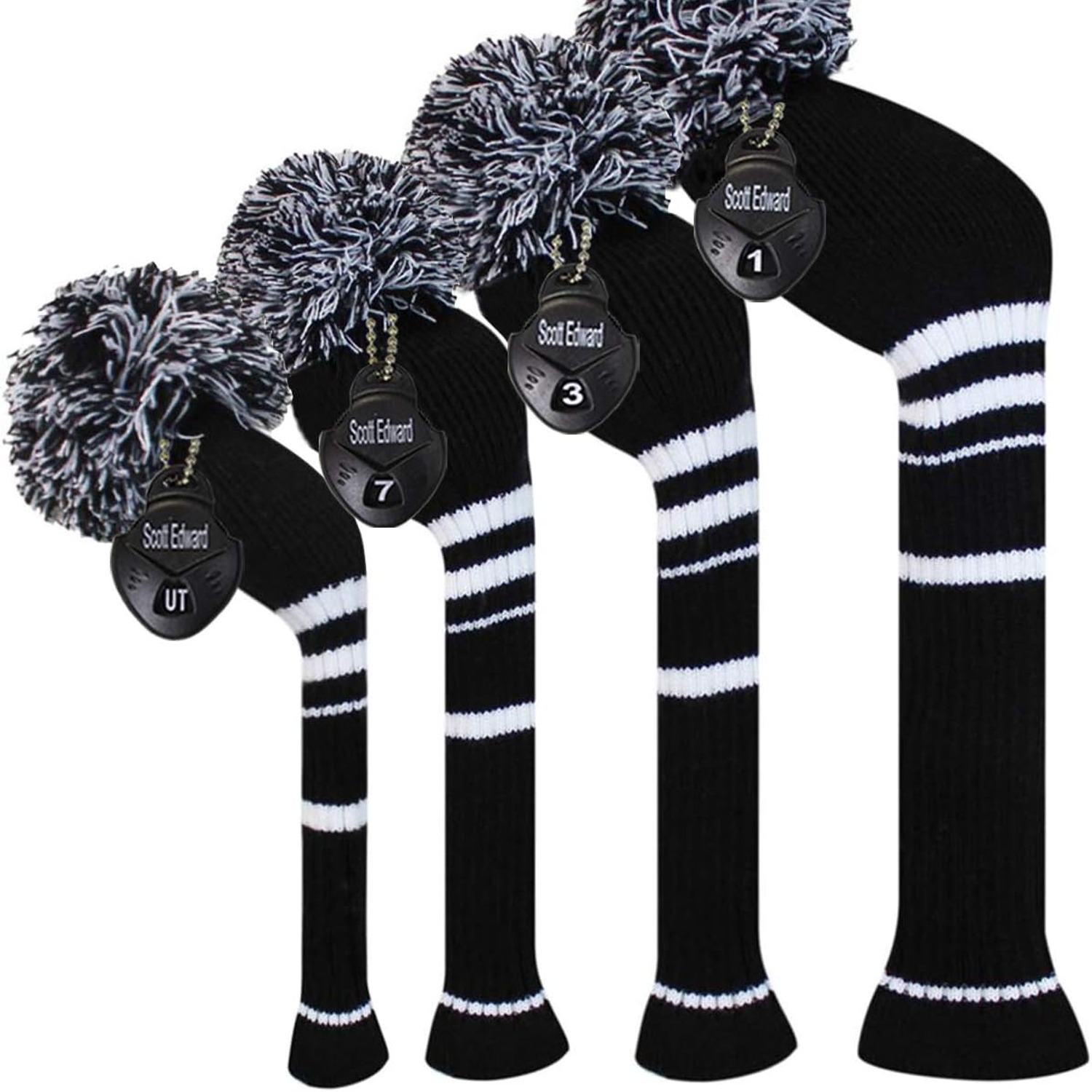
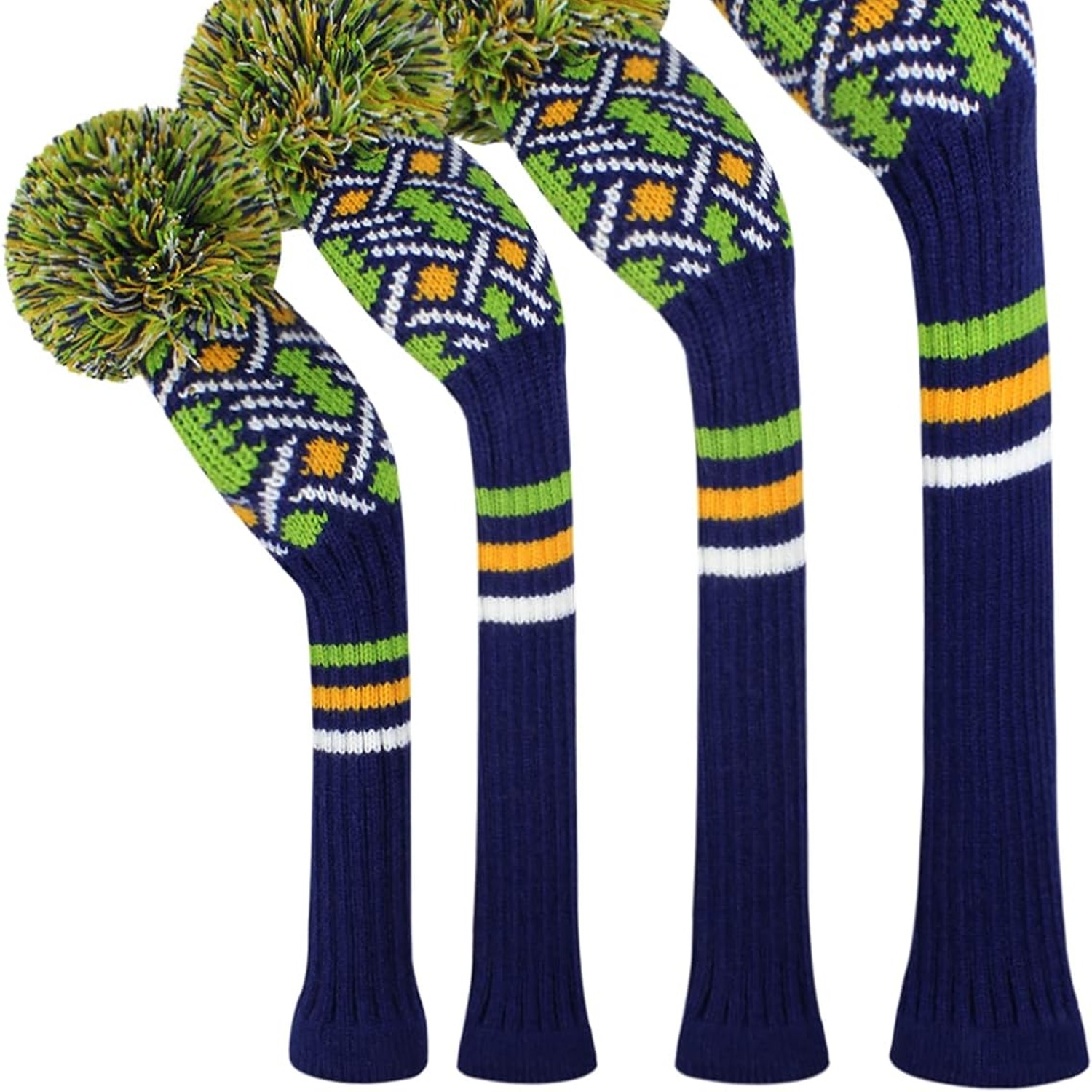
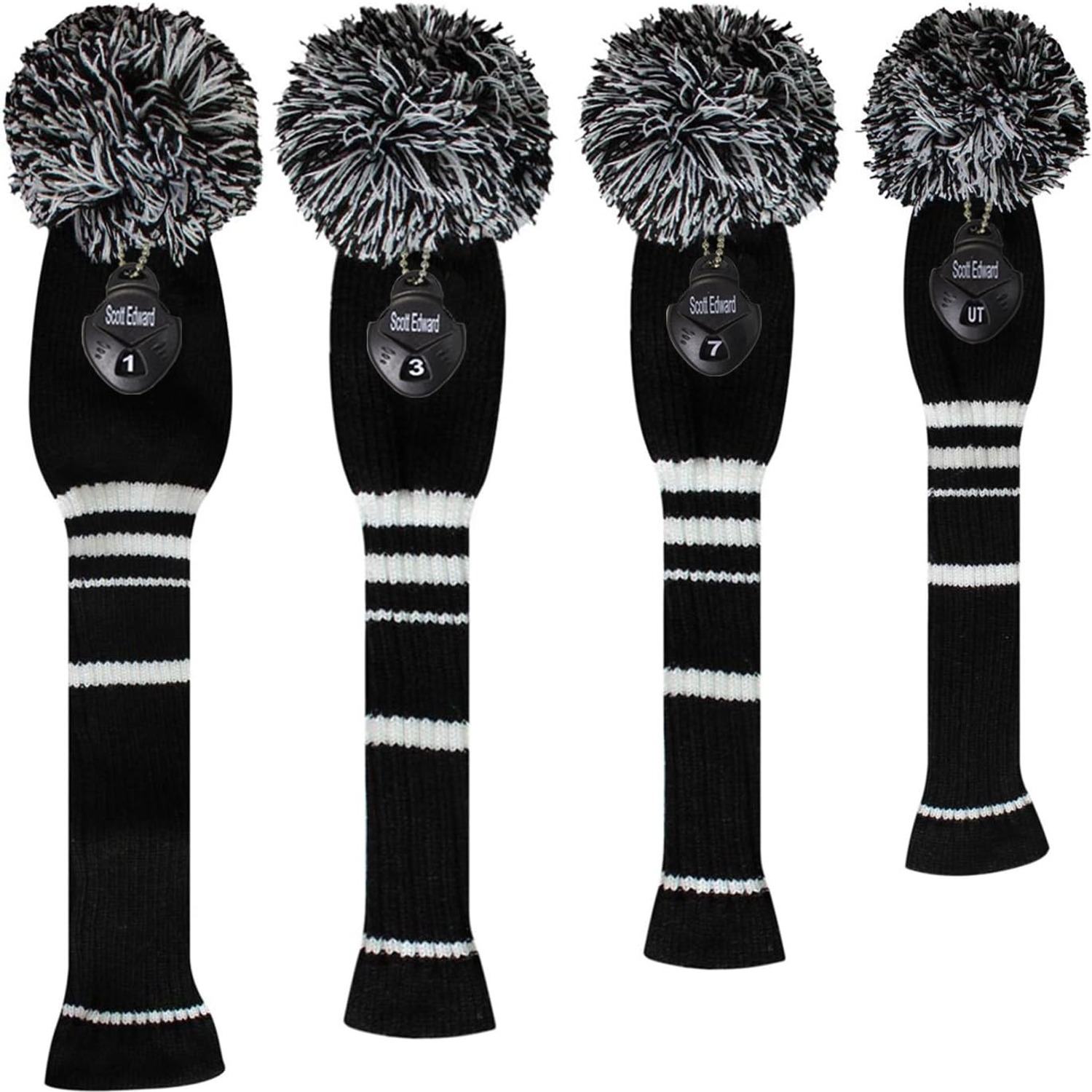
The complete guide
How to Choose Knitted Golf Head Covers That Actually Stay On
The problem nobody notices until it is too late
Club damage in a golf bag is slow and quiet. You do not spot it on the course. You spot it one evening when you pull the driver out at home, tilt it under a lamp, and see a line of small chips along the crown near the heel. That is the three wood talking. It has been knocking against the driver for two seasons while you walked.
The same thing happens to the shaft just above the hosel. Bag dividers are stiff, the clubs rattle, and the paint on that short section wears thin. None of it changes how the club performs. It changes what the club is worth and how it feels to pull out in front of people. If you ever sell or trade a driver, the crown condition is the first thing a buyer looks at.
Knitted golf head covers fix this cheaply. They are padding you can pull off in a second and put back in a second. That is the whole job.
How a knitted cover actually works
A knit cover is not armour. It works by separating. Instead of titanium touching titanium, you have a layer of acrylic yarn between the two. When the bag bumps, the knit absorbs and spreads the hit. Over a season that adds up to a lot of small impacts that never reach your paint.
The yarn matters. These covers use acrylic, which is the standard for this style. Acrylic is soft against a glossy crown, has natural stretch so one cover shape can handle different head sizes, and holds colour through sun and rain better than many natural fibres. It also does not soak up and hold water the way heavy cotton does, which is handy when you finish a damp round and throw the bag in the boot.
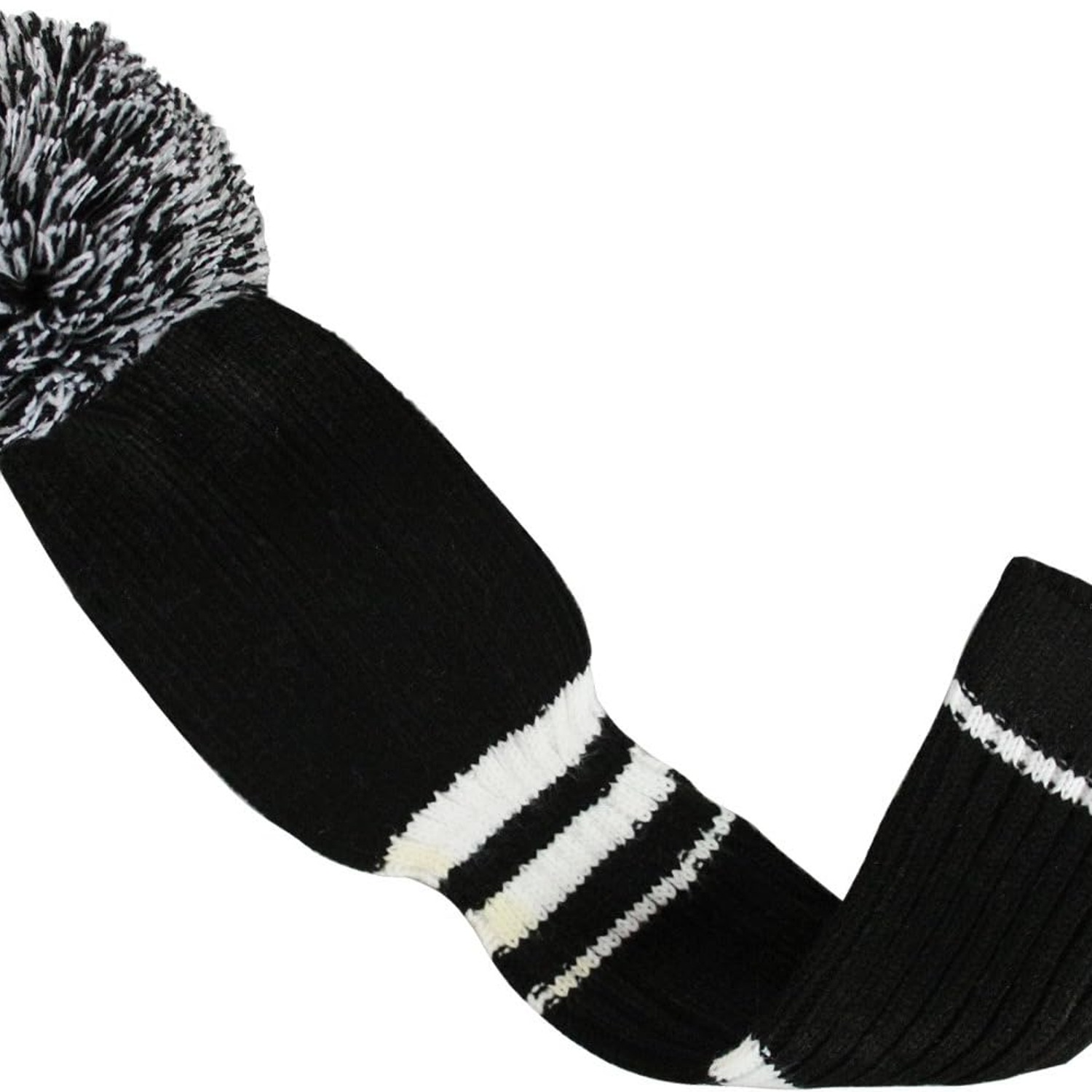
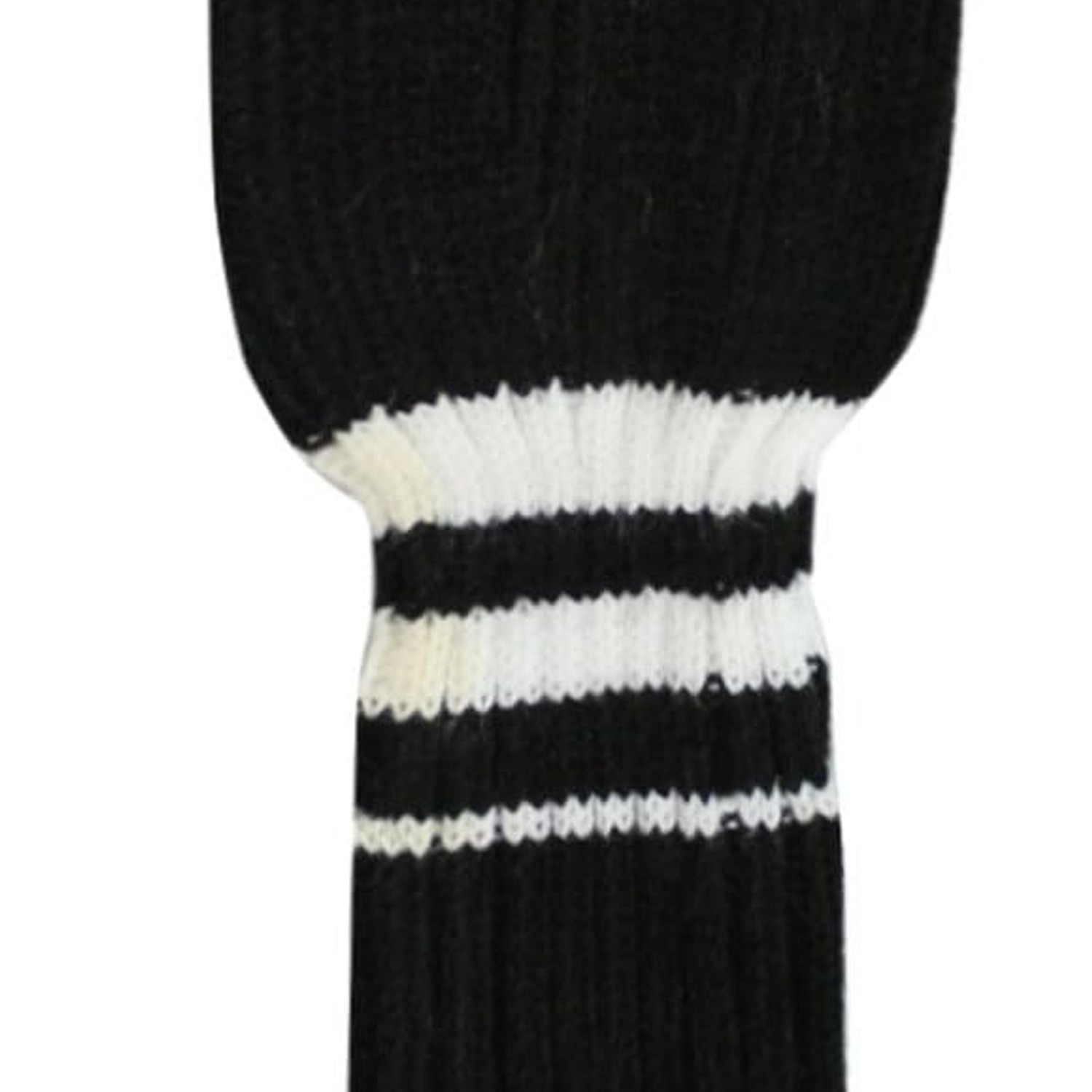
The second part is the neck. This is where cheap covers fall down. A short neck sits on the head and stops, leaving the hosel and the first few inches of shaft exposed to the divider. A long knitted neck drops further down and takes that contact instead. The set here has that extended neck, which is the difference between a cover that protects a club and a cover that just looks nice.
The third part is the closure. A hook and loop tab wraps the neck around the shaft and holds it closed. Without it, the cover is held on by friction alone, and friction loses every time your bag tips on a cart path. The tab is the reason you still have four covers at the end of the round.
Who this set suits
If you carry a driver and one or two fairway woods, you are the obvious buyer. Four covers handles that setup with one to spare for a hybrid or rescue club.
It also suits people who play off shared racks or stack bags in a buggy. Distinctive striped knit means you can see your clubs from a few metres away. In a group where three people carry the same brand of bag, that saves a bit of guesswork.
Gift buyers do well here too. Head covers are one of the few golf items you can buy for someone without knowing their hand size, their height or their swing speed. A four pack of knitted covers fits almost any bag, so it is a safe choice when you want something useful rather than ornamental. Among golf presents under a modest budget, a good golf club covers 4 pack is one of the easier wins.
The people it does not suit are golfers looking for iron protection. Irons need a completely different shape, usually numbered and sold as a full set. These are shaped for woods and hybrids.
How to choose between knit covers
Start with the number. Most golfers need three or four, so a four pack is usually right. Buying a single cover at a time almost always costs more in total and gives you a mismatched bag.
Look at the neck length next. Short necked covers look tidy but protect less. The longer the knitted neck, the more of the shaft and hosel stays out of trouble. If you are comparing two sets and one has a visibly longer neck, that is the better buy even if the pattern is less exciting.
Check the closure. Hook and loop is the common choice and it works well, as long as the tab is big enough to grip properly. Elastic only necks are faster to use but they relax over time and start slipping off.
Think about the knit density. A double layer or tight knit gives more cushioning than a thin loose one. Thin knits also pill faster, which is what makes a cover look tired after one season.
Finally, think about colour. A dark base like black stripe hides grass stains and cart grease, which is realistic if you play a lot. Light cream and pastel knits look lovely in photos and show every mark. There is no wrong answer, just a trade off between looks and upkeep.
Fit, and why stretch matters
Driver heads have grown. A modern 460cc driver is a very different shape to one from fifteen years ago, and head cover makers have had to keep up. Knitted covers handle this better than rigid moulded ones because the yarn stretches and then settles back.
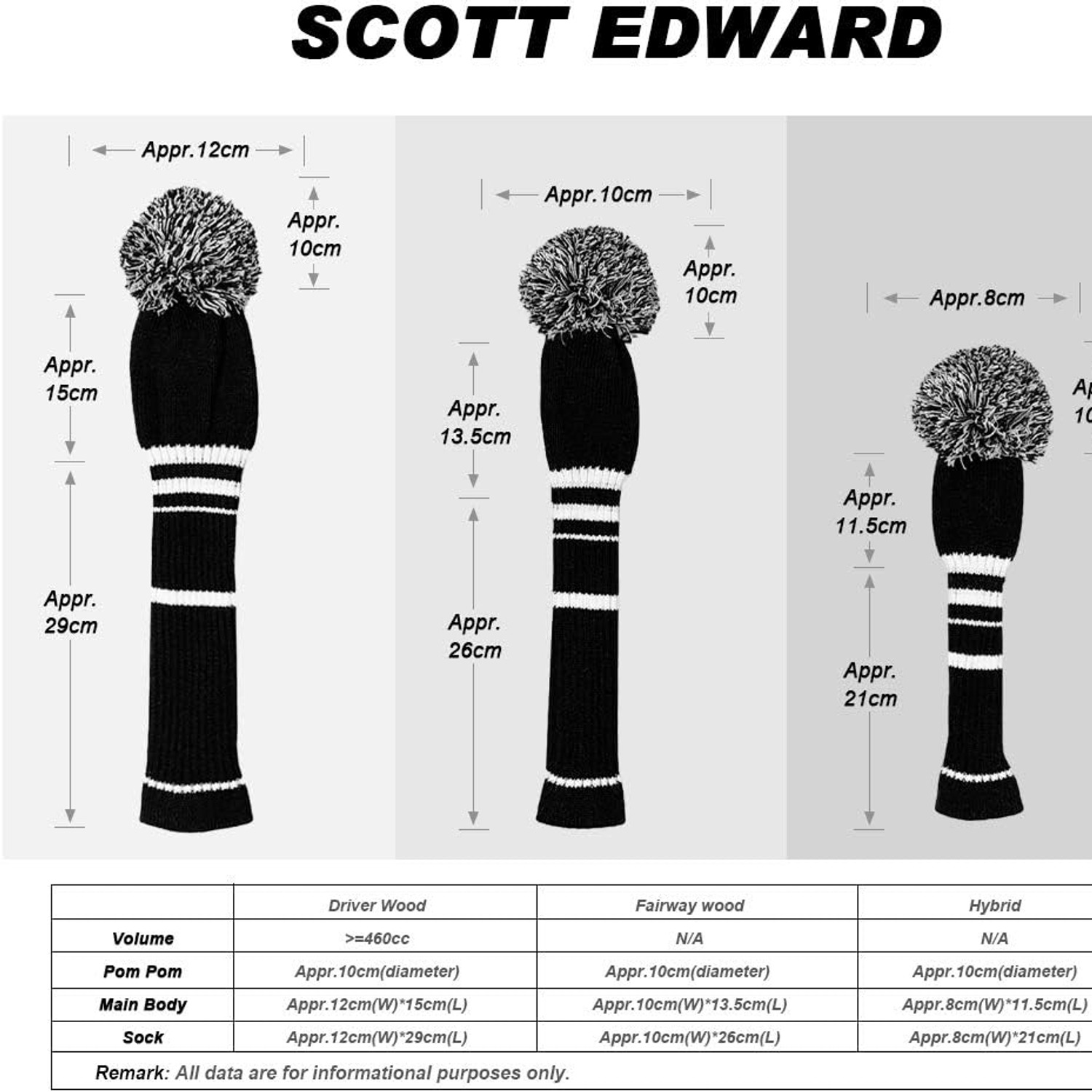
The same stretch is what lets one cover work on a three wood and another on a hybrid. The knit draws in around a smaller head rather than hanging loose. That said, stretch has limits. If you play a particularly tall or deep face driver, measure the head and compare it with the listed 20 cm by 15 cm cover size before you commit.
A snug fit is what you want. Too tight and you fight it every time you pull the club. Too loose and it works its way off on the walk to the tee.
Looking after them
Knitted covers last for years if you treat them like a jumper rather than a tool.
Wash by hand in cool water with a mild detergent. Press the water out, do not wring, because twisting is what stretches knit out of shape. Reshape the cover while it is damp and dry it flat, away from radiators and direct sun. Close the hook and loop tab before washing so it does not grab the yarn and pull threads.
Between washes, the main thing is drying. If you finish a wet round, take the covers off and leave them out overnight. Putting a damp cover back on a club head and zipping the bag shut is how you end up with a musty smell and, eventually, surface rust on steel parts.
If a thread pulls, do not cut it. Work it back through to the inside with a blunt needle or the tip of a tee. Cutting a knit loop is what starts a hole.
A few honest limitations
These are fabric covers, so they are not waterproof. In steady rain they will take on water like any knit. That does not harm the club, but it means you should dry them out afterwards.
There is no warranty listed on this product. The warranty description is recorded as No, so you are relying on standard consumer protection and our returns process rather than a manufacturer guarantee.
Knit also shows wear in a way that synthetic leather does not. After a couple of seasons the pom pom will look a bit loved and the stripes may soften. Some golfers think that is the charm. If you want something that looks factory fresh for five years, a moulded or PU cover is a better fit.
The short version
Knitted golf head covers do one job and do it well. They keep your woods from knocking into each other, they cover the shaft just below the head where damage is most common, and they make your bag easy to identify.
This set gives you four covers in acrylic knit with a long neck and a hook and loop tab, weighing 0.3 kg for the lot. That covers a standard driver and fairway wood setup with one spare. Check the 20 cm by 15 cm size against your driver if you play something unusually large, wash them by hand, dry them flat, and they will outlast the clubs they are protecting.