
The complete guide
Choosing Golf Tees - Height, Material and Why It Matters More Than You Think
The small thing that quietly costs you shots
Nobody walks off a course blaming the tee. Yet tee height is one of the few variables you control completely before the swing even starts, and getting it wrong costs distance on the drive and contact quality on a par three. Most club golfers just grab whatever is loose in the bag pocket and shove it in the ground to roughly the depth it went in last time. That is a lot of guessing for something you do fourteen or more times a round.
Then there is the other annoyance. You tee up, make your best swing of the day, and the tee snaps in half. Half of it goes forty metres down the fairway, the other half stays in the ground, and you are back in the pocket hunting for a replacement. Wooden tees have charm, but they break, and when you are already running low that becomes a genuine irritation.
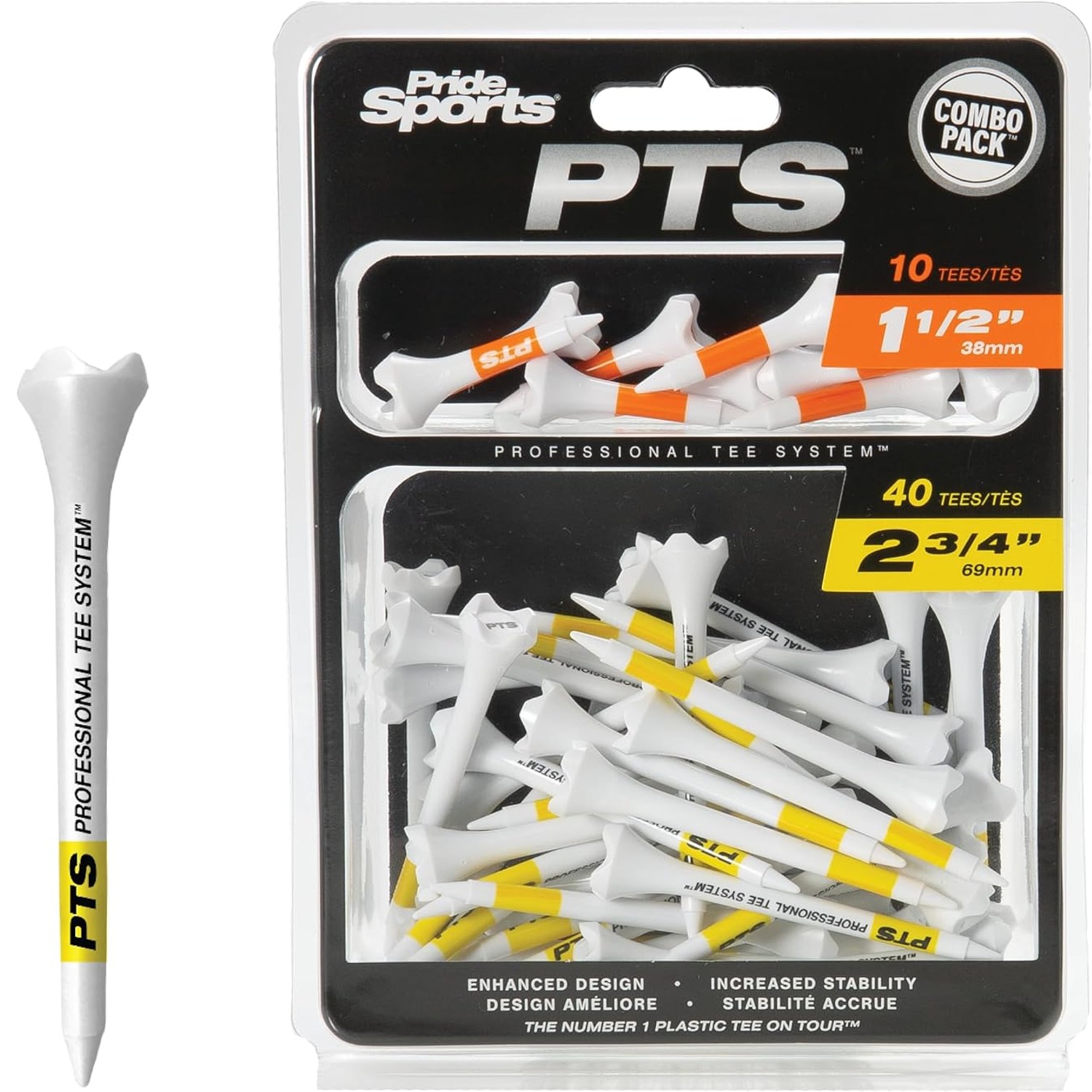
A mixed length plastic pack deals with both problems at once. You get a consistent height for the driver, a lower one for irons, and a material that handles repeated contact without shattering.
How tee height actually changes the shot
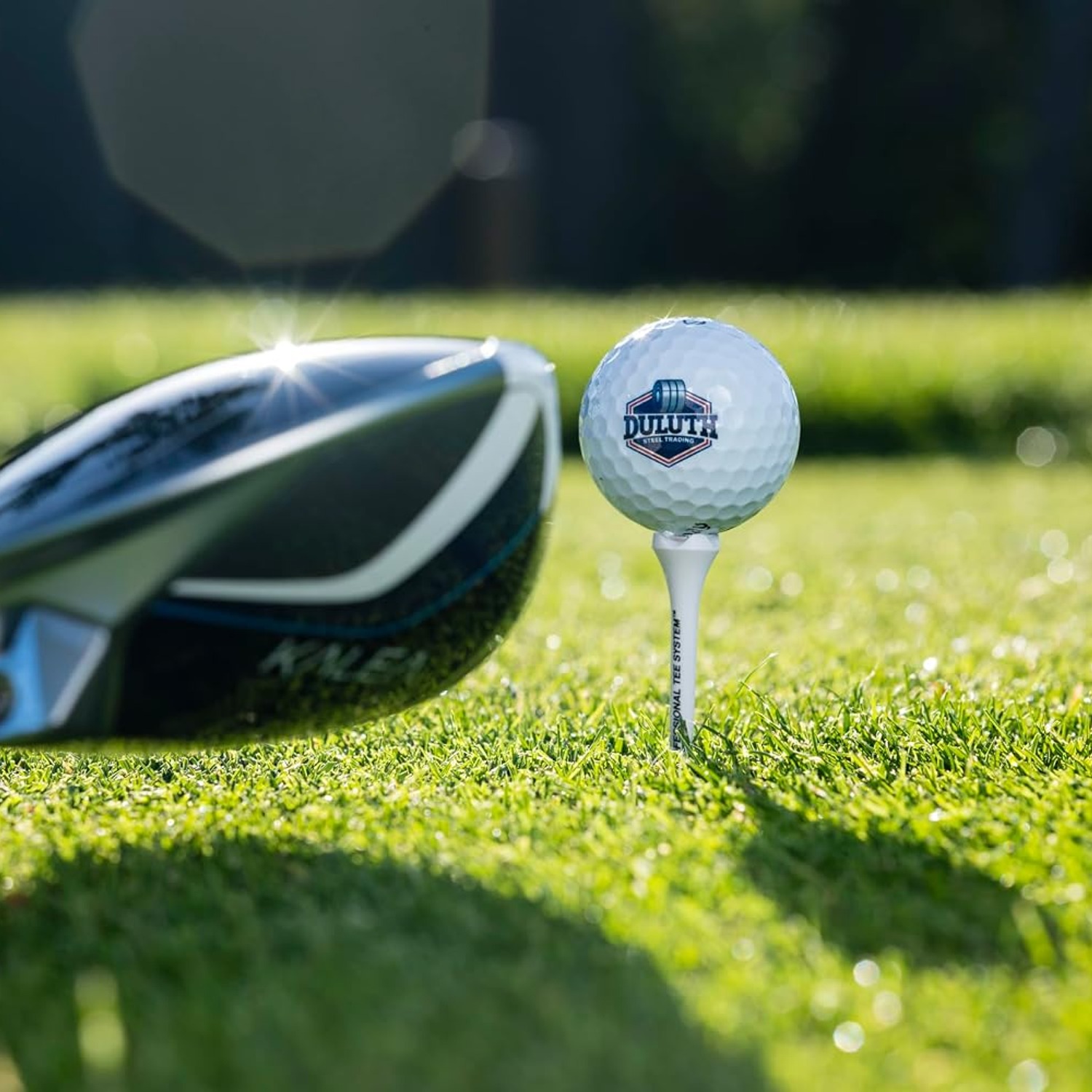
With a driver, you want to hit slightly up on the ball. Modern driver heads are large and the sweet spot sits high on the face, so the ball needs to sit high enough for the club to catch it on the way through rather than on the way down. The rough guide most coaches use is that roughly half the ball should sit above the top edge of the driver when you set the club behind it at address.
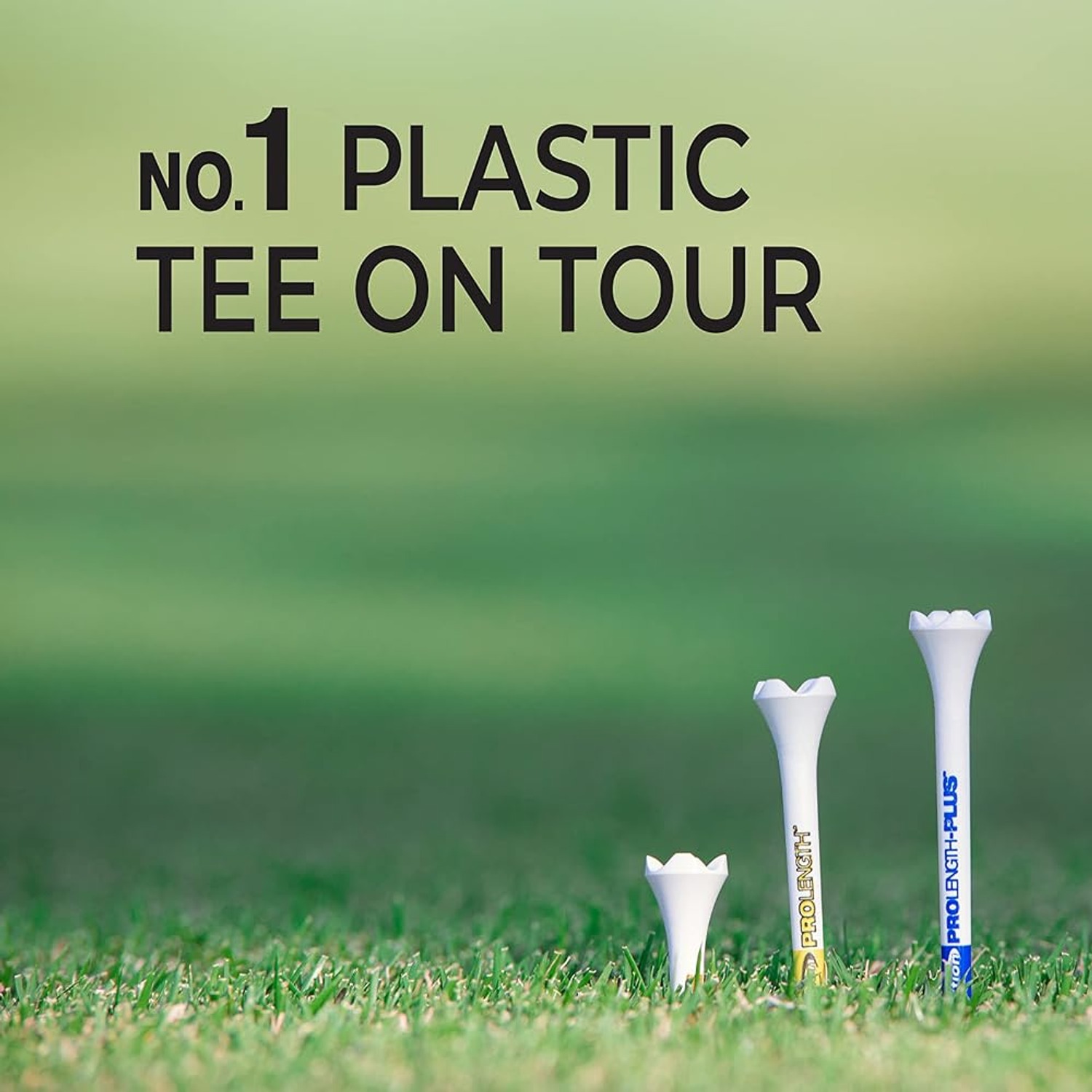
A 2-3/4 inch tee gives you the room to do that. Push it into soft ground until about the right amount is showing, and you will be close. On firmer turf the tee sits higher naturally, so you adjust by pressing a little deeper. The point is that you have enough length to work with. A short tee simply cannot get a driver ball high enough, no matter how carefully you set it.
Irons work the opposite way. With a seven iron you are trying to strike down on the ball and take a small divot after it. If the ball is sitting up high on a long tee, you have to make a different, flatter swing to catch it cleanly, and most people either thin it or hit it high and weak. A 1-1/2 inch tee pushed most of the way in gives you the ball just barely off the turf, which replicates a good lie in the fairway. That is the whole idea.
Hybrids and fairway woods sit somewhere in between, which is why having both lengths in your pocket is genuinely useful rather than a gimmick.
Plastic versus timber
Wooden tees are traditional and biodegradable, and plenty of good players still use them. The downside is simple physics. Wood has a grain, and a firm strike across that grain splits it. You get one or two good shots from a wooden tee before it breaks or bends, sometimes less if you catch it heavy.
Plastic flexes. Instead of snapping on impact it absorbs some of the force and springs back, which is why a single plastic tee often survives a whole round and then some. Over a season that difference adds up, both in cost and in how often you are rummaging about for a spare. The best durable golf tees are the ones you stop thinking about, because they keep showing up in your pocket week after week.
The low-resistance tip on these is a detail worth noting. The shape is designed to reduce friction as the ball leaves the tee at impact. The effect on any single shot is small, but less drag means a marginally cleaner launch, and the tee takes less punishment too.
Why the colour bar on the stem matters
This sounds trivial until you have played with a pocket full of mixed tees. A side pocket on a golf bag ends up holding tees, a couple of markers, a pencil stub, maybe a divot tool and whatever else got dropped in. Sorting a long tee from a short one by feel alone slows you down, and when you are trying to keep pace of play you do not want to be peering into a pocket on the tee box.
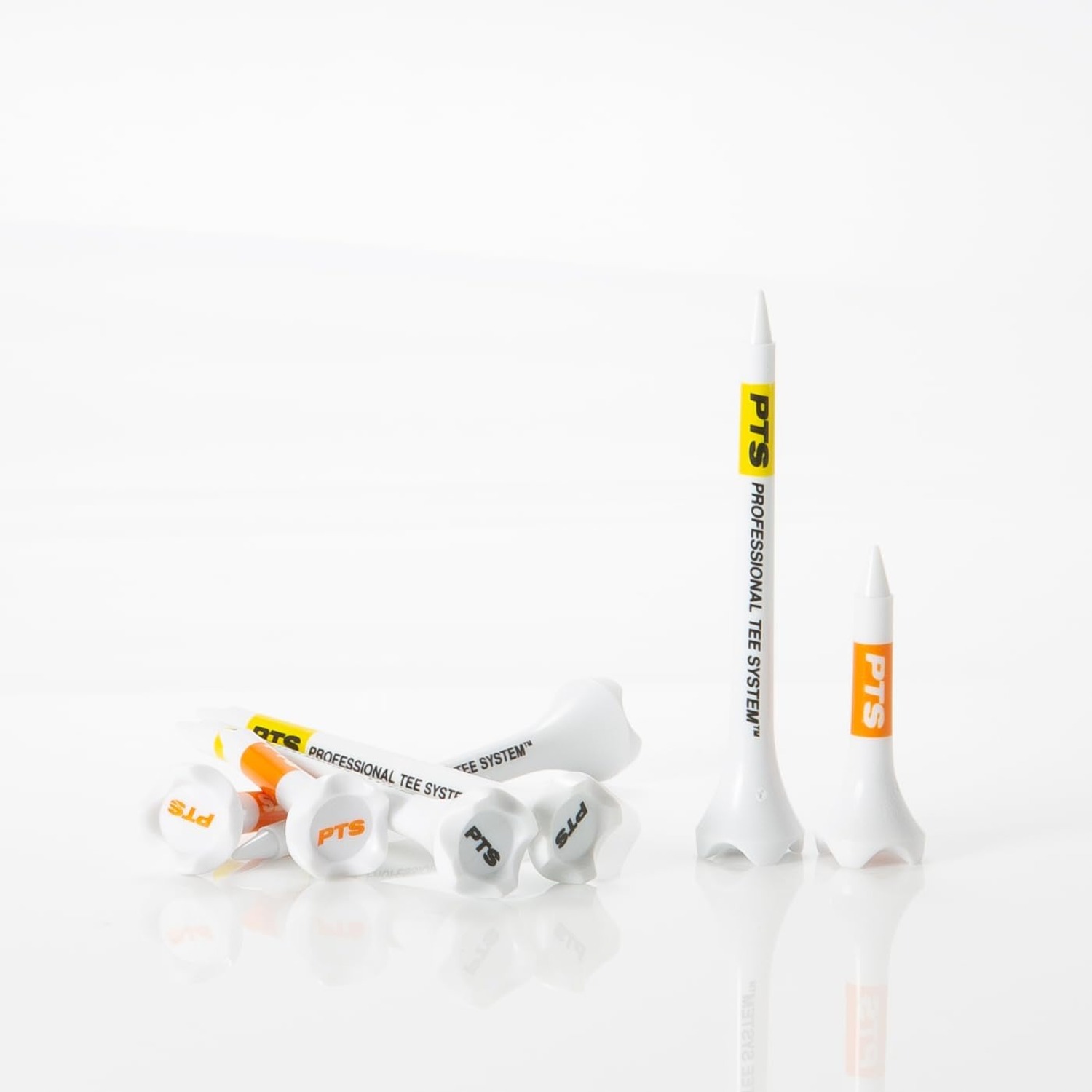
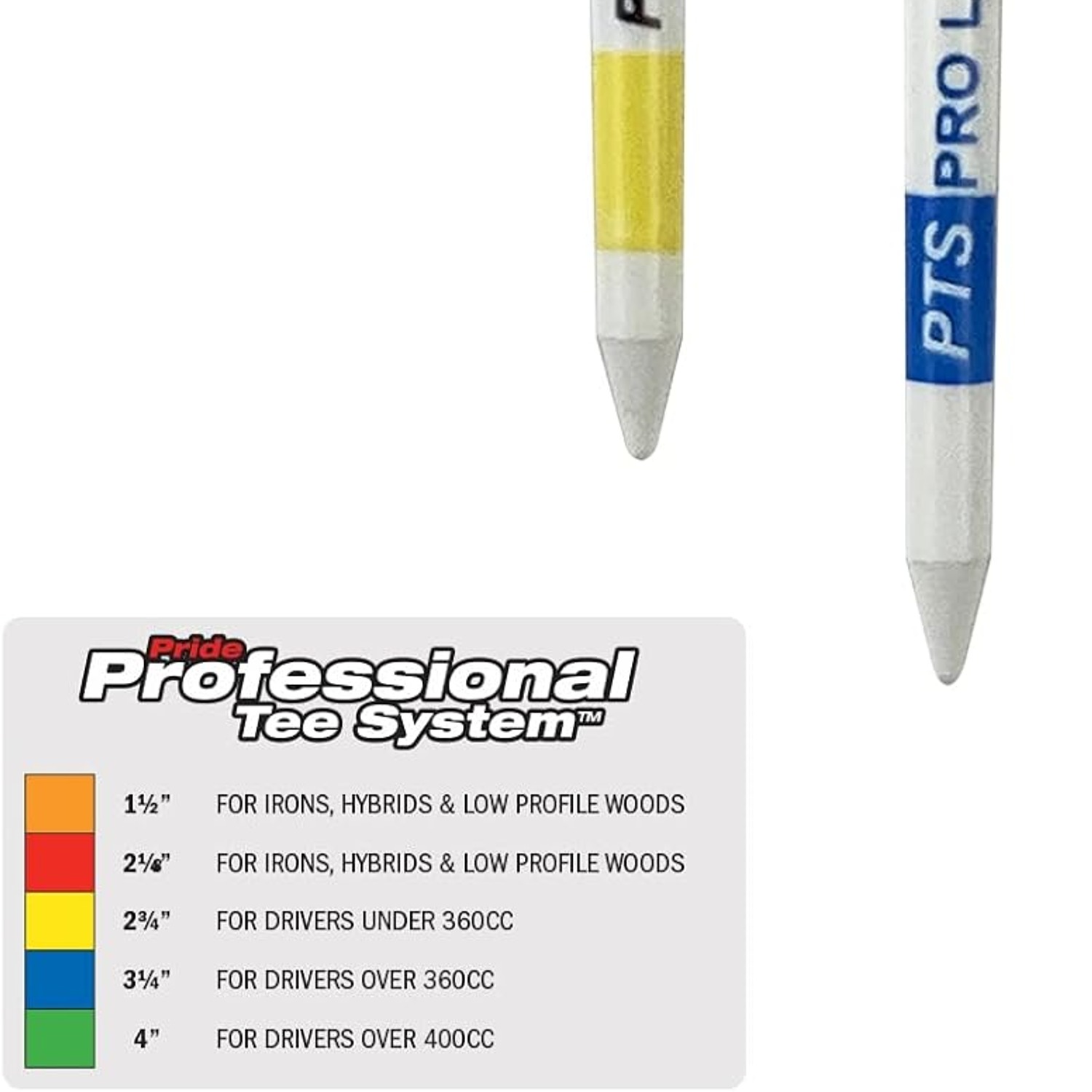
The colour bar marks length visually. Reach in, glance, and you know which one you have. It is the kind of small design decision that only makes sense once you have used it for a round.
Who this pack suits
If you play regularly and go through tees, a fifty pack is about right. It fills your bag, leaves spares for the practice bag, and gives you enough in reserve that you stop counting. Casual players who get out once a month will find a pack like this lasts a very long time.
Beginners benefit more than they expect. When you are learning, tee height inconsistency is an invisible variable messing with your contact. Having two defined lengths, one for the big stick and one for everything else, removes that variable and lets you focus on the swing. It is one of the reasons the best golf tees for beginners tend to be exactly this kind of two-height set rather than a bag of mixed timber.
Players who have moved to a longer driver shaft or a higher lofted driver often find they need more height than they used to. If your drives have been coming off low and spinning hard, a taller tee is worth trying before you change anything else.
Practical things worth knowing
On baked summer turf, a long tee can be hard to push in without bending. Press straight down rather than twisting, and look for a softer patch on the tee box. Short tees go in easily almost anywhere, which is another reason to carry some.
In wet conditions, mud gets into the cup at the top of the tee. Wipe it before you set the ball, otherwise the ball can sit crooked. A quick rinse after the round and a few minutes to dry is all the care these need, then back in the bag.
Keep an eye on the stems. Plastic bends before it fails, so a tee that no longer stands straight is telling you it has done its service. Pull it out of rotation rather than fighting with it on the tee box.
One habit worth building: put a few tees in a jacket pocket or the car console as well as the bag. The most common way to run out is not using them all, it is leaving the bag pocket zipped shut at home.
Matching tees to the rest of your setup
Tees are part of a small group of items that live permanently in your bag and get used every round. Balls, markers, a glove, a towel, tees. None of them cost much individually, and all of them are annoying when missing. If you are restocking one, it is worth checking the others at the same time.
If you tee up hybrids a lot, experiment with the short tee at two different depths. Pushed almost flush it plays like a fairway lie. Left a few millimetres higher it gives the club a slightly cleaner path through, which some players prefer. There is no single correct answer, only what produces better contact for you.
The short version
Fifty tees, two lengths, plastic rather than wood. Forty at 2-3/4 inches for the driver and anything you want teed high, ten at 1-1/2 inches for irons and tight par threes. A colour bar on the stem tells you which is which, and the shaped tip is built to cut friction at contact.
It is not a complicated product. It is the kind of thing you buy once, forget about for a season, and quietly appreciate every time you reach into the bag and find exactly the tee you wanted.