
The complete guide
How To Choose A Lightweight Golf Stand Bag
The bag problem nobody talks about
Most golfers buy one bag, and they buy it for the biggest round they imagine playing. Fourteen clubs, a rangefinder, two gloves, spare balls, a jumper, an umbrella. Then they spend the next three years playing a quick nine after work with six clubs, dragging a bag built for a tournament.
That mismatch costs you more than you think. A heavy bag changes how you walk, how often you stop, and how much you enjoy the back half of a round. It also makes casual golf feel like a production. If getting to the first tee means loading a trolley, you play less.
A lightweight golf stand bag solves the problem by matching the gear to the round. Fewer clubs, less fabric, a strap instead of wheels. You pick it up, you walk, you play.
What a par 3 bag actually is
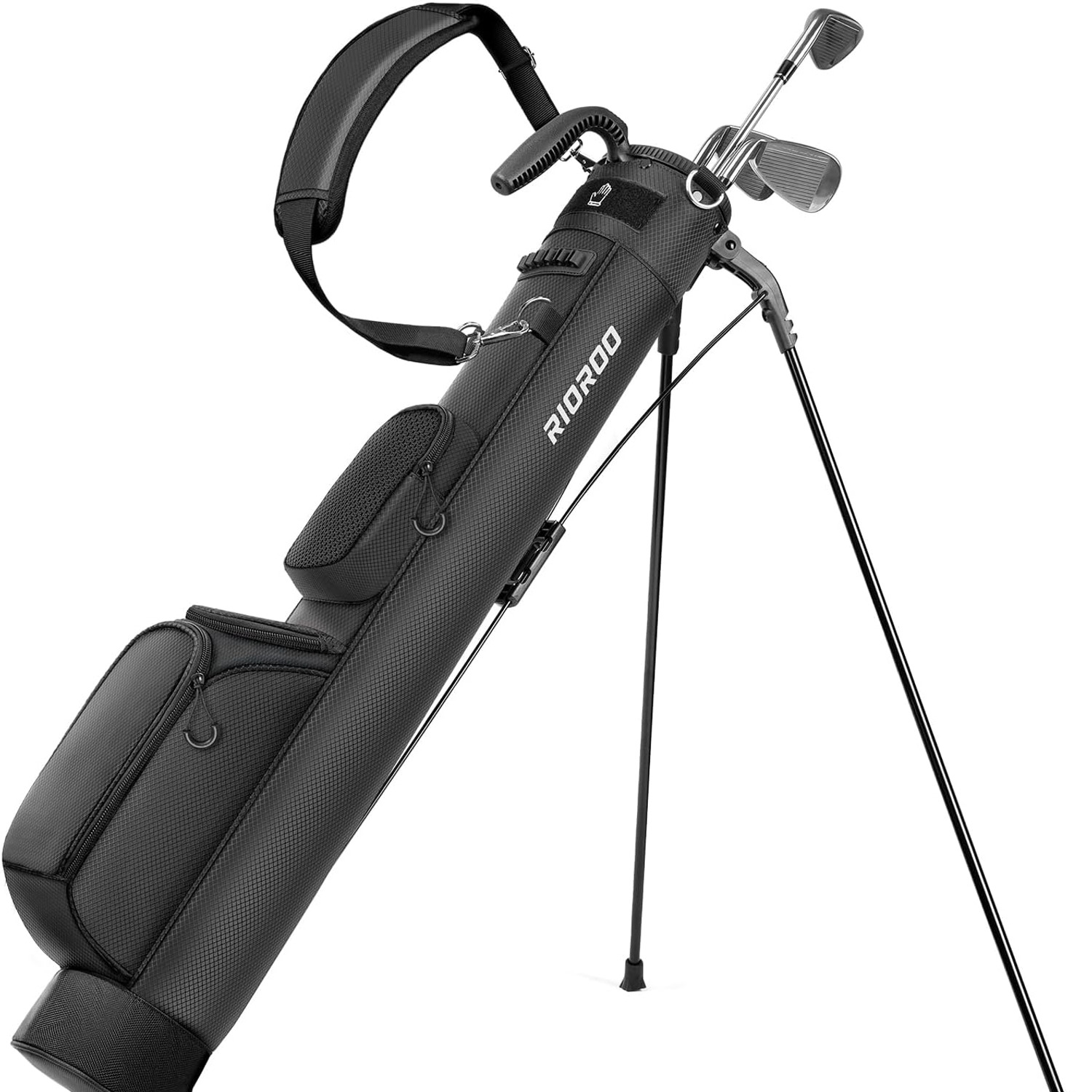
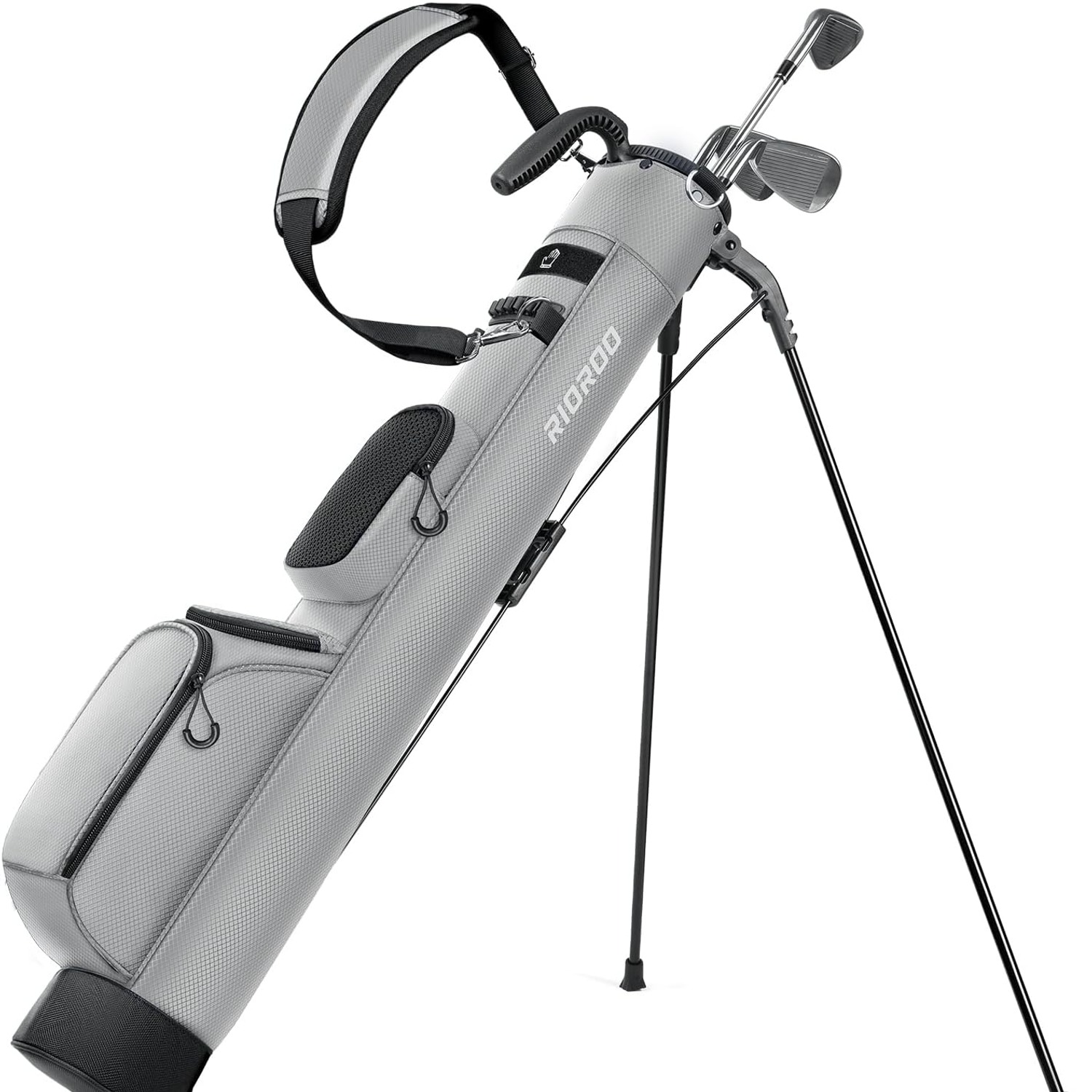
The term gets used loosely, but the idea is consistent. A par 3 golf bag is a small carry bag sized for a short set, usually somewhere between six and nine clubs. It has a narrow body, a simple top with one or two dividers, a handful of pockets and a shoulder strap.
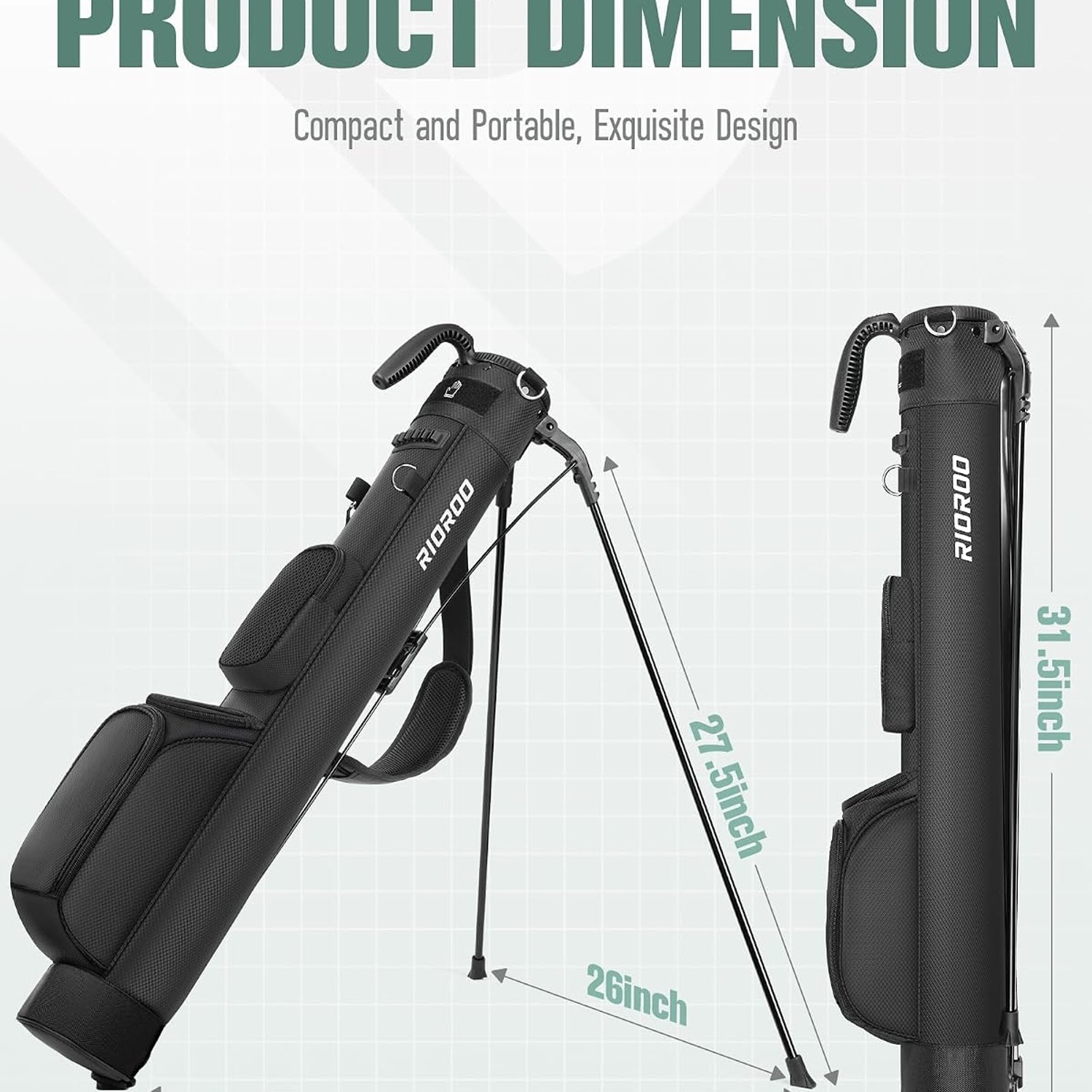
This one measures 13 cm by 10 cm by 80 cm. The height matters because it needs to support a full-length club without the grip end swinging about. The narrow width is what keeps it light and easy to stow.
Two dividers sit in the top. With a short set that is enough to keep your putter separate from the irons and stop everything sliding into one clump. More dividers sound better on paper, but each one adds structure, and structure adds weight. On a small bag the trade is not worth it.
How the stand works
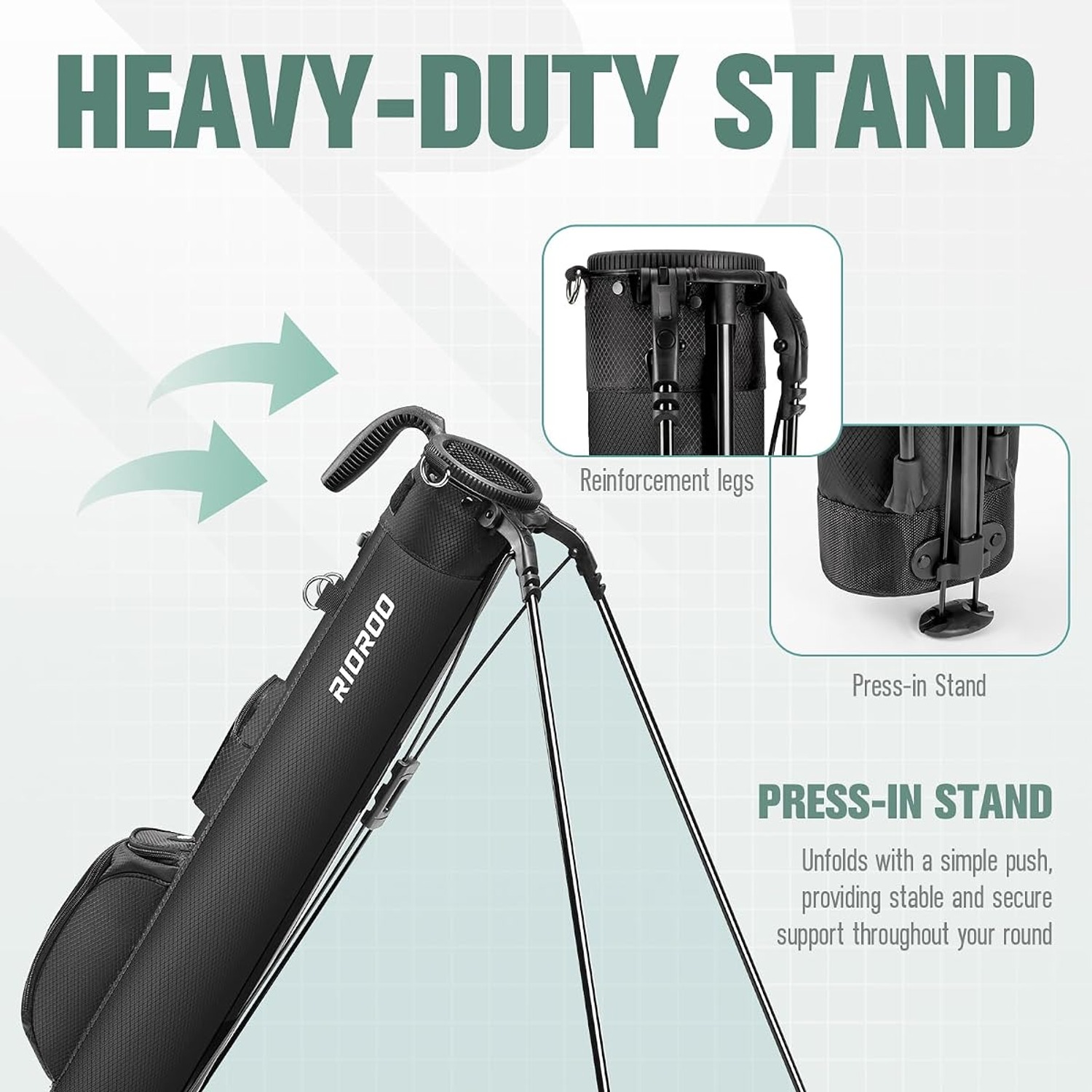
The stand is the feature that turns a sleeve into a bag you actually want on the course. This model uses a press-in system. You set the bag down, push, and the legs swing out to hold it at an angle. Lift the bag and they tuck back in on their own.
That matters more than it sounds. Without a stand you lay the bag flat on the grass. Grips get wet. The towel picks up mud. The head covers soak through on a dewy morning. You also spend the round crouching to pick clubs out of a horizontal bag, which gets old fast.
With a stand, the bag sits at a comfortable angle. You pull a club, play the shot, drop it back. On a par 3 course where you are moving every few minutes, that saves real effort.
A word on technique. Stand mechanisms last longest when you set the bag down rather than drop it, and when you brush grit off the legs occasionally. There is nothing fragile about a press-in stand, but like anything with a hinge, dirt is the enemy.
Pockets, and why three is enough
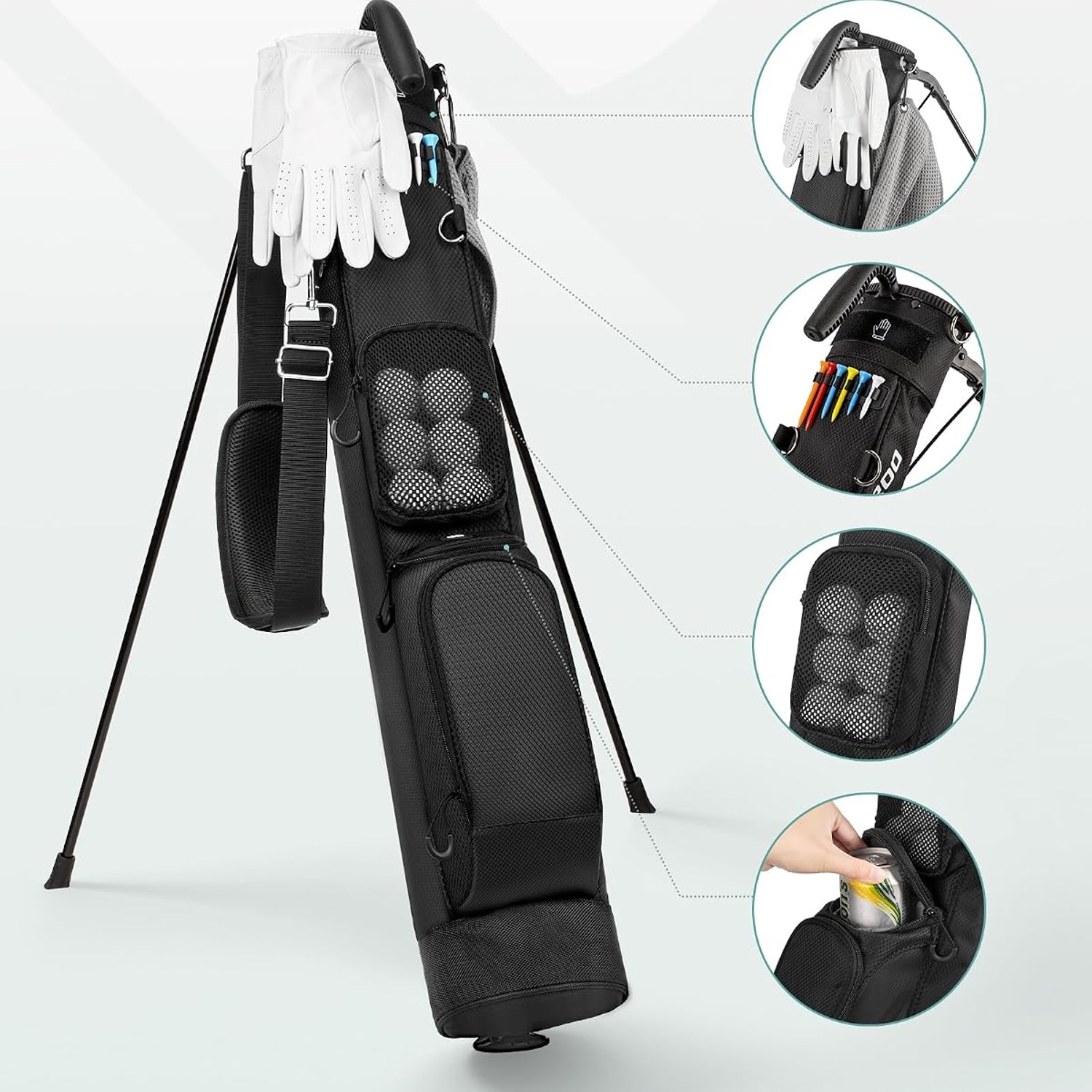
This bag has three pockets. A ball pocket that takes around eight balls, a general pocket, and a cooler pocket.
The ball pocket is sized sensibly. Eight balls is roughly a round for most people, with a few spares for the water hole. Carrying three sleeves because you might need them is how bags get heavy.
The general pocket takes a phone, keys, a wallet, tees, a marker and a scorecard. That covers the actual list of things you need.
The cooler pocket is the one people notice. A cooler bag is included, and it holds a cold drink through a round on a warm day. If you have ever finished nine holes with a bottle of water that tastes like a bath, you will appreciate it.
Outside, there is a velcro strap for a glove and four hooks for accessories. Clipping a brush or a cleaning kit to a hook means you are not unzipping a pocket every time your wedge picks up mud. Hanging a damp glove on the outside also helps it dry instead of going hard overnight.
Who this suits, and who it does not
This bag works for a specific kind of golfer.
Weekend players who walk nine holes will like it. So will people who play par 3 and pitch and putt layouts, where half the set never comes out anyway. It is a good practice range golf bag, because you can take four clubs and nothing else. Beginners working with a half set get a bag that fits where they are now. Juniors with shorter clubs often find an adult cart bag unmanageable, and a compact golf carry bag is easier to shoulder.
Travellers like a small bag too. It takes less room inside a travel case, and less room in a hire car.
It is not for everyone. If you play 18 holes with a full 14-club set, you need more capacity. If you ride a cart every round and like a big apparel pocket, a cart bag suits you better. If you want a full-length divider system with individual club slots, this is not that bag either. There is no shame in owning both and picking by round.
Fitting the strap properly
People buy a light bag and then carry it badly, which undoes the benefit.
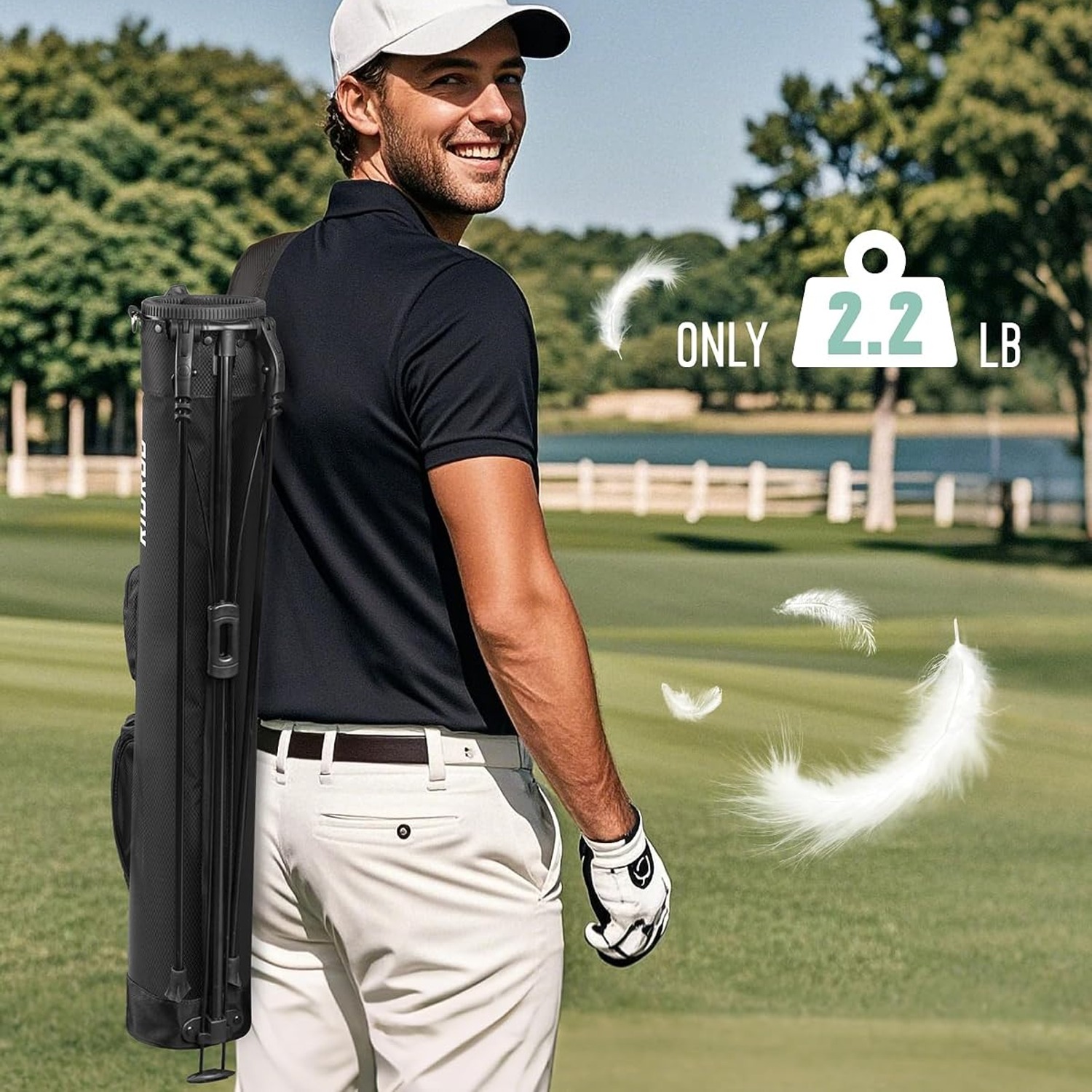
The strap is adjustable, so spend two minutes setting it. The bag should sit against your back with the top of the clubs level with or just below your shoulder. Too long and it bangs your hip with every step. Too short and it rides up into your neck.
Try it loaded, not empty. A bag with eight clubs and a full drink hangs differently to one you are testing in the kitchen. Walk a few metres and adjust again. Once it is right you will not need to touch it.
The built-in handle is the second half of the carrying story. Use it for the short moves: car boot to path, path to tee, up a flight of stairs at the clubhouse. It also lets you hang the bag on a cart or on a wall at home, which keeps the base off a wet floor.
Looking after it
Polyester nylon is easy fabric to live with, but it still rewards basic care.
Wipe the body with a damp cloth and a bit of mild soap when it picks up mud. Air dry it out of direct heat. Never put a golf bag in a washing machine or a dryer, because the structure inside is not designed for it.
After a wet round, empty every pocket and leave the bag open until it is properly dry. Damp sitting in a closed pocket is how bags start to smell. Brush grass off the base and the stand legs before you pack it away.
Store it upright somewhere dry, with the stand folded in. A garage shelf is fine. A damp concrete floor is not.
Judging value
When you compare small bags, look past the marketing and check four things.
Check the height against your longest club. Eighty centimetres suits standard clubs, but if you play extra-long drivers, measure first.
Check the divider count against how you like your clubs organised. Two is right for a short set, and more than that on a tiny bag usually means extra weight for little gain.
Check what the pockets are actually for. Three well-chosen pockets beat seven shallow ones you never use.
Check the stand type. A press-in stand with no separate release is one fewer thing to break and one fewer step between shots.
The short version
This is a small golf bag built for the round most people actually play. Seven or eight clubs, two dividers, a press-in stand, three pockets including a cooler, an adjustable strap and a handle for everything else.
It is black polyester nylon, 13 cm by 10 cm by 80 cm, with a glove strap and four accessory hooks. A cooler bag comes with it.
If your golf is quick nines, par 3 courses, range sessions and the odd holiday round, this bag will get more use than the big one in your garage. If you play full 18-hole rounds with every club in the set, buy something larger and keep this one for practice.