

The complete guide
How to Choose and Use an Indoor Putting Mat
The putts that actually cost you shots
Ask most golfers where they lose strokes and they will point at the tee. Ask their scorecard and it tells a different story. Three-putts and missed four footers quietly drain a round, and they do it on holes that otherwise went fine. A good drive means very little if the ball takes three goes to drop from twelve feet.
The problem is that putting is the hardest part of the game to practise. You need a green, and most of us cannot get to one more than once a week. By the time you do, you spend the first six holes finding your pace again.
That is the gap an indoor putting mat fills. It is not a replacement for a real green. It is a way of keeping the stroke honest between rounds, so the first hole feels like the tenth.
What a 10ft mat gives you
Length matters. Short mats, the three or four foot kind, are fine for a quick gate drill but they do not give you enough run to feel pace. Ten feet is the sweet spot for a home setup. You can putt from the back edge and watch the ball travel properly, and you can work the whole range of distances that make up the majority of your putts on course.
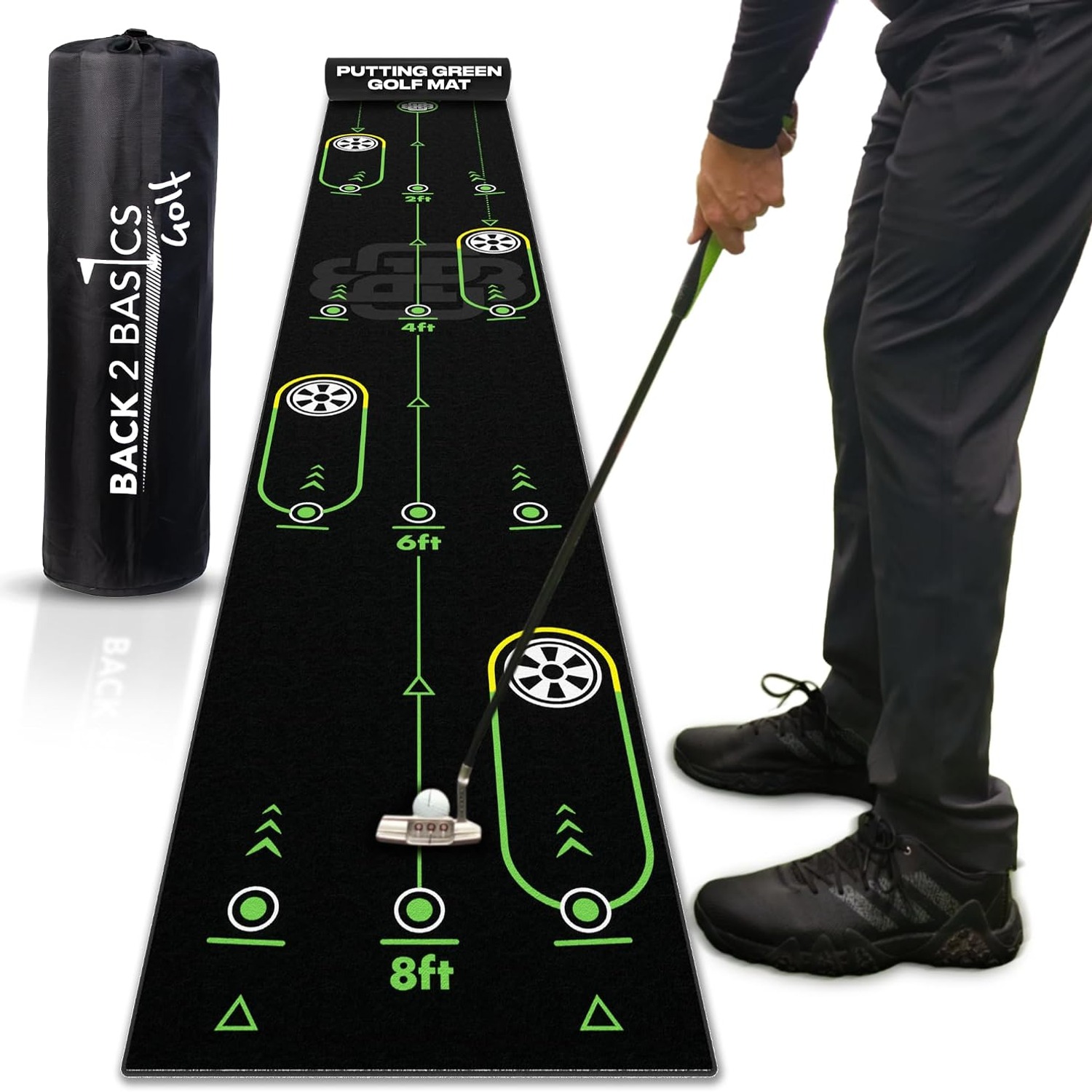
This mat measures 10 feet by 1 foot, about 3.05 metres long and 0.31 metres wide. The narrow width is deliberate. It keeps the roll-up small and light, and for a straight putting drill you do not need width. You need length and a true surface.
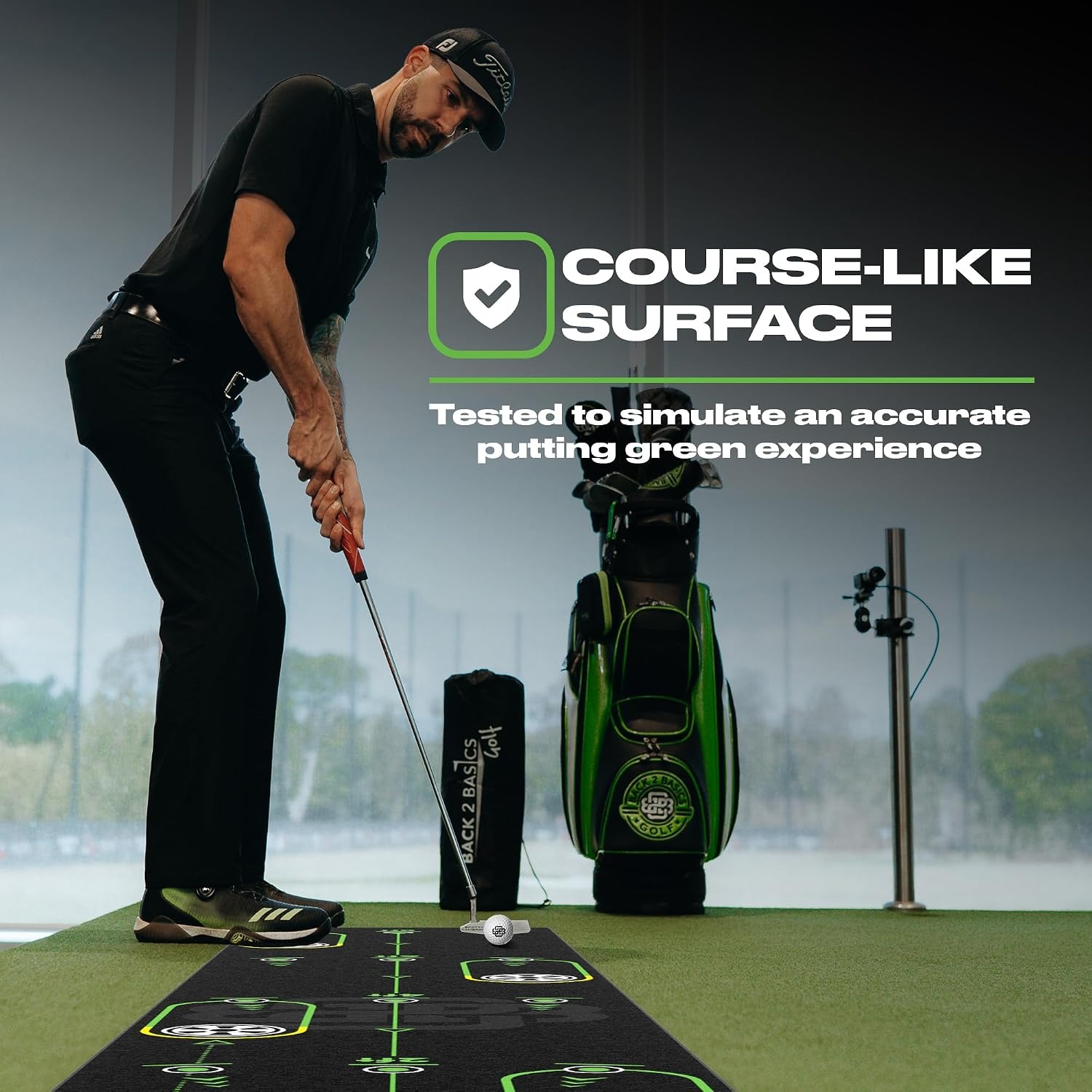
The playing surface is nylon, which is what gives the ball a smooth and repeatable roll. Underneath sits a thermoplastic rubber backing. That backing does two jobs. It adds enough weight and grip to stop the mat sliding forward when you strike the ball, and it helps the mat sit flat rather than rippling.
Total weight is 2.65 kg. Light enough to carry one handed, heavy enough to stay put.
How the training features work
Two features do the heavy lifting here.
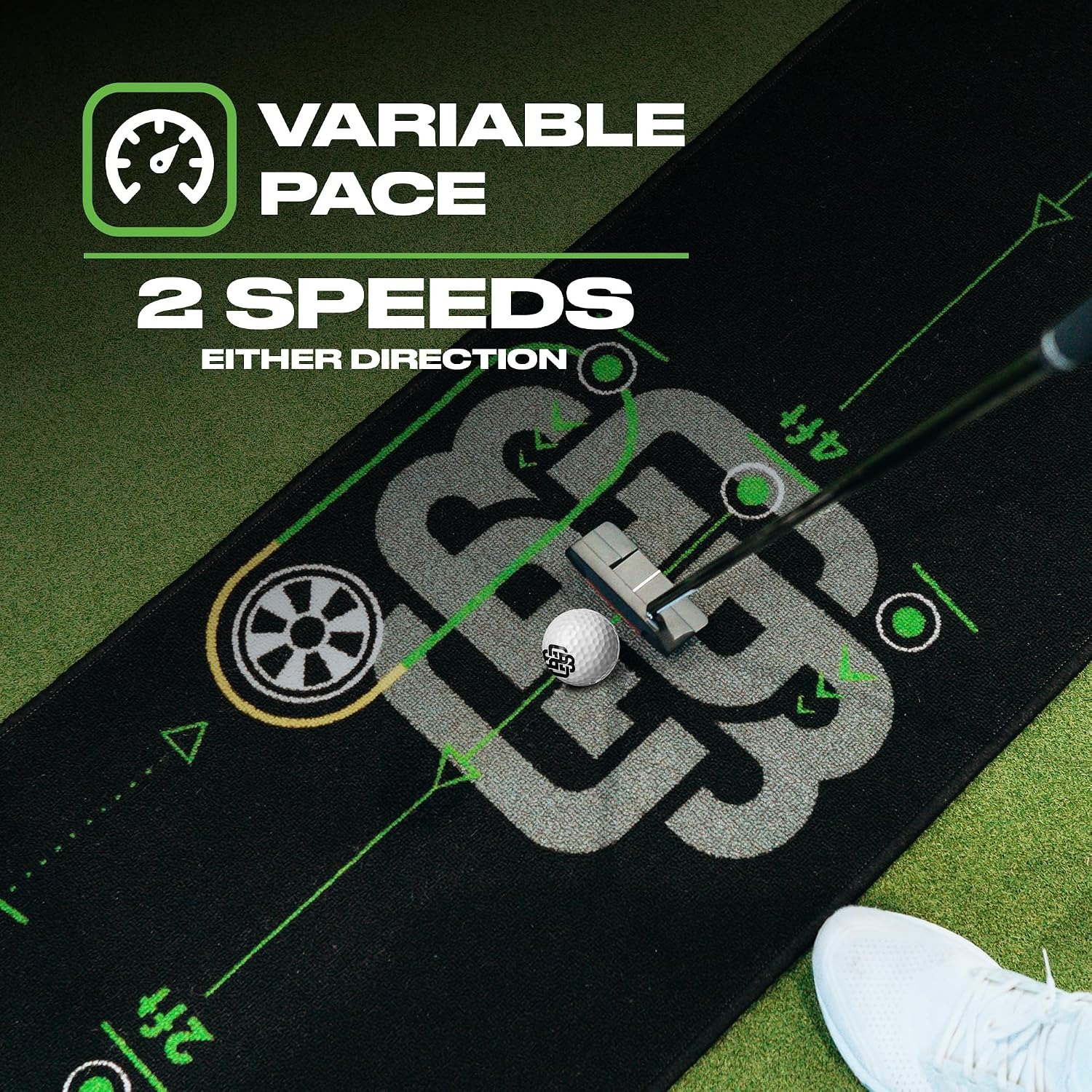
The first is the alignment markings. They run along the mat and give you a straight reference line. This sounds basic, and it is, but it exposes a fault that most amateurs never see. Set up over the line, make your normal stroke, and watch where the ball starts. If it leaves the line to the right, your face was open at impact or your path was out to in. You get that information instantly, without a coach standing over you.
The second is the adjustable target gate. A gate is simply a narrow opening the ball has to pass through. Set it wide and almost any decent putt gets through. Narrow it and only a ball struck with a square face on the right line survives. The feedback is immediate and completely objective. The ball either goes through or it clips the edge.
Used together, those two features cover the two things that decide a putt: where the ball starts, and how hard you hit it. Everything else is reading the green, and no mat can teach you that.
Who this suits
Beginners get the most obvious benefit. If you are new to the game, your stroke has no groove yet, and the fastest way to build one is repetition on a surface that behaves the same way every time. Start with the gate wide, putt from three feet, and only move back once you are holing them without thinking.
Mid handicappers tend to use it differently. Their stroke is mostly fine but it drifts. Ten minutes a day on the mat catches that drift early, before it shows up in a scorecard.
Lower handicappers usually go straight to the narrow gate. At that level the work is about start line precision, holding the face square through a small window, and keeping the feel alive through winter.
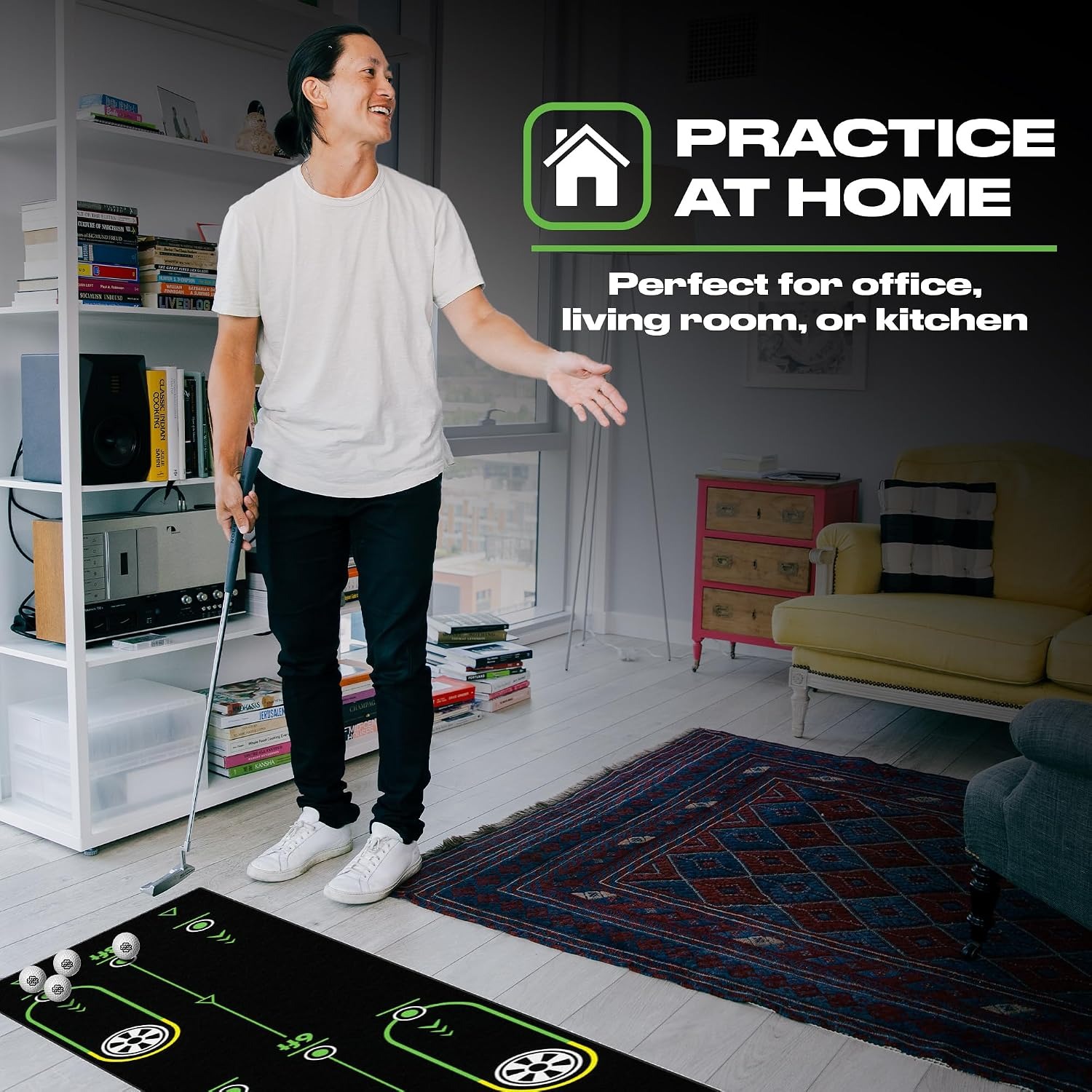
There is also a case for anyone who simply enjoys golf and does not get to play much. A roll-up mat in the office or beside the sofa turns dead minutes into practice. That consistency is why a home putting setup often beats a monthly range session.
Picking the right spot for it
You need the 10ft length plus a bit of room behind you for your stance and backswing. Two to three extra feet is usually plenty. A hallway works well. So does the long edge of a lounge room, or a spare bedroom.
The floor underneath matters more than people expect. A hard, flat floor gives you the truest roll. Firm low-pile carpet is fine too. Thick, soft carpet is the one to avoid, because the padding compresses under the mat and creates subtle dips that are not the mat's fault but will still ruin your reads.
Check for slope. Many floors have a slight fall that you never notice until a golf ball sits on them. Roll a ball along the empty floor first. If it consistently drifts one way, try a different spot or accept that you are practising a slight break.
Getting it flat and keeping it that way
Straight out of the packaging the mat has been rolled for shipping, so it will want to curl at the ends. Unroll it on a flat surface and leave it alone for a few hours. Overnight is better. A warm room speeds this up, because the rubber backing relaxes faster when it is not cold.
If the ends still lift slightly, lay something flat and modestly heavy across them for a day. Books work. Avoid anything with sharp edges or points.
After that, the habit that keeps it true is simple. Roll it, do not fold it. Folding creates a hard crease in the same spot every time, and creases change how a ball rolls. Roll it with the playing surface facing outward, which keeps the nylon fibres from being compressed against themselves.
Looking after the surface
A putting surface does not need much care, but it does need some.
Dust and crumbs settle into nylon fibres and slow the roll over time. Vacuum on a low setting every few weeks, or brush it with a soft brush in the direction of the pile. If you spill something, spot clean with a damp cloth and a small amount of mild soap, then let it dry all the way before rolling it away. A mat put away damp can develop a smell.
Keep lofted clubs off it. Chipping with a wedge digs into the fibres and will wear a patch in the landing area faster than anything else. If you want to practise chipping, use a mat built for it.
Avoid leaving it in direct sunlight for weeks on end. UV fades and stiffens most synthetic surfaces eventually.
Building a routine that works
The biggest mistake with home practice is treating it like range practice. You do not need an hour. Ten focused minutes beats sixty distracted ones.
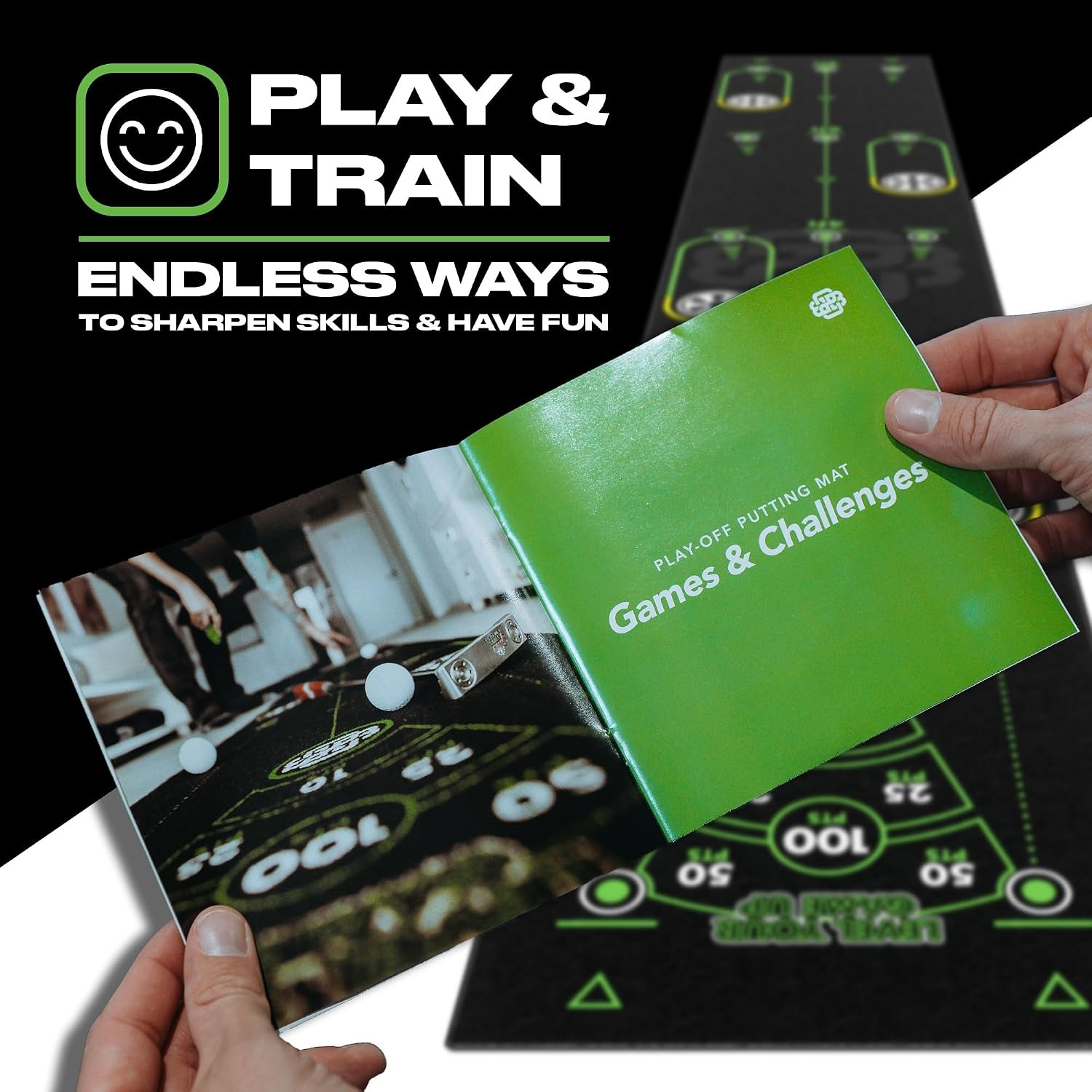
A session that works well looks like this. Start with twenty putts from three feet with the gate wide, just to find your rhythm. Narrow the gate and do another twenty. Then move back to six and eight feet and focus on pace, trying to finish the ball just past the target rather than dying it in.
Finish on a made putt. It sounds soft, but ending on a success is a habit worth keeping. You want the last feeling you take away to be a good one.
Do that four or five times a week and you will notice the change within a month. Not because you learned anything new, but because the stroke stopped being a decision and started being automatic.
The short version
A 10ft golf putting mat is one of the few pieces of golf equipment that genuinely pays back the money, because it gets used. The nylon surface rolls true, the TPR backing holds it steady, the alignment markings show you what your face is doing, and the adjustable gate gives you an honest target that does not flatter you.
At 2.65 kg it rolls up and disappears into a cupboard in seconds, which is the real reason it keeps getting unrolled.
If your short putts have been letting you down, this is the straightforward fix. Set it up somewhere you walk past every day, and let the repetition do the work.