
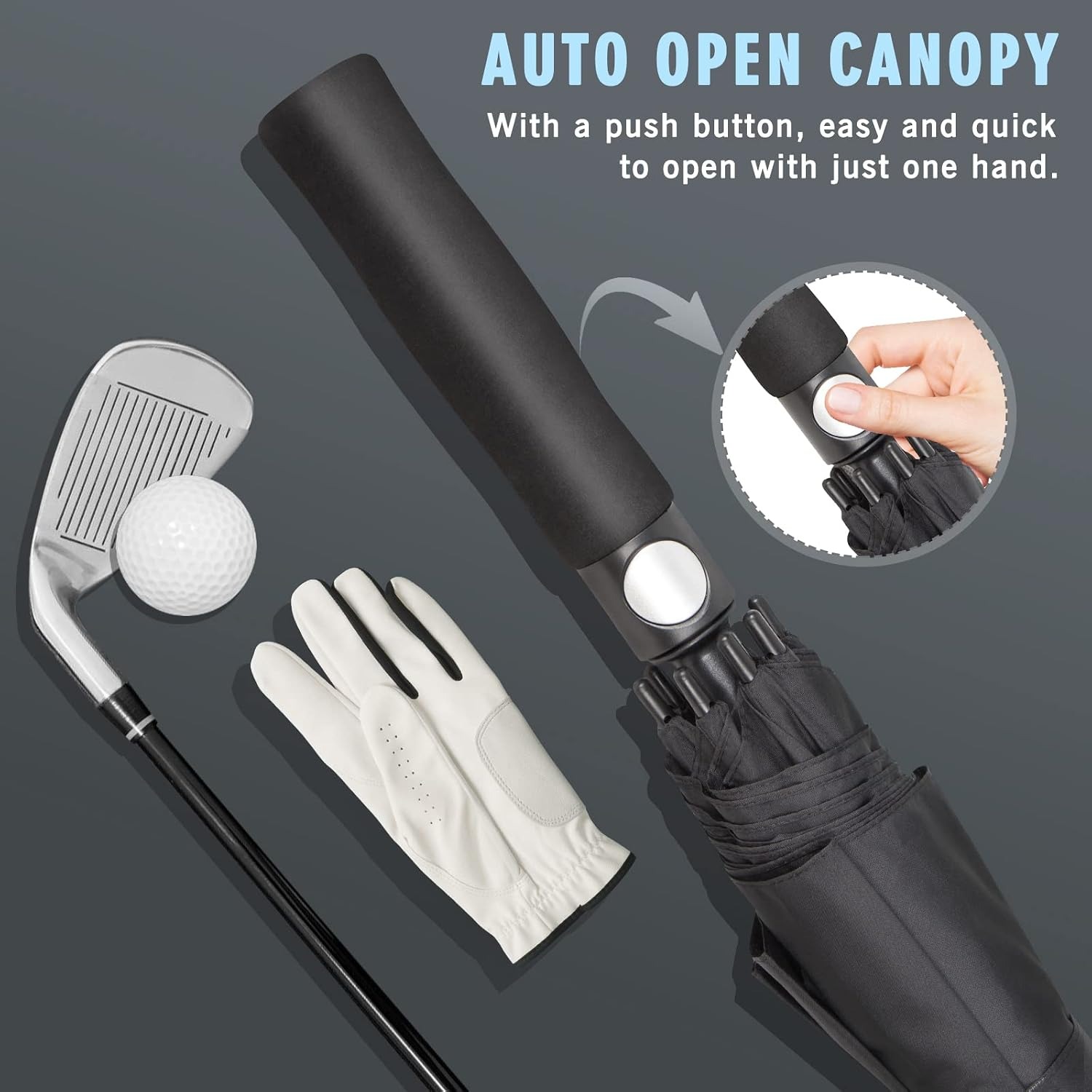
The complete guide
How To Choose A Windproof Golf Umbrella That Actually Lasts
Why ordinary umbrellas fail on a golf course
Most umbrellas are designed for a city street. Buildings break up the wind, the walk is short, and you can duck into a doorway if things get bad. A golf course gives you none of that. You are standing in the open, often on raised ground, for four hours or more, and the wind arrives from whatever direction it fancies.
That is why so many people end up with a bin full of broken umbrellas. A single-layer canopy acts like a sail. Air gets underneath it, pressure builds, and because there is nowhere for that air to go, the force travels straight into the ribs. One strong gust is usually enough. The frame inverts, a rib bends, and the umbrella never sits quite right again.
A golf umbrella solves this in two ways. It gives you a much wider span, so you and your gear stay dry instead of just the top of your head. And in the better designs, it vents, which is where the double canopy comes in.
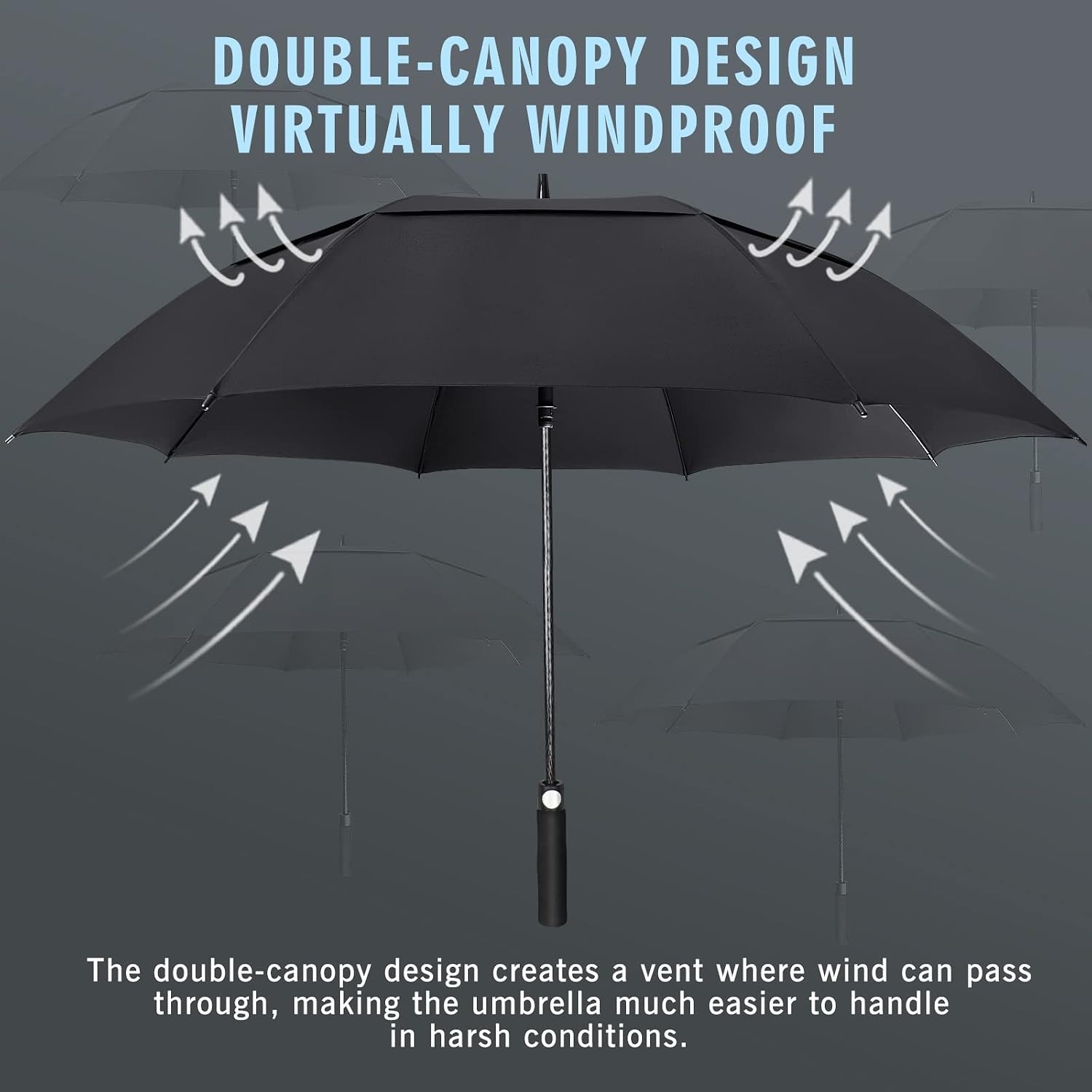
How a double canopy works
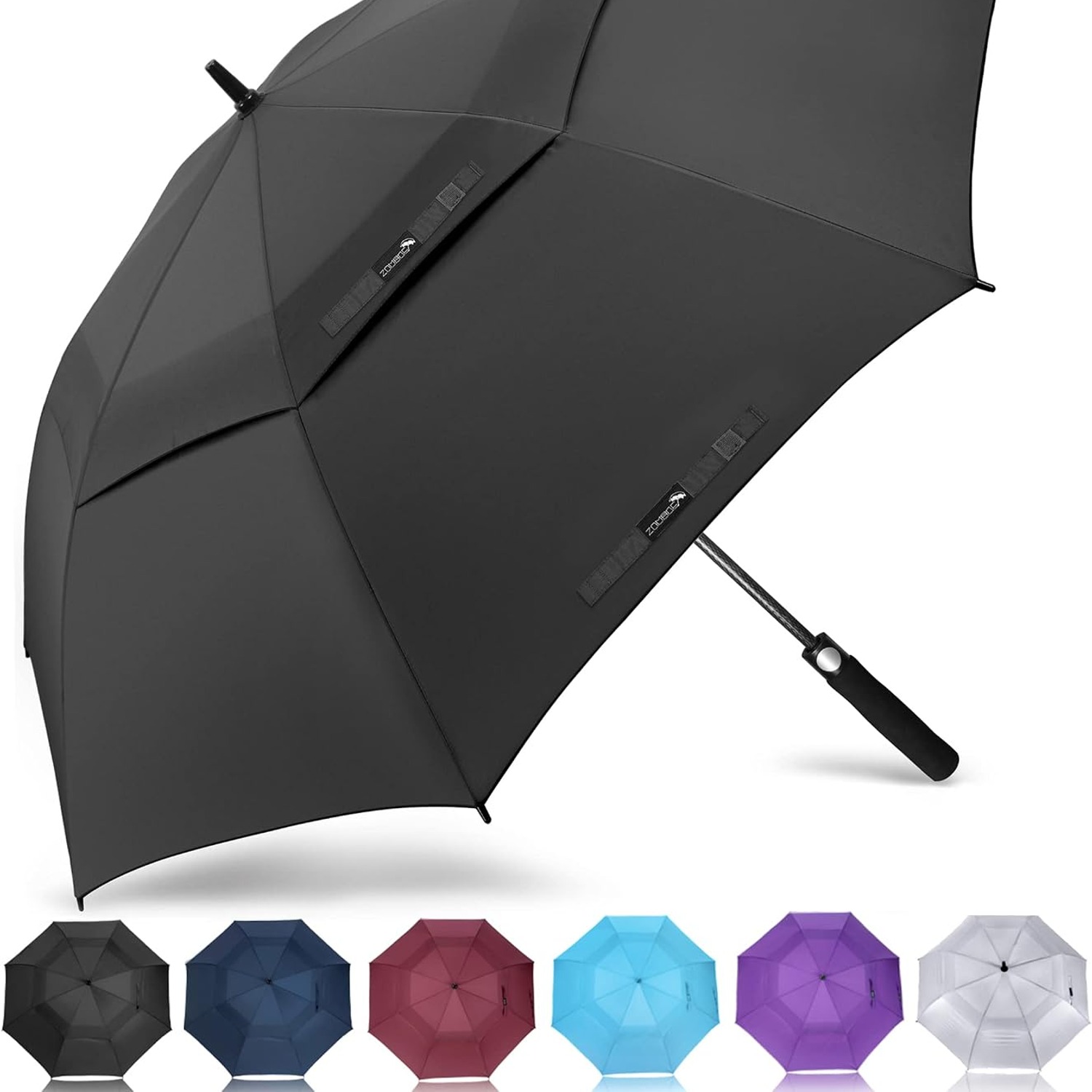
Picture two overlapping discs of fabric, one slightly smaller and sitting below the other, with a gap around the join. That gap is the vent.
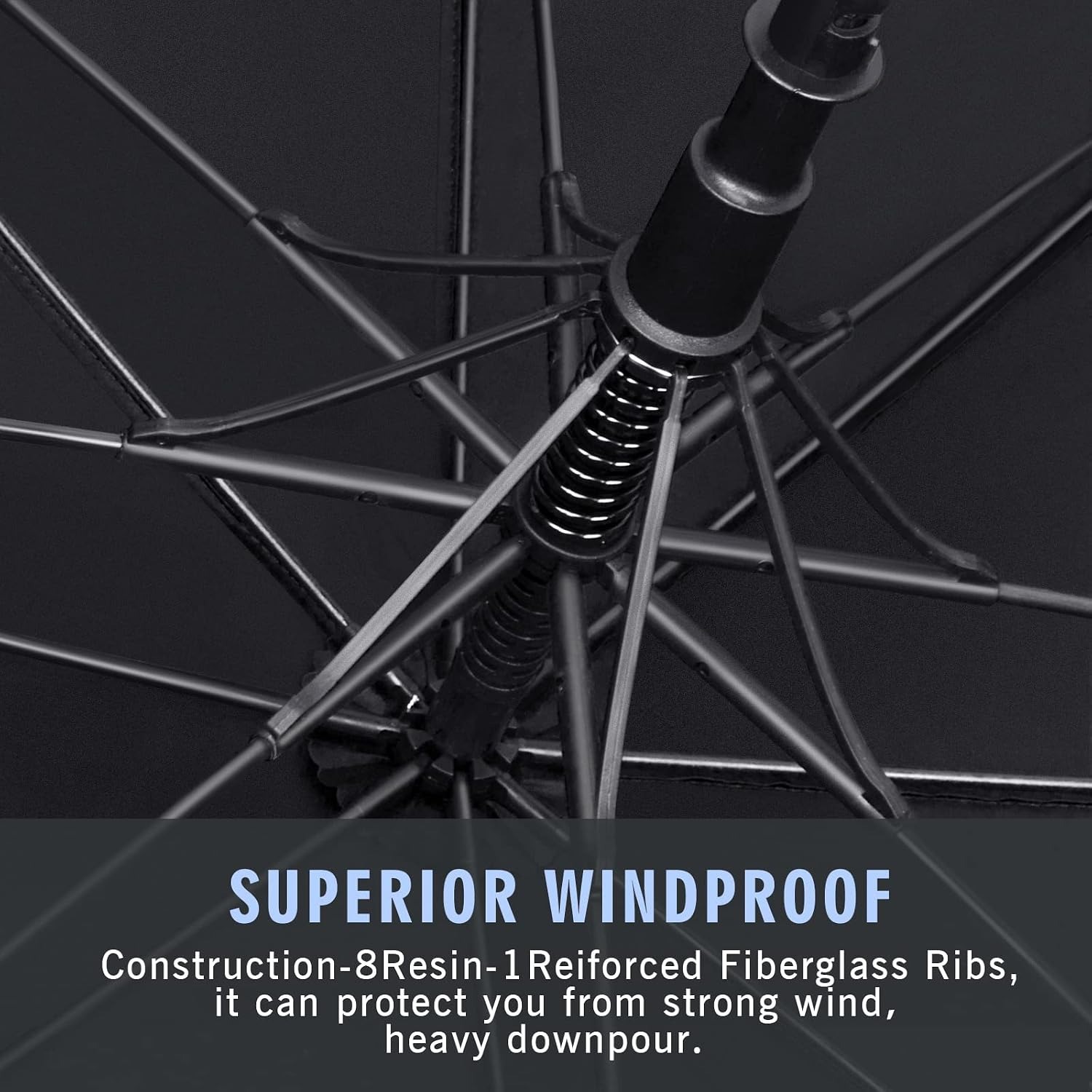
When wind hits the umbrella from below, instead of pressing against a sealed dome it pushes up through the lower layer, through the vent, and out the top. The pressure gets released rather than building. The ribs feel a fraction of the load, and the canopy stays the shape it is meant to be.
Rain does not come through, because the upper layer sits over the vent like a lid. Water runs down the outside of the top layer and drips off the edge, well clear of you. It is the same principle used in tent flies and market awnings, and it has been around a long time because it works.
The practical result is that a vented double canopy golf umbrella keeps working in conditions where a flat single canopy has already folded. You still would not take it out in a genuine storm, but the ordinary blustery day that ruins cheap umbrellas becomes a non-event.
Who this suits
Golfers are the obvious group, and the design clearly comes from that world. If you walk rather than ride, the weight matters, and at roughly 730 grams this one is comfortable to carry for a full round. If you ride, the slim 5 cm folded profile sits neatly in a buggy holder.
But the people who get the most use out of a large wind resistant umbrella are often not golfers at all. Think about anyone who spends time standing still outdoors. Parents at junior football on an exposed pitch. Dog walkers crossing open fields. Someone waiting on a train platform with a canopy that stops two metres short of where they stand. Race day, market stalls, outdoor photography, camping trips. All the same problem, all solved by the same tool.
It is also a sensible thing to keep in a car permanently. Folded, it measures about a metre long and lies flat along the side of a boot, where it takes up space you were not using anyway.
How to choose the right one
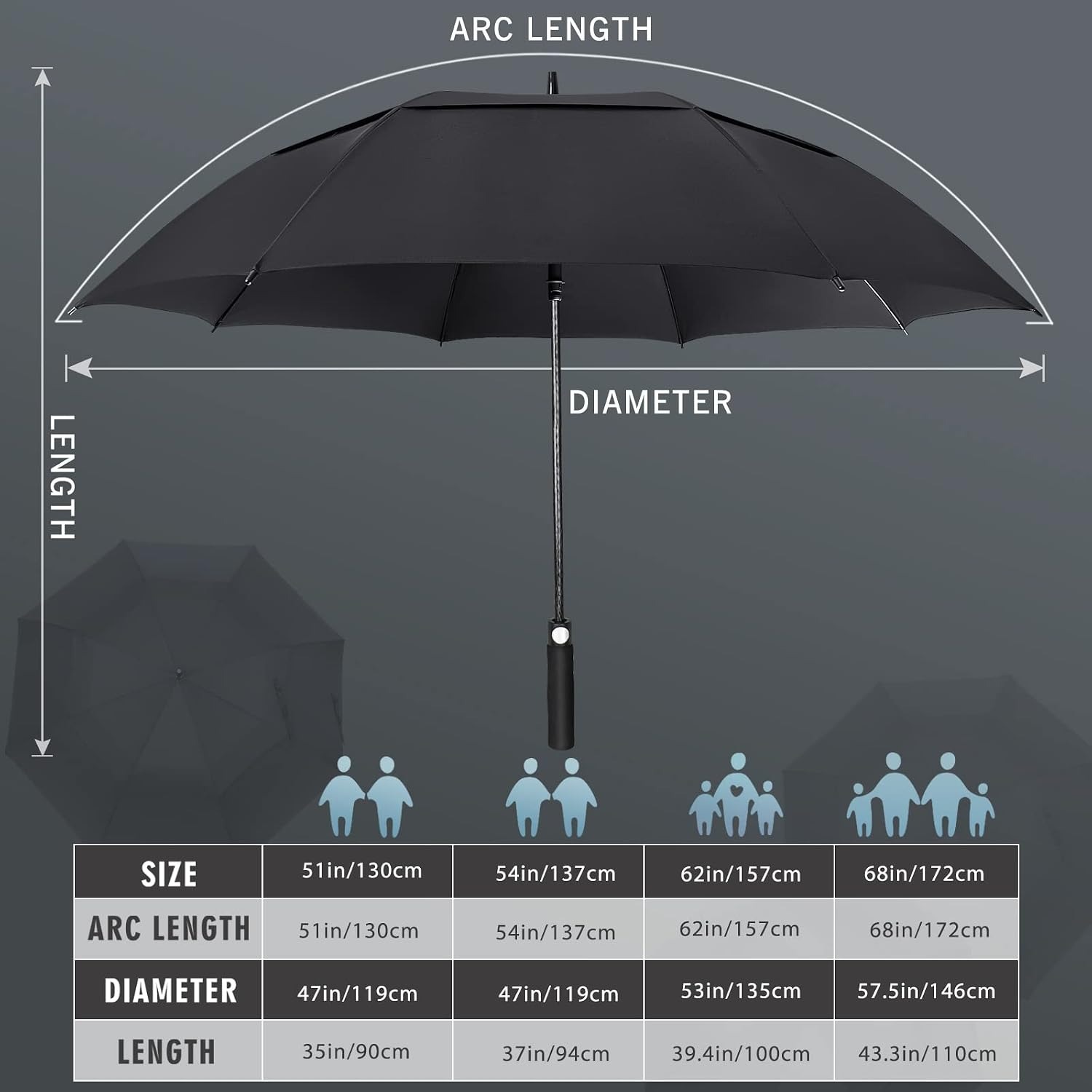
Start with canopy span. This is the single thing that determines whether you stay dry. A commuter umbrella covers your head and maybe one shoulder. A full-size golf canopy covers your whole body, your bag, and whoever is standing next to you. If you regularly carry a golf bag, you want enough span to angle the umbrella over the grips while you are walking, because wet grips cost you shots.
Then look at venting. Any umbrella sold as windproof should have a vent of some kind. A double canopy is the most effective version because the overlap is generous and the vent runs the whole way around. Some cheaper umbrellas have small mesh panels instead, which help a little but not nearly as much.
Check the folded dimensions against where you plan to store it. This one folds to 99.99 x 5 x 5 cm. That fits a golf bag, a car boot, a hall cupboard and a large suitcase. It does not fit a backpack or a handbag, and it never will, because a full-size umbrella cannot shrink that far. If you need something pocketable, a golf umbrella is the wrong tool and you want a compact instead.
Weigh it up, literally. Umbrella weight ranges from about 400 grams for lightweight compacts to well over a kilogram for heavy steel-framed models. Around 730 grams sits in a good middle zone for a full-size canopy. Light enough to carry all day, substantial enough to feel like it will not disintegrate.
Think about the handle. You will be holding it for hours in the rain, so grip comfort matters more than people expect. A handle that is too thin gets tiring, and a slippery one is a nuisance with wet hands.
Using it well on the course
Hold the umbrella at an angle into the wind rather than straight overhead. Tilting the canopy towards the gust means the air slides over the top instead of catching underneath, and it also keeps the rain off your front rather than letting it blow under the edge.
Between shots, lean the umbrella over your bag or clip it into the buggy holder so your grips and towel stay dry. A dry grip is worth more than a dry shirt.
When you are about to play a shot, close the umbrella properly and lay it down rather than propping it somewhere it can roll or blow away. An umbrella skittering across a green mid-putt is a quick way to lose friends.
If a gust does catch you and the canopy flips, do not wrestle it back by hand. Close it, point it into the wind, and let the air push it back the right way. Then open it slowly. Most permanent rib damage happens when people force the frame.
Looking after it
The single biggest thing you can do to make an umbrella last is to dry it properly. Open it after a wet round, stand it somewhere with some air movement, and leave it until the fabric is dry to the touch. Closing a soaked umbrella and stuffing it into a bag is how canopies end up smelling musty and developing those grey speckled marks.
If it picks up mud or grass, wipe it down with a damp cloth and a little mild soapy water, rinse with clean water, then air dry it open. Skip the washing machine, the tumble dryer and the iron. Heat and agitation damage both the stitching and the water-shedding surface of the fabric.
Store it dry and closed. Avoid piling heavy shopping on top of it in the boot, because constant pressure on the folded ribs will eventually bend something. If a rib does bend, a gentle straighten by hand sometimes fixes it, but prevention is a lot easier.
The short version
A golf umbrella is not really about golf. It is about having enough canopy and enough venting to stay dry when there is nothing around you to block the wind.
This one gives you a vented double canopy that lets gusts escape rather than fighting them, a full-size span that covers you and your clubs together, and a carry weight of about 730 grams that will not wear your arm out over eighteen holes. Folded to 99.99 cm, it stows along a golf bag, in a buggy holder or flat in a car boot.
If you have been replacing cheap umbrellas every winter, the fix is a bigger canopy with somewhere for the air to go. Dry it out after each use and it should see you through a lot of wet rounds.