
The complete guide
How To Choose A Golf Rangefinder With Slope (Buyer's Guide)
The problem is not your swing, it is your information
Think about the last few holes where you dropped a shot. Odds are at least one of them went like this. You were somewhere around 150 out, you took the club you always take from 150, and the ball came up short in the front bunker. The swing was fine. The yardage was not 150. It was 162, uphill, into a half-breeze, and you had no way of knowing.
Course markers help, but they are measured to the middle of the green and the pin moves every day. Sprinkler heads help a bit more, and they are still measured to a fixed point rather than to the flag. GPS apps give you front, middle and back, which is useful, but they do not tell you where today's pin sits on a thirty-metre green.
A laser golf rangefinder closes that gap. You put the reticle on the flag, press the button, and you get the actual distance to the actual target. Everything downstream of that becomes easier. Club choice gets simpler. Commitment to the shot gets easier, because you are not arguing with yourself over the stick. And over a season, the number of shots you leave short of the green quietly drops.
How a laser rangefinder actually works
The device fires a short, invisible, eye-safe laser pulse at whatever you point it at. The pulse bounces off the target and returns, and the unit measures how long the round trip took. Light travels at a known speed, so time gives you distance. The whole thing happens faster than you can blink.
The complication in golf is that a flagstick is thin and there is usually a big green bank or a stand of trees directly behind it. Point a basic laser at a pin and it may well read the tree twenty metres further back. That is what flag lock solves. The filters for the nearer, narrower target and confirms the lock with a short vibration through the body. You feel the buzz, you know the reading is the pin, you put the device down and swing.
Seven times magnification matters here too. At 180 yards a flag is a sliver. Pulling it in seven times makes it an object you can actually hold the reticle on. The transflective LCD is the other half of that equation, since a display you cannot read at noon in February is not much help.
Slope, and why the switch is the important bit
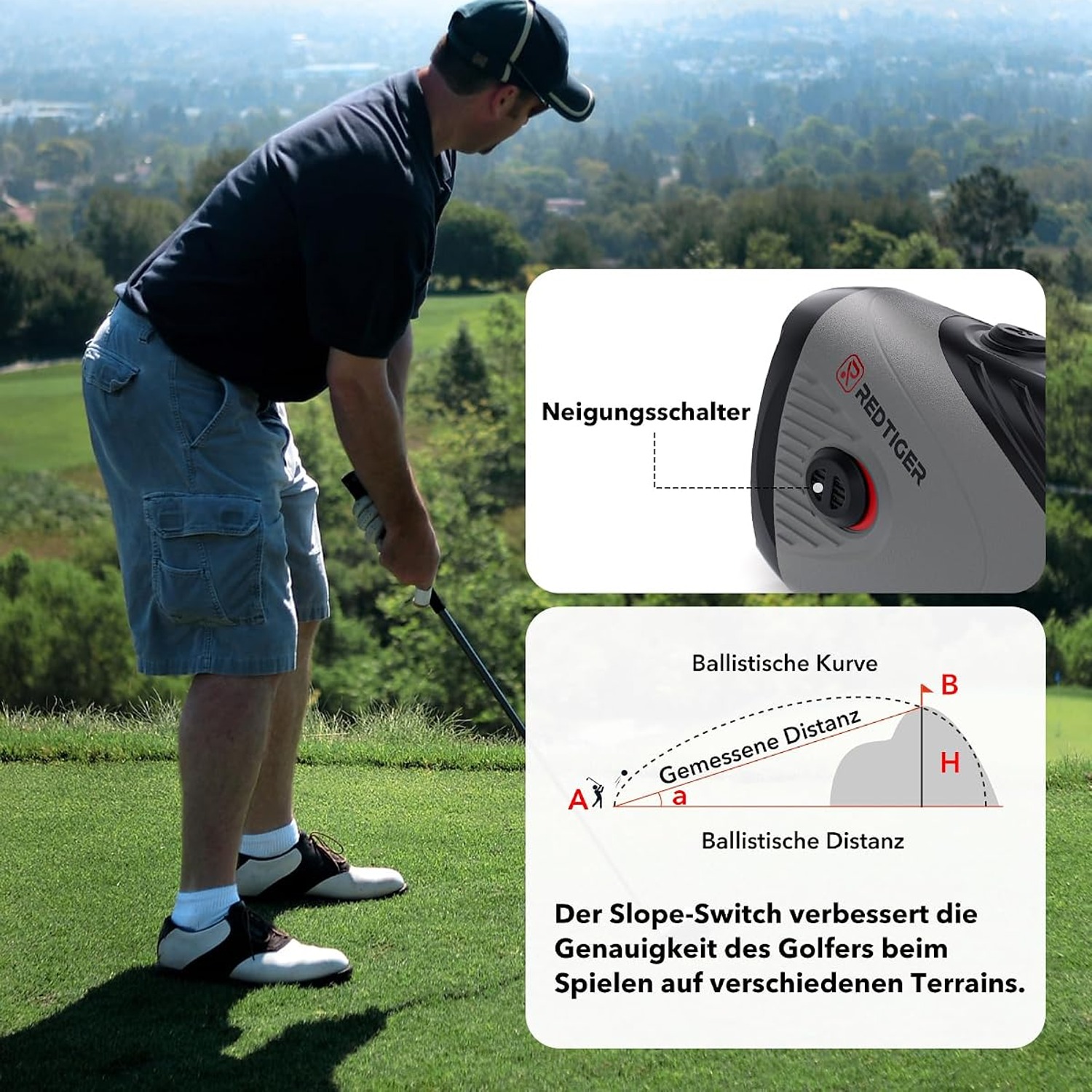
Slope compensation is the feature people buy for and then misunderstand. All it does is factor in elevation. If the green sits ten metres above you, the ball has to travel further through the air than the flat line-of-sight distance suggests, so the unit gives you an adjusted "plays like" figure. Downhill works the other way.
This is genuinely useful on hilly courses and on any hole with a raised or sunken green. It is also the reason a slope switch rangefinder is worth more than a non-slope model, because you learn something every time you use it. After a few rounds you start to get a feel for what a given rise adds, which is knowledge you carry even when you are not pointing the laser at anything.
Then there is the rules question. Under the Rules of Golf, distance-measuring devices are generally allowed in competition, but features that measure or interpret elevation change are not. That is why the switch exists. With slope turned off, the device gives a plain line-of-sight distance and becomes a tournament legal rangefinder. Switch it back on for practice, casual rounds and your own course knowledge. One unit, two jobs. Always confirm your club or committee's local rule before a counting round, because the final call is theirs.
The six modes and when you would use each
Flag lock is your default and will cover the majority of shots. Slope compensation layers on top of it for practice. Horizontal and height ranging give you the flat distance and the vertical change separately, which is useful for understanding a hole rather than just playing it.
Continuous scan is the one most people underuse. Hold the button down and sweep. The reading updates live as you pass over the front bunker, the front edge, the pin and the back edge. In five seconds you have a picture of the whole green complex, and you know whether the miss should be short or long. That is better course management than a single number to the flag.
Speed mode reads moving objects in km/h or mp/h. It is a bonus feature rather than a core one, though some players point it at ball flight on the range for a rough sense of speed.
Who this suits
Beginners get the most immediate benefit, which surprises people. If you are new to the game, you do not yet know how far you hit a seven iron, and you never will while every shot is a guess. Use it for a dozen rounds and your distances stop being theory. A good golf yardage finder is an education.
Mid-handicappers gain mostly from decision quality. You are already striking the ball reasonably. Giving yourself the right number stops the bogeys that come from being one club light.
Better players use it for precision work, mainly edges and hazards. Front edge, back edge, the lip of the bunker you need to carry. That is where a 7x golf rangefinder with continuous scan earns its spot in the bag.
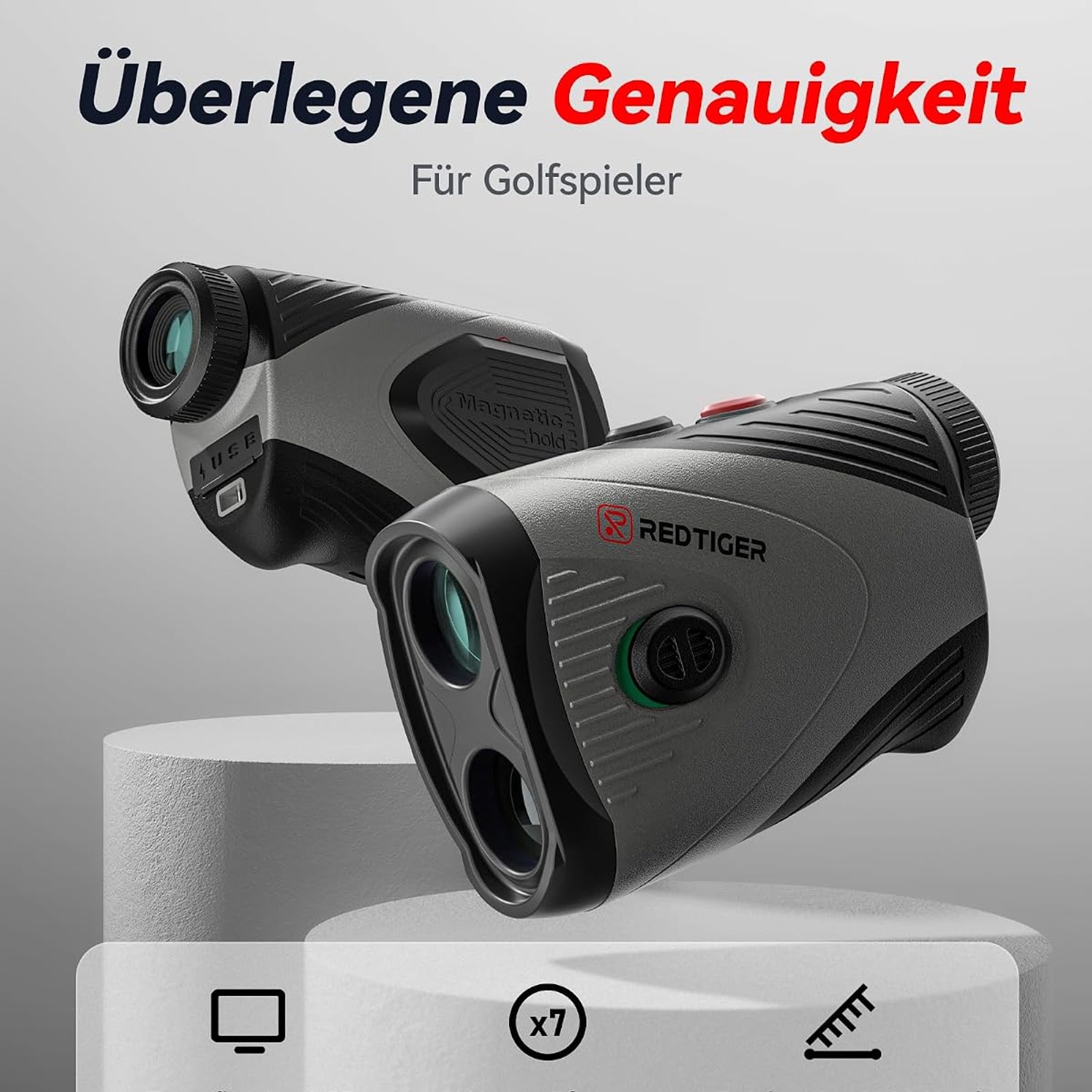
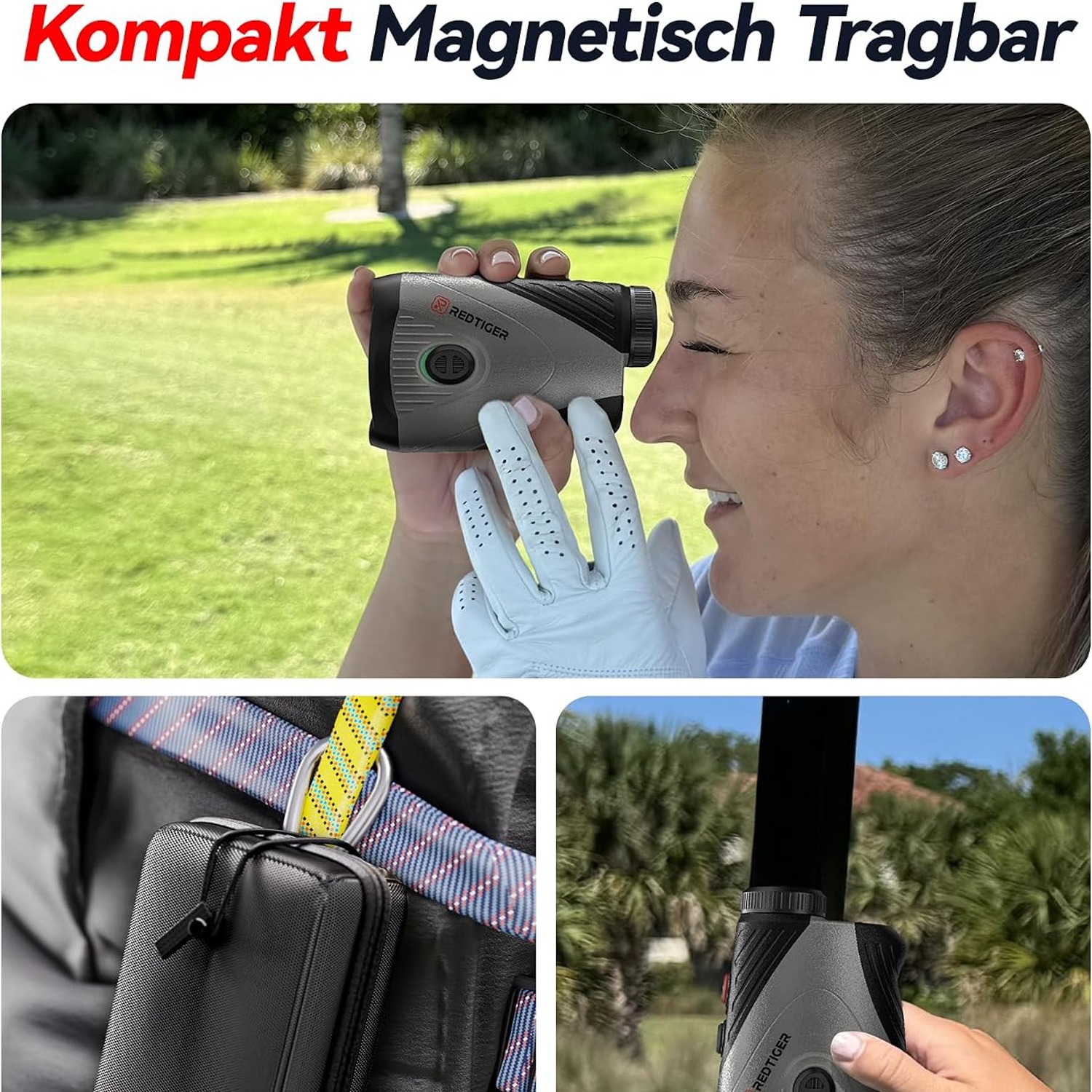
If you ride a cart, the magnetic strip is a small thing that you will appreciate every hole. Park the unit on the frame, grab it when you need it, no zipping and unzipping. If you walk, the magnetic belt clip does the same job on your bag strap or belt.
What to look for when comparing models
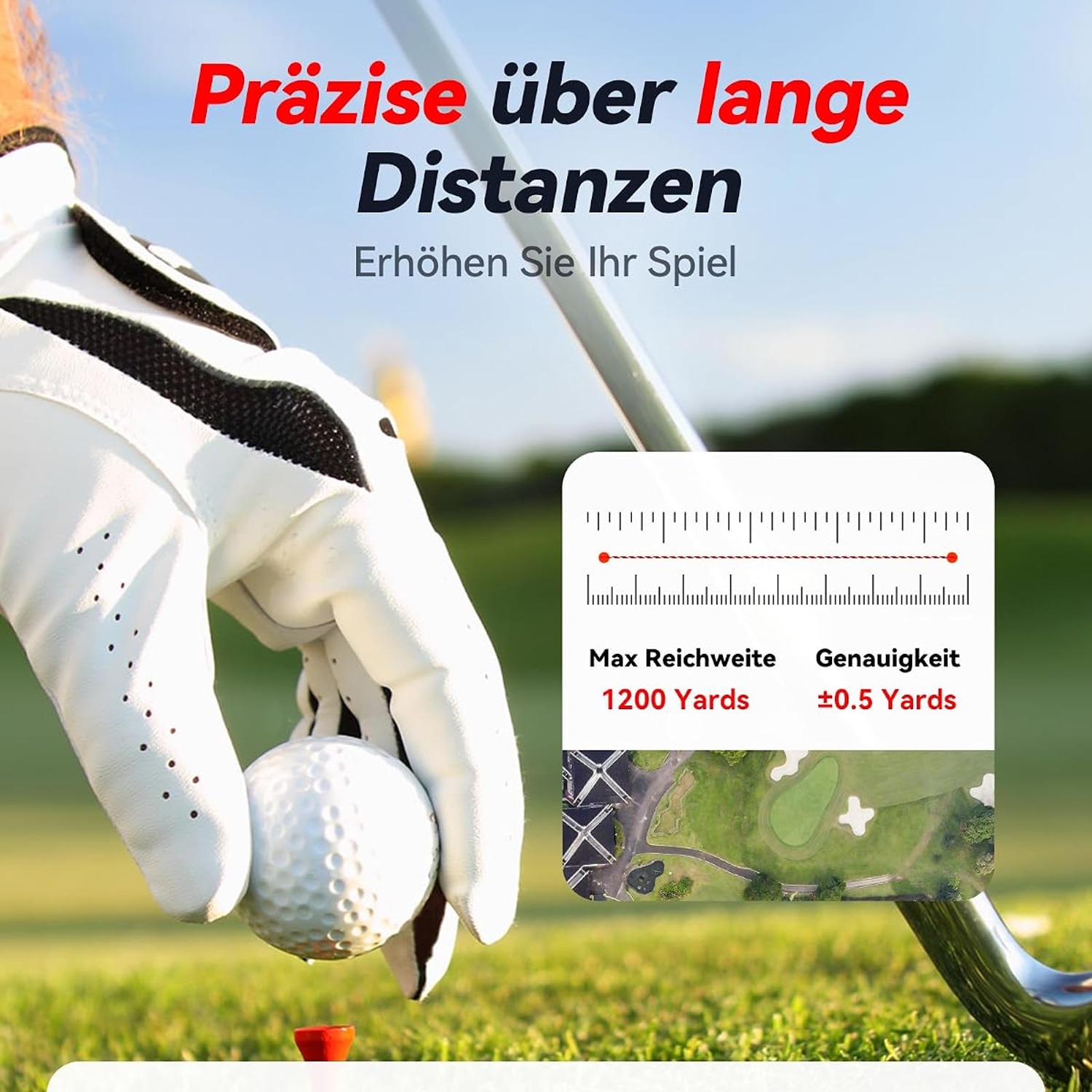
Range figures get quoted loudly and matter least. A 1200 yard range finder reach sounds impressive, and you will almost never use half of it. What matters is reliable locking at normal golf distances, which comes down to flag lock quality and magnification rather than headline range.
Accuracy to half a yard is plenty. Anything tighter is marketing.
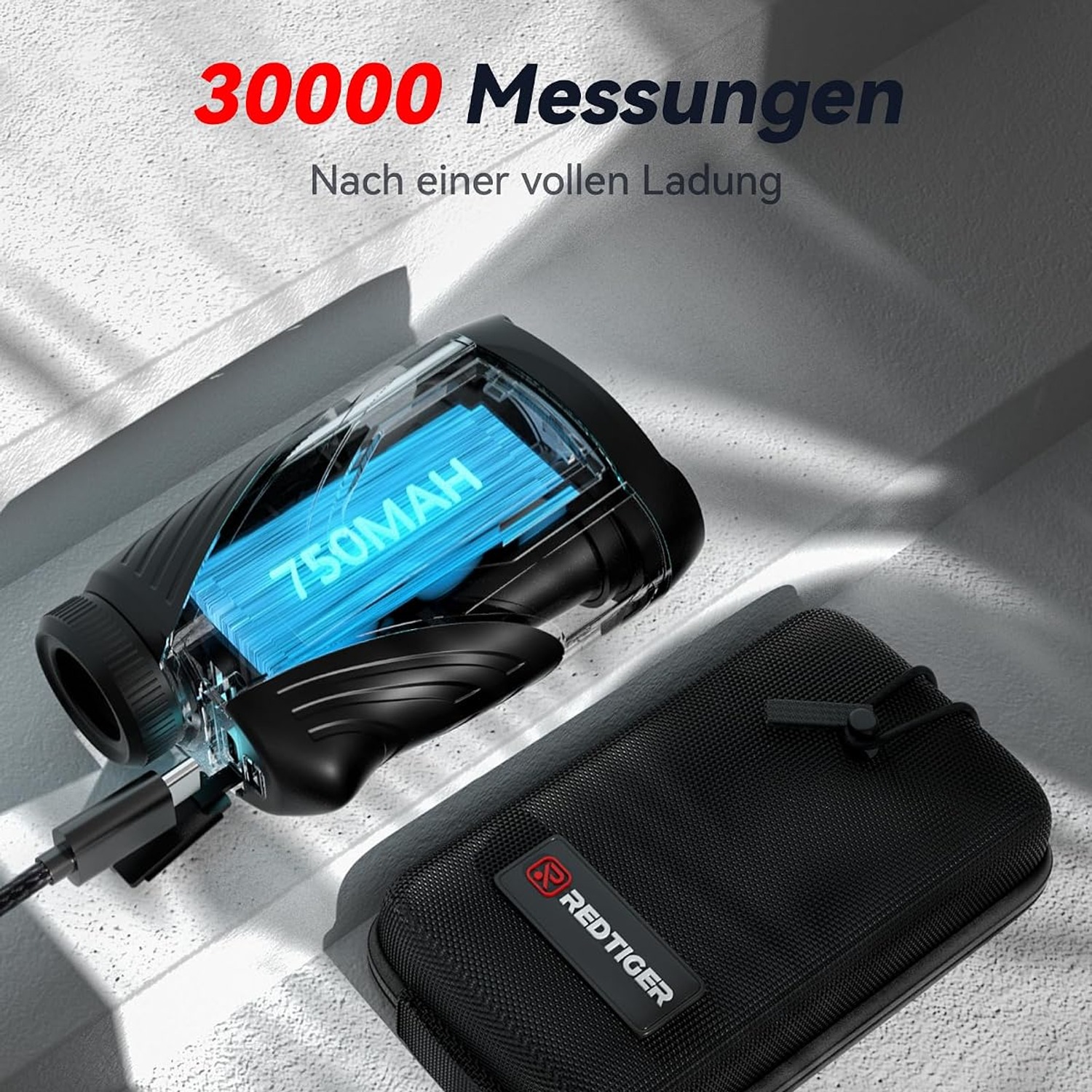
Battery type is worth checking. A rechargeable golf rangefinder with USB-C, as here, means no hunting for an odd-sized coin cell on a Sunday morning. The 5V/2A input is standard, so any phone charger or power bank covers it. A visible power level display saves you from the mid-round flat battery.
Weather sealing is the last practical item. IP54 covers dust and splashing water. That is the right level for golf, where you get rain, dew and the odd damp towel, but you are not dunking the thing in a creek. Do not treat an IP54 water resistant rangefinder as submersible.
Size and weight influence whether you actually carry it. At 11.5 x 4.5 x 7.4 cm and 0.4 lb, this one sits in a jacket pocket or a bag pouch without being noticed.
Looking after it
Lenses first. Use a microfibre cloth and nothing else. A shirt tail carries grit and will scratch the coating, and paper towel is abrasive. If there is mud or sand on the glass, blow it off before you wipe.
For the body, a slightly damp cloth is fine, followed by a dry one. Avoid solvents. Let it dry before it goes back in the bag, because trapping moisture in a pocket is how electronics quietly die.
Charge it with a normal USB-C cable. If it is going into storage over winter, leave some charge in the battery rather than running it flat, and keep it somewhere dry and not too hot. A car boot in summer is the worst place for any lithium battery.
The short version
If you are picking clubs by feel and course markers, you are giving away strokes that have nothing to do with your swing. A golf rangefinder with slope gives you the real number, and the slope switch means the same device works for your weekend comp and your practice rounds.
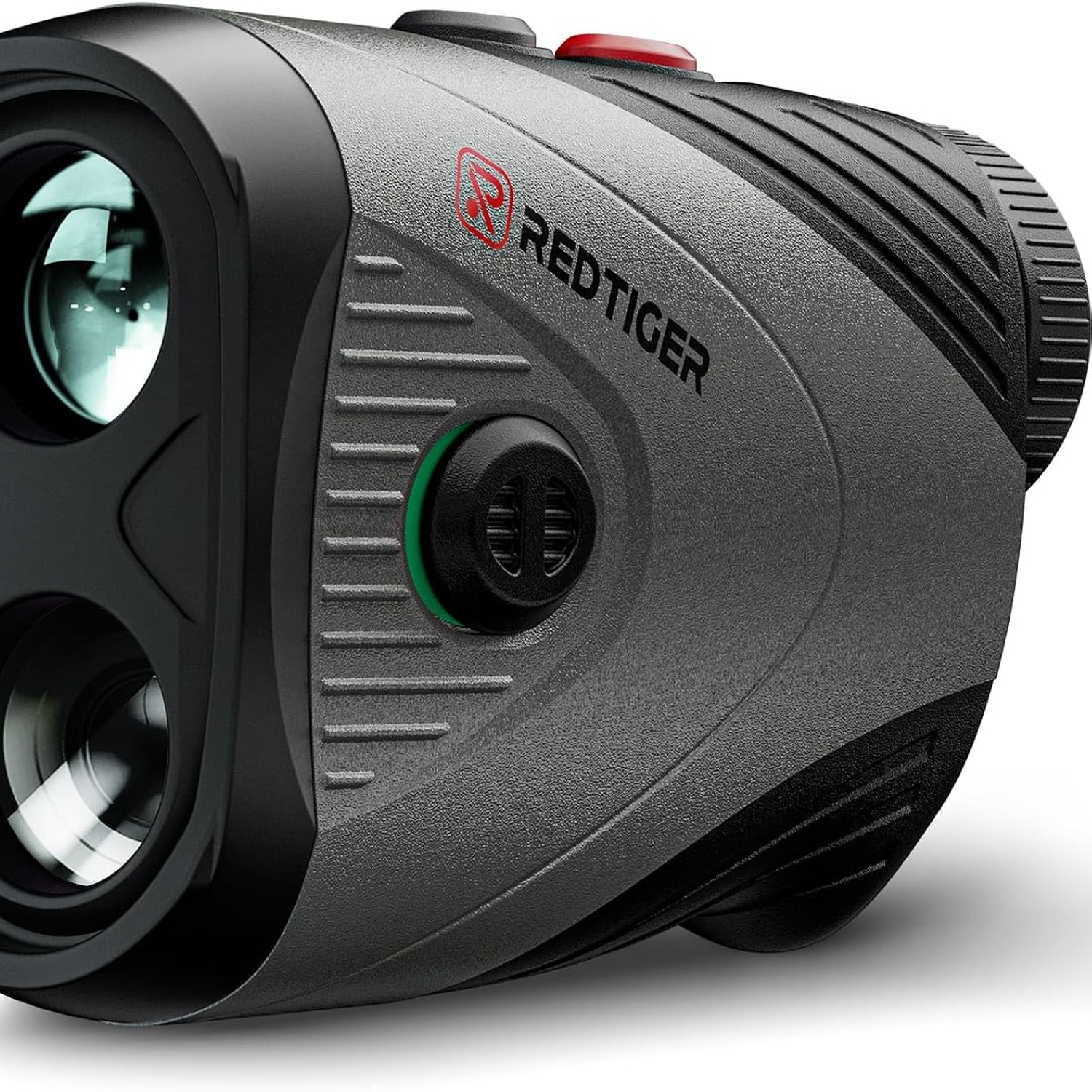
The covers the bases that matter. Flag lock with a vibration you can feel, 7x magnification and a display that holds up in sun, six modes including continuous scan, 0.5 yard accuracy out to 1200 yards, USB-C charging, IP54 sealing, a magnetic mount and belt clip, and a 2 year warranty behind it.
Buy it, use it for a month, and you will not want to play a round without it.