
The complete guide
How to Choose Golf Balls That Actually Suit Your Game
The ball is the one club you use on every shot
Think about a normal round. You might hit driver fourteen times. You might hit your 7-iron four or five times. The ball? It is involved in every single stroke, including the thirty or so putts that make up the biggest chunk of your score. Yet it is usually the last thing anyone thinks about.
Part of the reason is that the differences are hard to see. One white sphere looks a lot like another. The differences live in the cover material, the core, and how many layers sit between them, and none of that is visible from the outside. So most people pick on price, or on what was on the counter, and never find out whether a different ball would have helped.
That is the gap this guide is trying to close.
What the cover does
The cover is the part that touches the clubface, so it has an outsized effect on feel and on short-game spin.
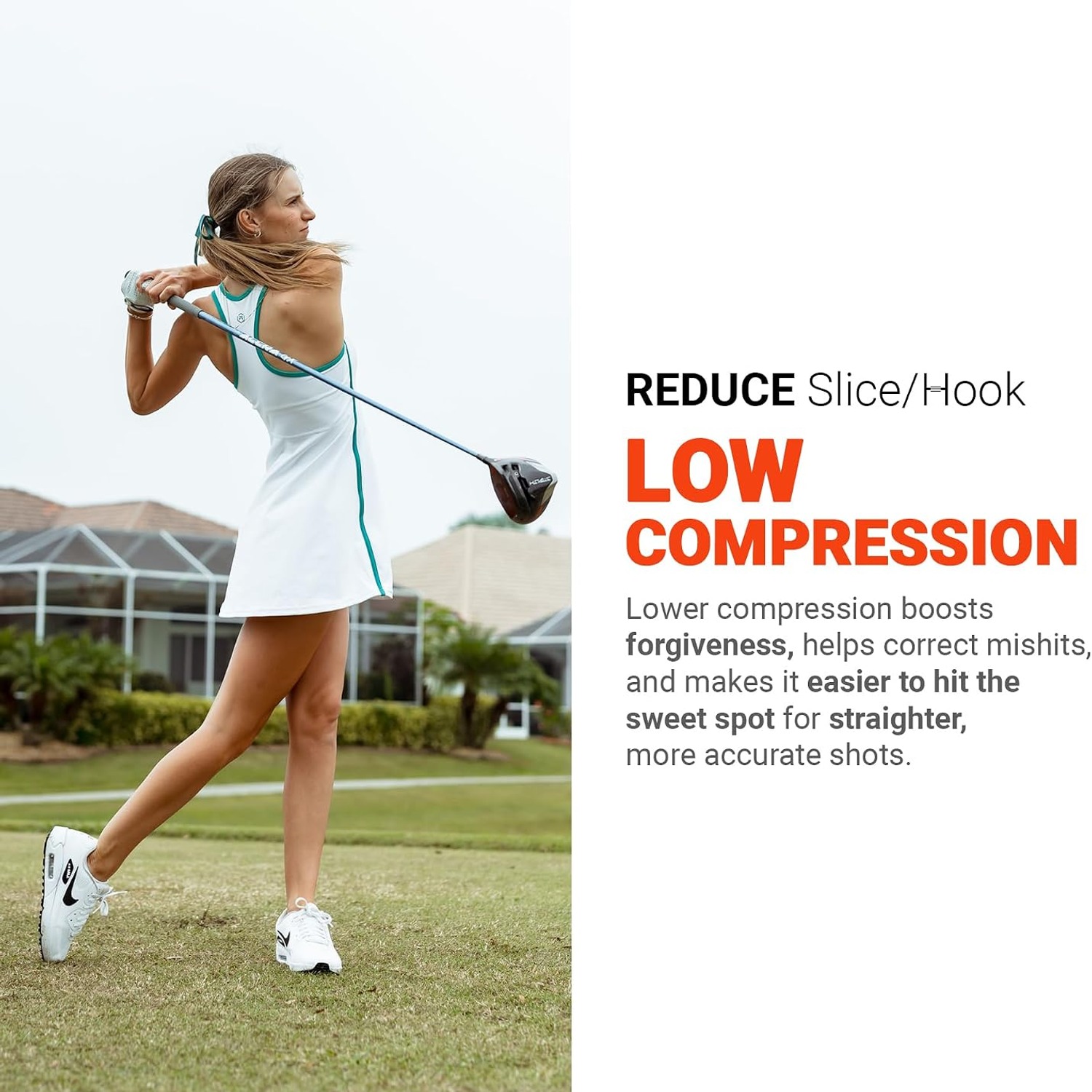
Two materials dominate. Ionomer, often sold under the Surlyn name, is harder and very tough. It resists cuts, lasts a long time, and tends to spin less. That low spin can be helpful on a driver if you slice, because less sidespin means less curve, but it works against you on a wedge shot where you want the ball to stop.
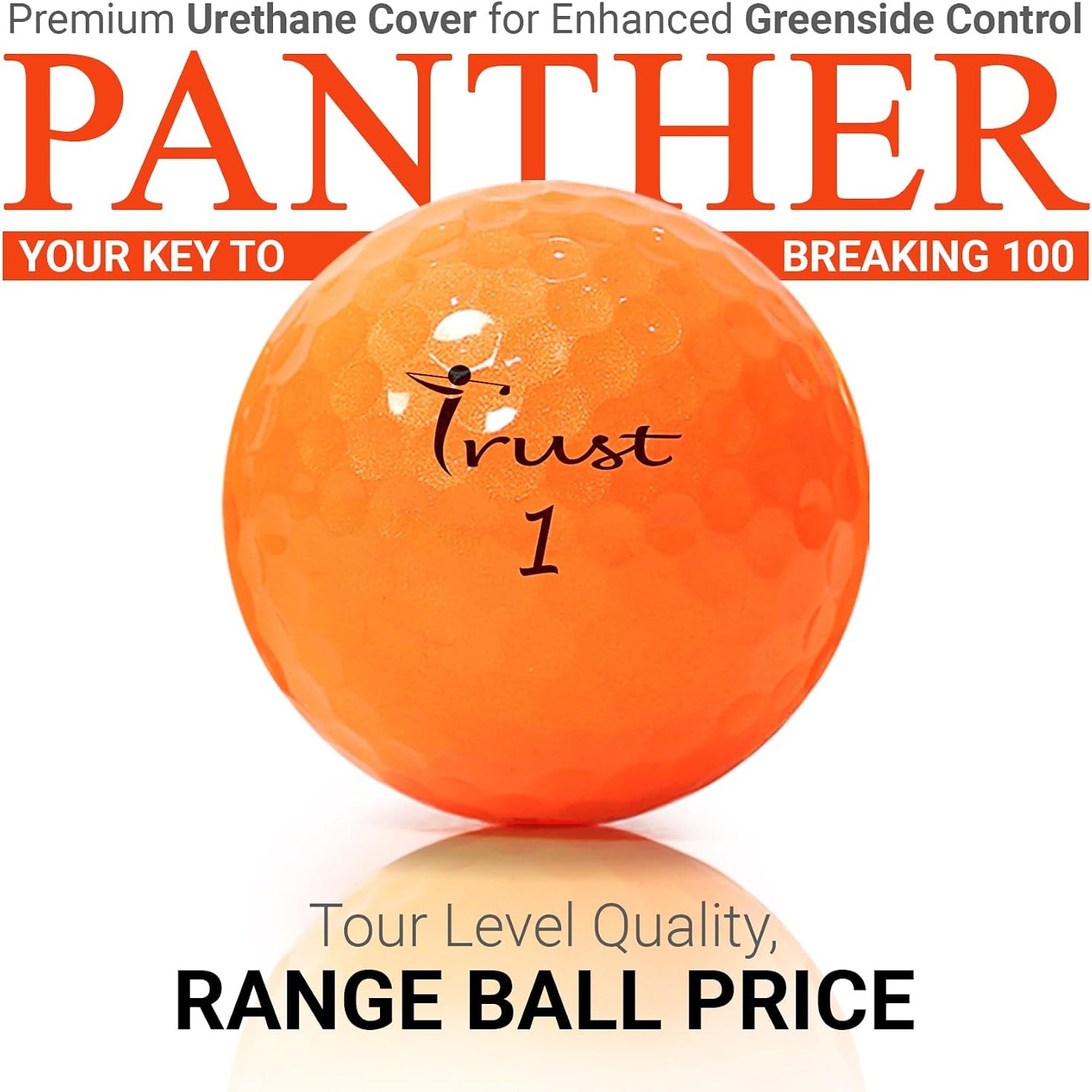
Urethane is the other option. It is softer and grippier, and it is what nearly every tour-level ball uses. The grooves on your wedge can dig into a urethane cover and generate friction, which is what creates spin. It also changes how the ball sounds and feels off the putter, usually quieter and less clicky.
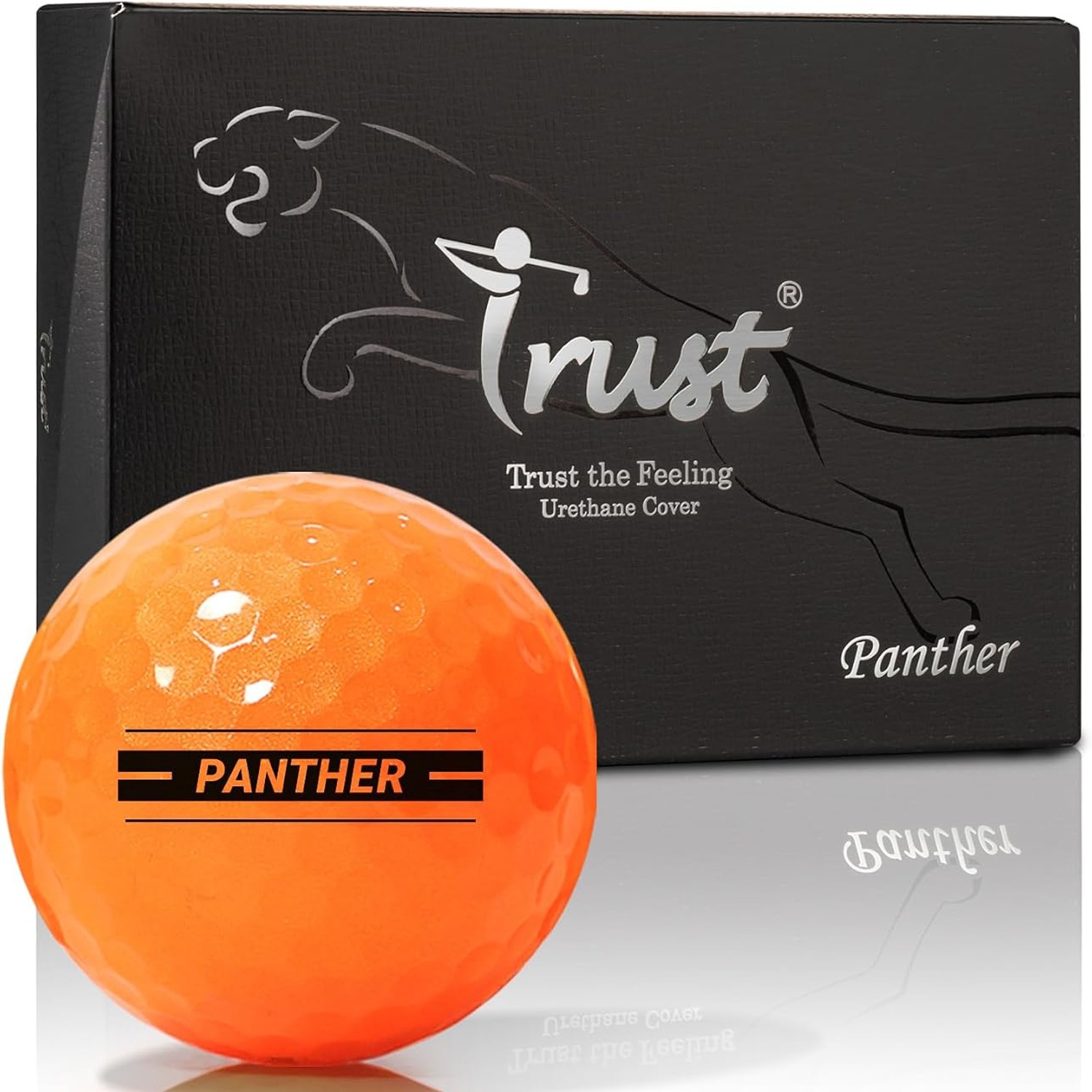
The uses a urethane cover, and it is a thin one. That is the headline feature here, because historically urethane covers were reserved for expensive multi-layer balls.
What the core does
If the cover handles the short game, the core handles the long game.
When your driver hits the ball, the ball squashes flat for about half a millisecond, then springs back. How efficiently it springs back is measured as COR, the coefficient of restitution. A higher COR means more of your swing energy ends up as ball speed instead of being lost as heat.
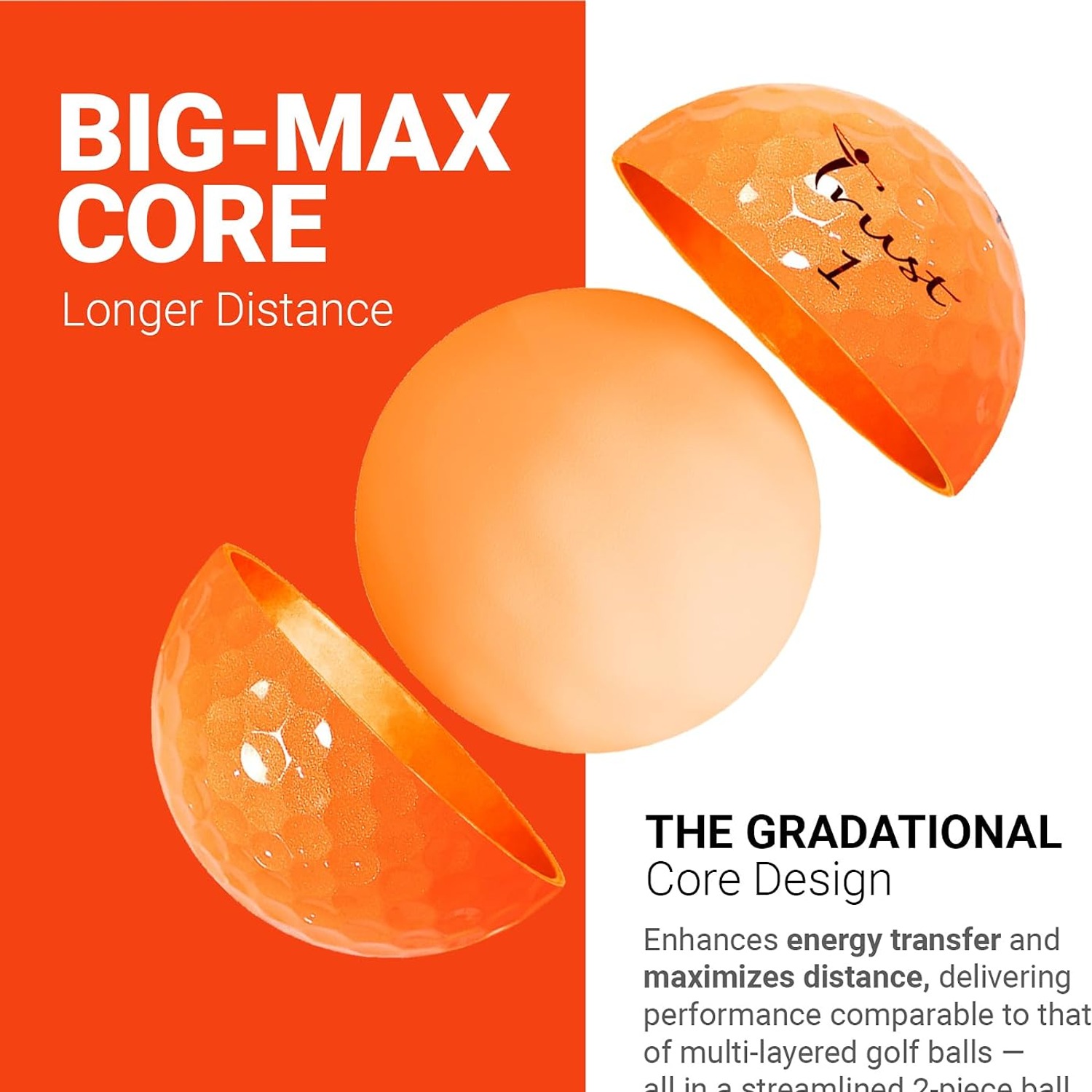
This ball uses what Trust calls a Big Max COR core. The point of a high-energy core in a two-piece ball is to stop the soft cover costing you distance. Soft feel and long distance pull in opposite directions, and the core is where that fight gets settled.
Two layers versus four or five
A tour ball typically has four or five layers. There is a core, then one or two mantle layers, then the cover. Each layer compresses at a different swing speed, which lets designers separate behaviours. The idea is low spin on a hard driver swing and high spin on a soft wedge swing from the same ball.
Two-piece balls cannot do that trick. They have one core and one cover, so spin characteristics are more consistent across clubs. The upside is that they are simpler to make, generally tougher, and much cheaper.
For most club golfers, the extra layers in a tour ball are solving a problem they do not have. If your driver swing is not fast enough to compress a firm four-layer ball properly, you get the cost of the technology without the benefit. A two-piece ball with a urethane cover gives you the part that helps most people (the short-game cover) without the part that mainly helps fast swingers.
Why colour is not just a style choice
Orange balls used to be a novelty. They are not any more, and the reason is practical.
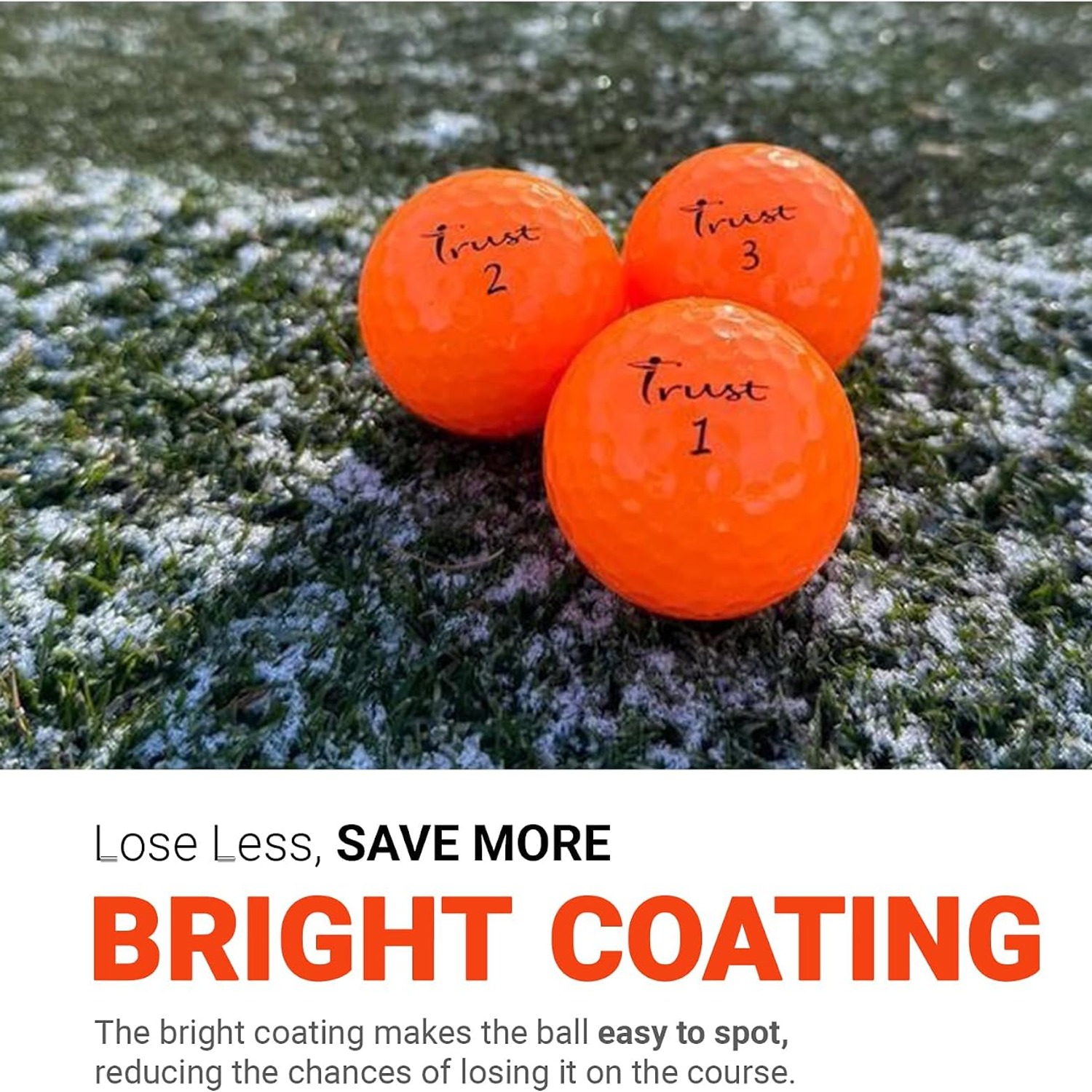
Grass is green, leaf litter is brown, and white balls sit somewhere in between. Under grey cloud or late evening light, a white ball in semi-rough can be genuinely hard to spot from thirty metres away. Orange has almost no competition from the natural colours on a golf course, which is why it jumps out.
Two groups benefit most. Players who still miss a few fairways will find more balls, which saves money and keeps pace of play reasonable. And anyone playing in autumn or winter, when light is poor and leaves are down, will notice the difference quickly. The best orange golf balls earn their keep in exactly those conditions.
Tracking in flight is the other advantage. Plenty of players find a coloured ball easier to follow against a bright sky, especially as eyesight changes with age.
Working out what suits you
There is a simple way to narrow things down. Ask yourself where you lose shots.
If you lose shots with three-putts and chunky chips, your short game needs help, and the cover material is where you should look. A urethane cover will give you more to work with around the green, and the softer feel makes distance control on putts easier to judge.
If you lose shots off the tee because the ball curves into trouble, you have a swing issue more than a ball issue, but a lower-spinning ball will curve slightly less. If you lose shots because you simply cannot reach par fours in two, core efficiency matters more than cover spin.
And if you lose shots because you cannot find the ball, colour is your answer. That sounds flippant, but penalty strokes from lost balls cost real scores.
Most mid-handicappers sit in the middle of all this, which is exactly where a urethane-covered two-piece ball makes sense. It is the reason this category keeps growing.
Testing it properly
Here is the mistake almost everyone makes. They play one round with a new ball, hit a good drive, and decide it is a great ball. Or they hit a bad one and write it off.
A better test takes two things. First, play the same ball for at least three or four rounds so you learn its carry distances with your wedges. Second, do a side-by-side on the practice green. Hit ten putts from the same spot with your current ball, then ten with the new one, and see which gives you better distance control.
Chipping is the other place to test. Take both balls to a practice green with a reasonable lie and hit the same chip five times each. The urethane ball should check up sooner. If it does not, the lie or your technique is the limiting factor, not the ball.
Looking after them
Golf balls are not fragile, but a few habits help.
Clean them. Mud and grass in the dimples genuinely changes how the ball flies, and a dirty ball putts unpredictably. Warm water and a cloth is enough, and you should skip the solvents, which can dull a urethane cover.
Store them sensibly. A dry cupboard at room temperature is ideal. A car boot that hits fifty degrees in summer, then freezes in winter, is not doing them any favours over months.
Inspect them. Once a cover has a visible cut or a deep scuff, the ball no longer flies true. Move it to the practice bag. A urethane cover is softer than ionomer, so it will pick up marks a bit faster from cart paths and rakes.
Mark them. A dot of permanent marker takes two seconds and saves arguments about whose ball is whose in the rough.
The short version
The cover decides your short game. The core decides your long game. Layers beyond two mostly help fast swingers who need spin separation between driver and wedge.
This ball gives you a urethane cover, which is the part most club golfers notice, built onto a high-COR two-piece core so you do not give away distance to get soft feel. The orange finish is a practical addition rather than a gimmick, and twelve balls in the box is enough to actually learn how it behaves.
If you are currently playing a hard two-piece ball and wondering why your chips release past the hole every time, the cover is a good place to start looking.