

The complete guide
The Honest Guide to Choosing and Fitting Golf Grips
The problem nobody talks about on the range
Golfers will spend a thousand dollars chasing two miles an hour of ball speed and leave the same hardened grips on their irons for five seasons. It is an odd blind spot. The grip is the only piece of equipment your body actually touches, and when it goes off, nothing else in the club can compensate.
The trouble is that grips do not fail dramatically. They fade. Rubber slowly loses its oils, the surface pattern wears flat under your thumbs, and a film of skin oil, sunscreen and dirt builds up on top. Each round is fractionally worse than the last, which is exactly the kind of change the human brain is terrible at noticing. You just find yourself holding on a bit tighter. Then a bit tighter again.
Tight hands are the real cost. Grip pressure travels straight up your forearms into your shoulders, and tense arms do not swing fast or release properly. Plenty of players who think they have a swing fault actually have a grip problem. Fresh rubber lets you hold the club lightly and trust that it will stay where you put it.
What this set actually is
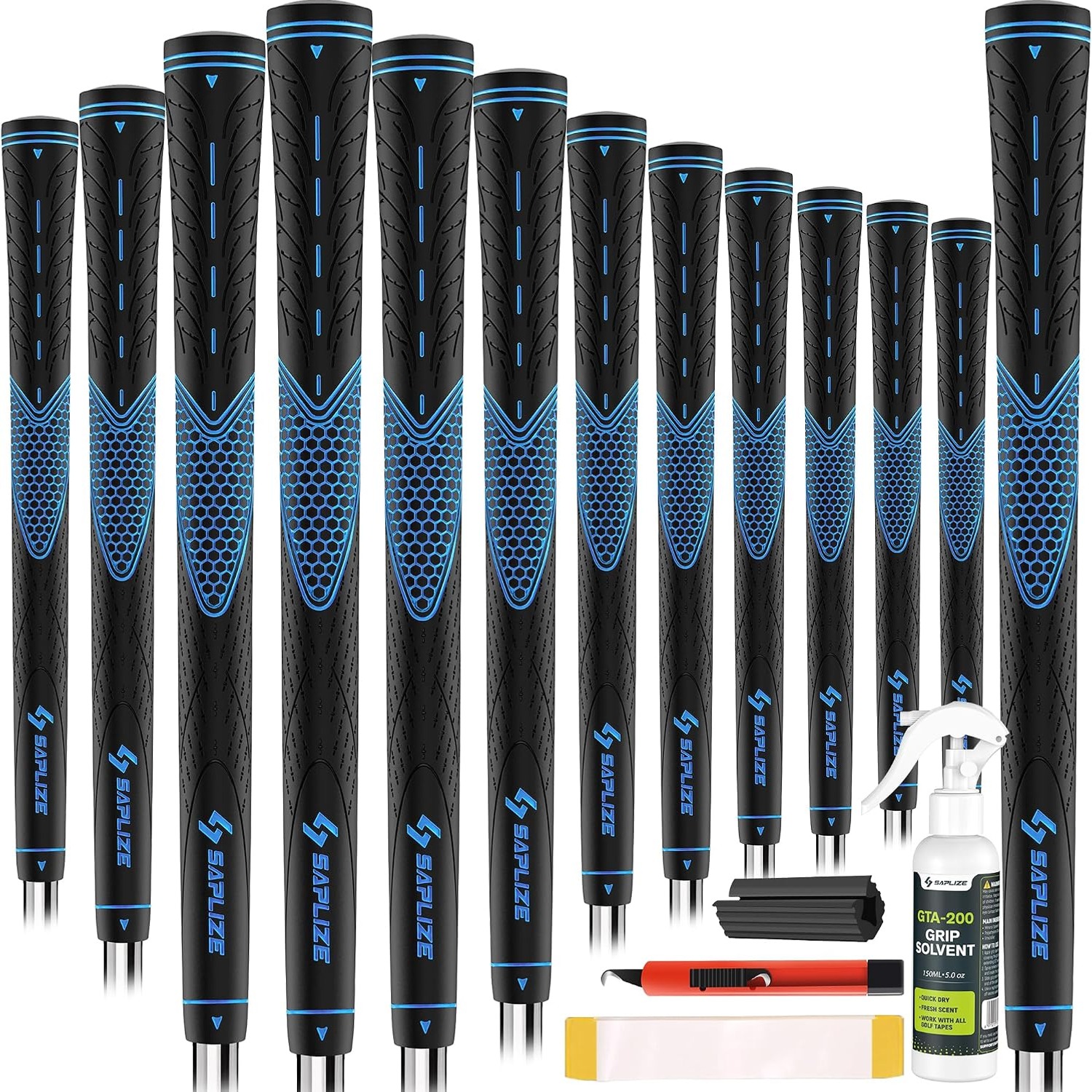
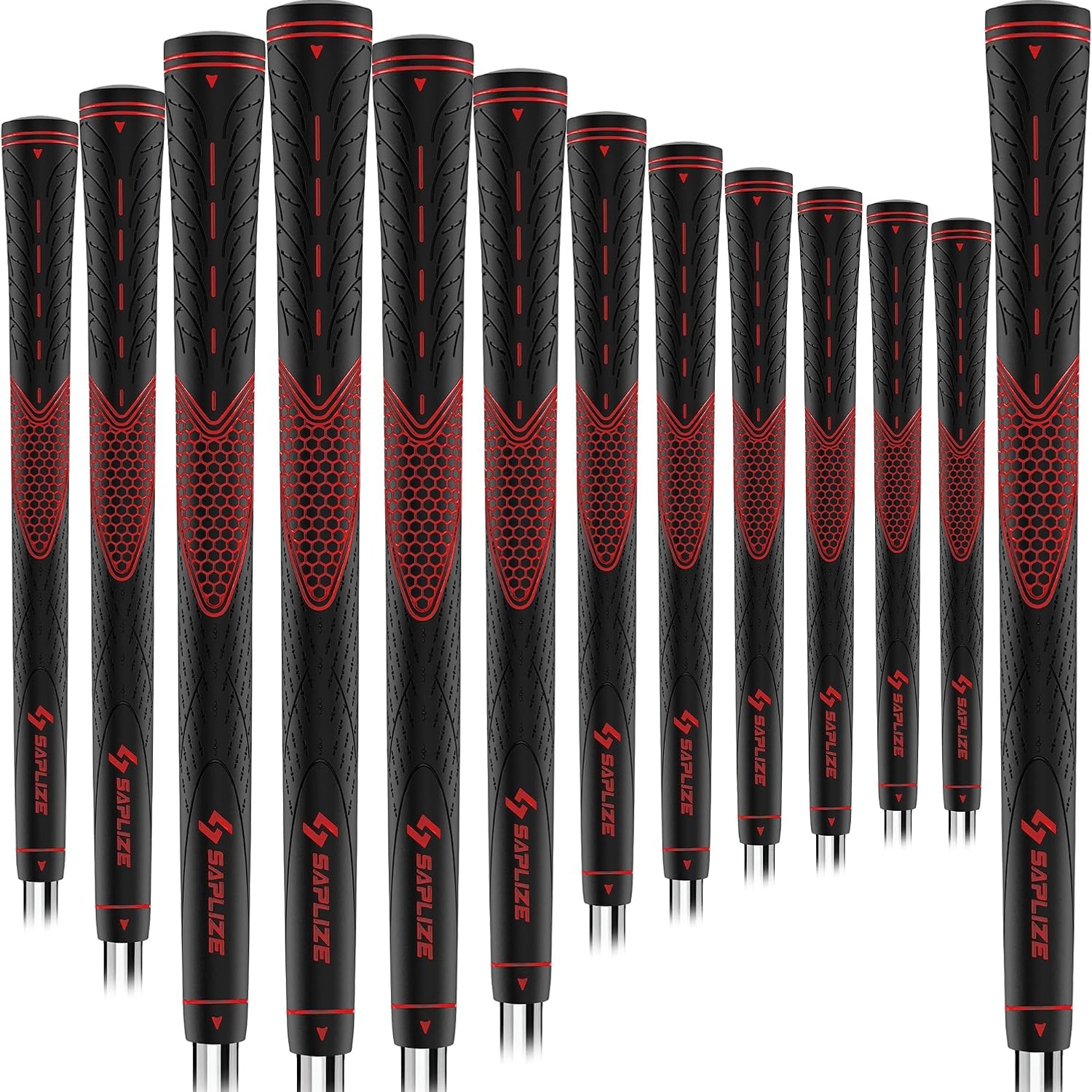
Thirteen rubber golf grips, standard size, in blue. Thirteen is the usual count for a full bag minus the putter, which takes a different shape of grip entirely. The listed dimensions are 26.9 cm long by 2.7 cm wide, and the whole pack weighs a kilogram.
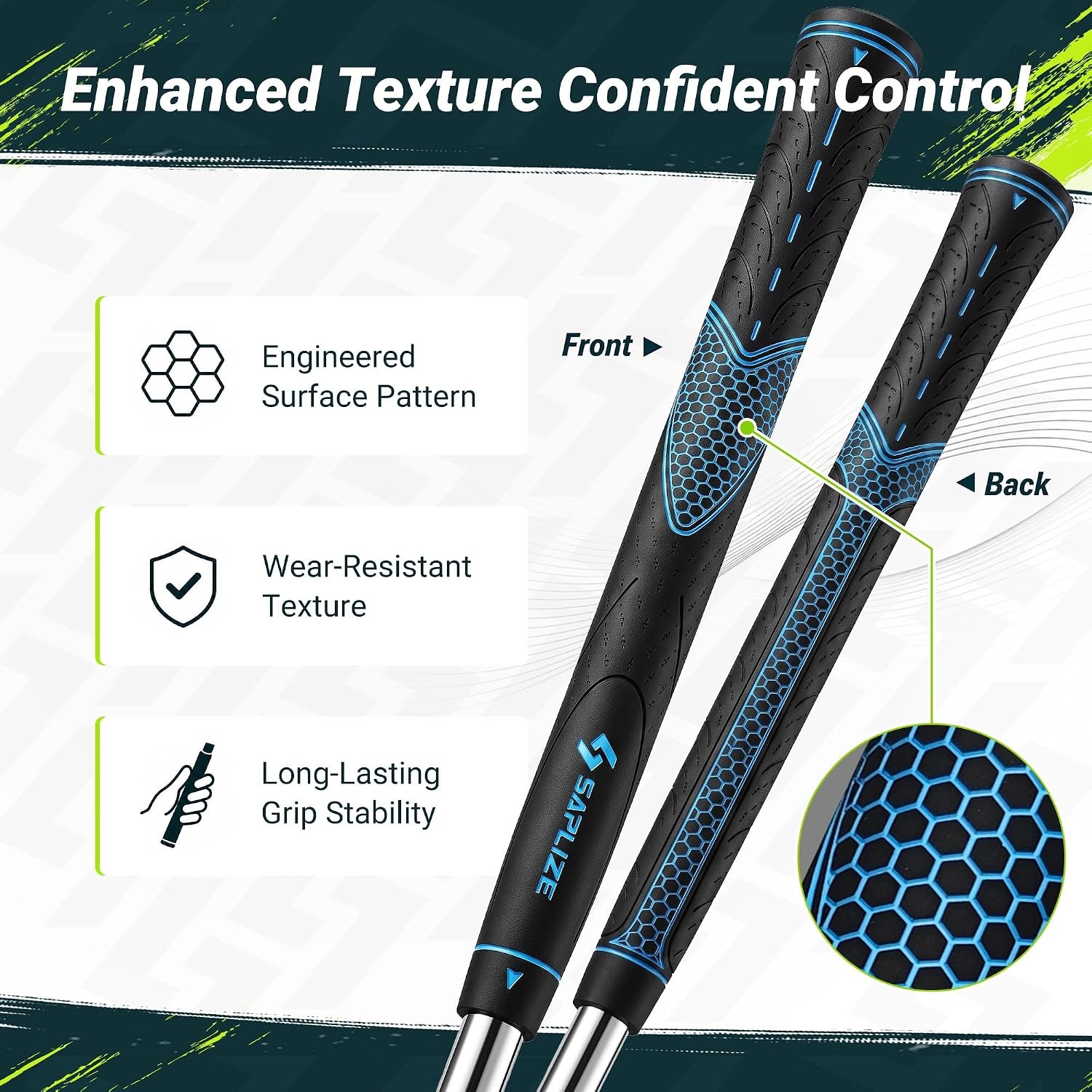
The surface is textured rather than smooth. That texture is the working part of the design, giving your palms and fingers something to key into so you are not relying on raw friction or a death grip. also states that weight variation across the thirteen grips is held to plus or minus 1.5 g, against a common industry figure of plus or minus 3 g. That number sounds small and dull, but it matters.
Here is why. Swing weight, the thing that makes a club feel heavy or light in your hands, is unusually sensitive to mass at the butt end. Swap in a grip that is four grams heavier than the one next to it and those two clubs now feel different, even though the heads and shafts are identical. Matched grips across a set keep your bag behaving like one coherent family. If you have ever picked up a nine iron and thought it felt odd compared with the eight, mismatched grip weight is one of the quiet culprits.
Core size is not specified by the maker, so if you have unusual shafts, measure your butt diameter before you order. Most adult steel and graphite shafts sit in the common range, but it is worth two minutes with a caliper if you are building something custom.
Who this suits
If you play standard size grips now and they feel right, this is a straight swap and a cheap one. Thirteen grips bought as a kit costs a good deal less per club than replacing them one at a time at a pro shop, and you keep the labour.
It also suits anyone running a secondhand or inherited set. Old clubs often have perfectly serviceable heads and shafts under grips that went hard three owners ago. A full re-grip is the single best value upgrade you can make to a bag like that. People searching for the best value golf grips usually arrive at a full set for exactly this reason.
It suits sweaty hands and humid climates too, though be realistic. Textured rubber helps a lot. It is not a full-cord grip, and nothing short of cord plus a rain glove is genuinely waterproof. If you play most of your golf in heavy weather, keep a towel handy regardless of what grips you fit.
Who it does not suit: anyone who plays midsize or jumbo and knows they need the extra diameter. Going back to standard will feel thin and you will probably grip harder, which defeats the point. Arthritic hands in particular often do better with a larger diameter.
How to work out your size
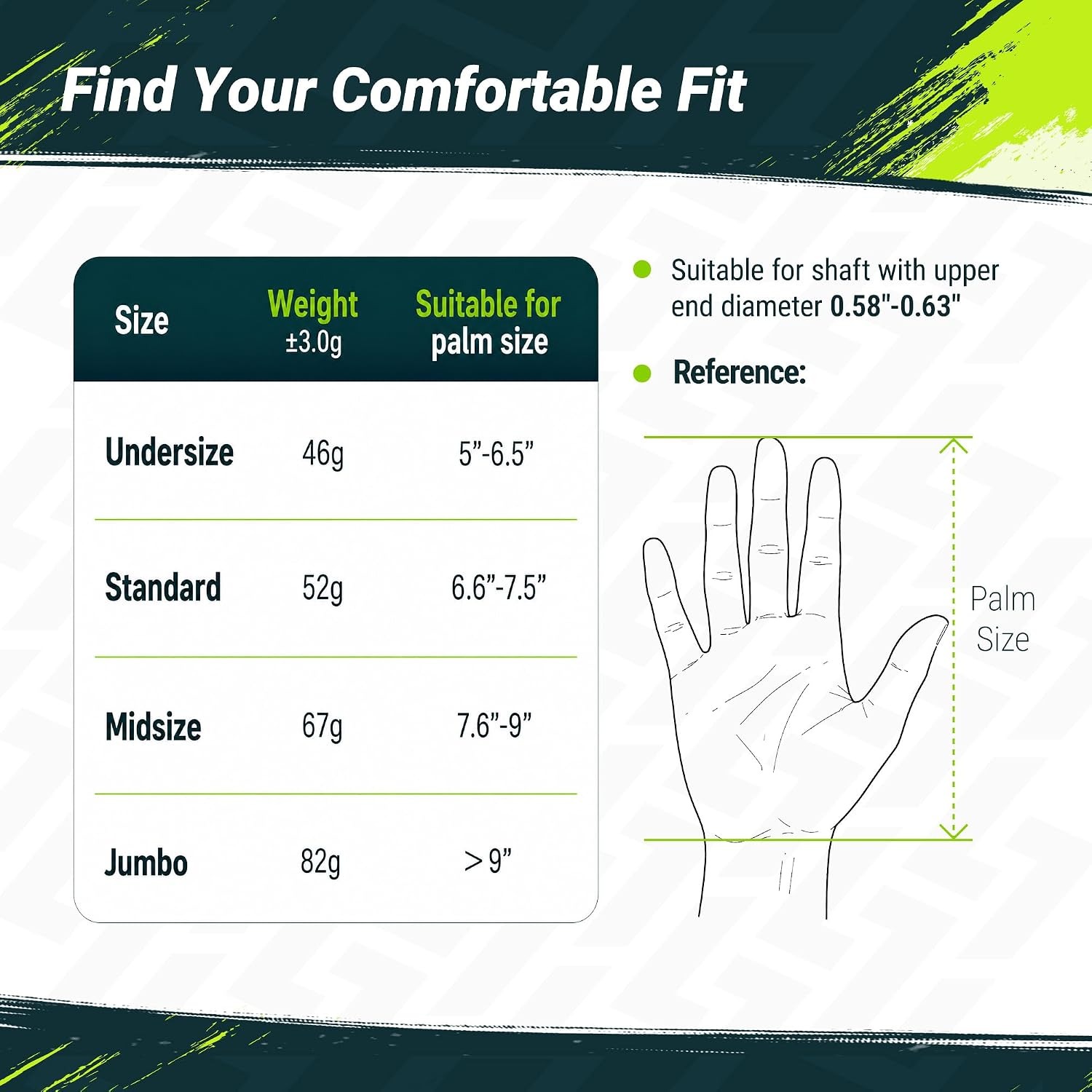
The quick test is simple. Take a normal hold with your lead hand and look at where your fingertips end up. If they lightly touch the pad at the base of your thumb, you are in the right ballpark for that size. If they dig into the palm, the grip is too thin. If they cannot reach, it is too thick.
Glove size is a rough guide too. Most men in a medium or medium-large glove land on standard, and most women's sets run smaller. But hands vary in shape as much as size, and some players with big hands genuinely prefer thinner grips for the extra wrist action they allow. If you are between sizes, standard plus an extra wrap or two of build-up tape is a practical middle ground.
That tape trick is worth knowing generally. One extra wrap under the grip adds roughly a 64th of an inch to the diameter. It is the cheapest fine-tuning available in golf.
Fitting them yourself
This is one of the few club jobs you can genuinely do at home without special skills. You need double-sided grip tape, grip solvent or mineral spirits, a hook blade or sharp utility knife, and ideally a vice with a rubber shaft clamp.
Cut the old grip off by running the hook blade along the shaft, always cutting away from yourself and away from the shaft surface. This matters more on graphite, where a deep scratch can become a real weak point. Peel off the old tape. If it has fused on, a bit of solvent and a plastic scraper will shift it.
Wrap the new tape along the shaft, leaving a little overhanging the butt end so you can tuck it in. Pour solvent into the new grip while covering the small vent hole, slosh it around, then tip it out over the taped shaft so everything is wet. Then push the grip on in one firm movement. You get roughly thirty seconds before the solvent tacks up, so commit rather than hesitating.
Line up the grip logo, check it sits square, and set the club aside to dry for a few hours. Then do the next twelve. The first club takes fifteen minutes and the last one takes three.
Keeping them alive
Most grip wear is not wear at all. It is contamination. Skin oils, sunscreen, hand cream and dirt form a slick layer on the rubber that feels exactly like a dead grip. Wash them with warm water and a little mild dish soap, scrub with a soft brush, rinse properly and pat dry. Let them air dry fully before bagging the clubs. The tack that comes back often surprises people.
Do that every few rounds and you will get noticeably longer life out of a set. The other half of the job is storage. Heat is the enemy of rubber, and a car boot in summer is a slow oven. Keep clubs indoors or in a shaded garage and your grips will stay fresher for an extra season.
Avoid solvents, petrol-based cleaners and anything labelled as a degreaser. They strip the oils out of the rubber and leave it hard and shiny.
When to replace again
The usual advice is once a year, or around forty rounds. Treat that as a starting point rather than a rule. A player who practises three times a week wears grips faster than someone who plays twelve rounds a summer. Humidity, sunscreen use and whether you wear a glove all shift the number.
The honest test is how hard you are holding on. If you catch yourself squeezing, or you see shine where your thumbs sit, it is time regardless of what the calendar says.
The short version
Grips are cheap, they are the only part of the club you touch, and almost everyone leaves them too long. This set gives you thirteen matched rubber grips in standard size, enough to do a full bag in one afternoon, with weight variation held tighter than the usual industry tolerance so your clubs feel consistent from wedge to driver.
Check your size before ordering, pick up tape and solvent at the same time, and set aside a couple of hours. The difference in how the club sits in your hands is immediate, and it costs less than a decent round of golf.