

The complete guide
How to Choose a Golf Rangefinder (and Actually Use It Well)
The problem with guessing
Most golfers lose strokes to bad numbers, not bad swings. You stand in the fairway, look at the green, decide it is "about a 7 iron", and hit it well. Then the ball comes up short, or sails over the back, and the round grinds on. The swing was fine. The information was wrong.
Course markers only get you part of the way. A 150 post tells you the distance to the middle of the green, not to the flag, which might be fifteen metres further back today. Sprinkler heads help if they exist and if you walk to one. Phone apps give you GPS estimates to green front, middle and back, which is useful but still not the flag.
A laser golf rangefinder gives you the number to the thing you are actually aiming at. That is the whole pitch, and it is a good one.
How a laser rangefinder works
The mechanics are simple. The unit fires a short invisible laser pulse at whatever you are pointing it at. The pulse bounces back, and the device times the round trip. Light travels at a known speed, so the time tells it the distance. That is it.
What separates a good unit from a poor one is everything around that core function. The quality of the glass decides how clearly you can see the flag. The targeting logic decides whether the beam reports the flag or the oak tree behind it. The display decides whether you can read the result in bright sun. The housing decides whether it survives three seasons in a bag.
Pin seeker technology deals with the targeting problem. When several objects sit in the beam path at different distances, the unit has to choose which one to report. Pin seeker logic favours the closer, narrow target, which on a golf course is almost always the flagstick. Without it, a laser tends to report the biggest, most reflective surface, which is often the tree line. That mistake is exactly the kind of error you bought the device to eliminate.
Slope, and why the off switch matters
Flat distance is only half the story on a hilly course. A 150 metre shot playing twelve metres uphill does not play 150. It plays more like 162, depending on your ball flight. Downhill works the other way.
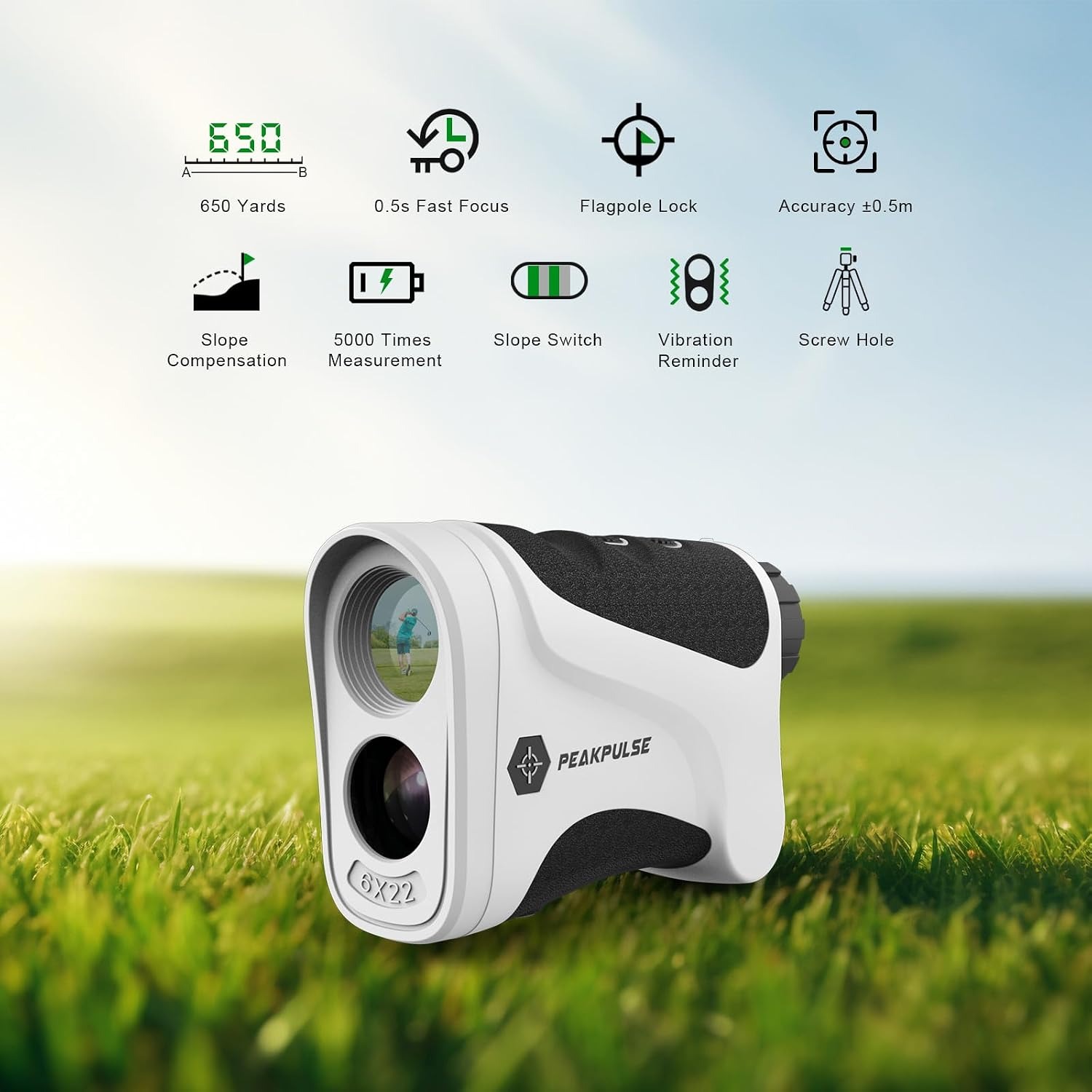
Slope mode measures elevation change and shows you an adjusted figure. For casual rounds this is genuinely helpful, particularly on courses where greens sit well above or below the fairway. It takes a calculation most people fudge and makes it reliable.
The catch is competition. Many formats do not allow devices that compensate for slope, so any unit without an off switch becomes useless the moment you enter an event. That is why switchable slope is the sensible choice. You get the help when you want it, and a clean, compliant distance reading when the rules demand it. Always check the conditions of competition for the specific event, because local rules vary.
Magnification and optics
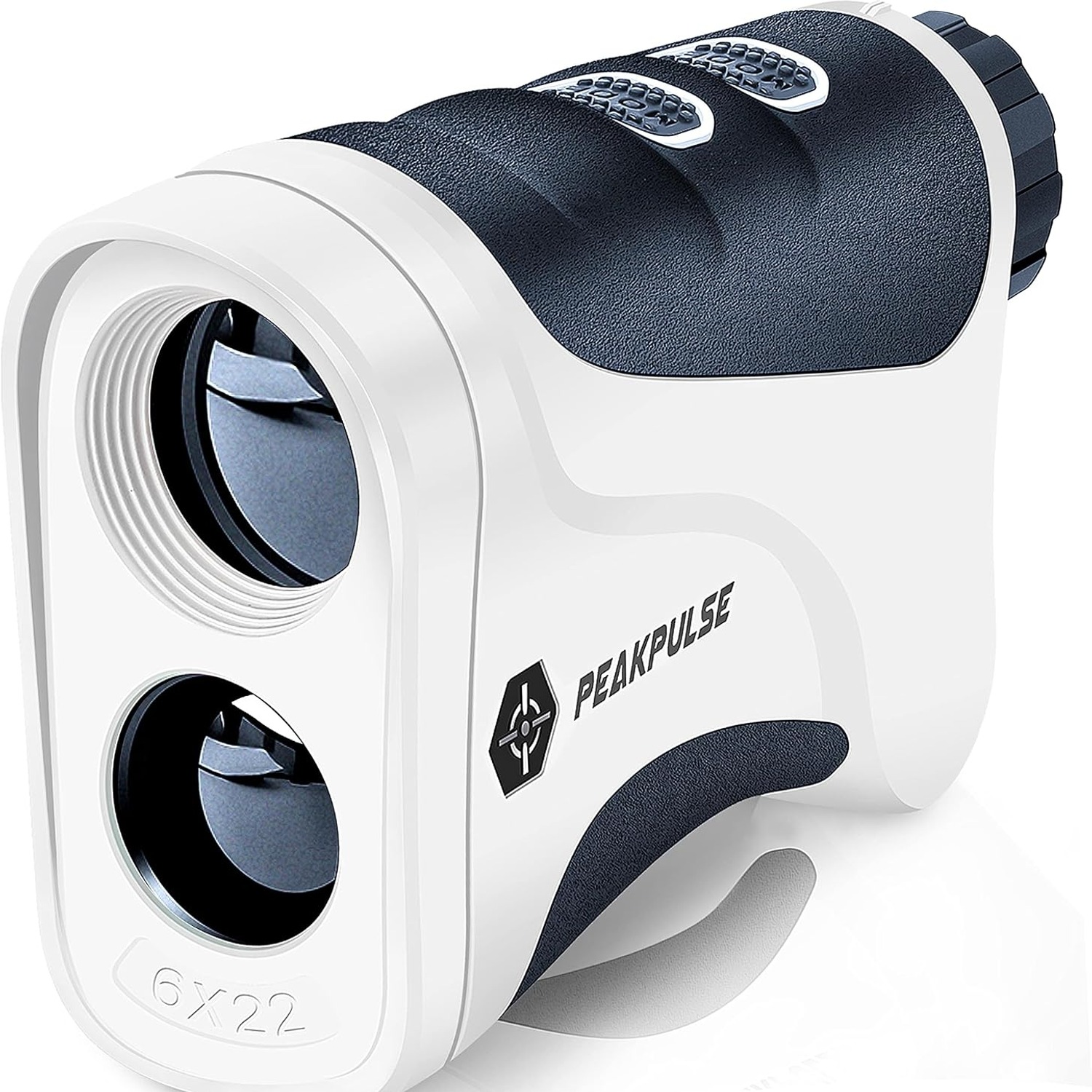
This model uses 6x magnification with multi-coated glass. That means objects appear six times closer, and the coatings reduce reflections inside the optical path so more light reaches your eye.
More magnification is not automatically better. At higher power, every tremor in your hand is amplified, which makes holding the target steady harder, especially after walking uphill. Around 6x is the sweet spot for handheld use on a golf course. You can see the flag clearly at a realistic golf distance without the view bouncing around.
The display matters just as much. A high-contrast LCD readout stays legible in conditions where a dim or low-contrast screen washes out. Reading a number through a bright reflection at noon is a real-world test that cheap units fail regularly.
Build, weight and weather
The housing here is ABS with rubber armour, rated IP54. ABS gives rigidity, the rubber adds grip and absorbs the knocks that come from living in a golf bag. IP54 covers dust and splashing water, so rain, dew and a damp towel are not a concern. It is not a submersion rating, so a swim in the lake is still bad news.
Size and weight are 11.4 x 3.8 x 7.6 cm and roughly 0.16 kg. In plain terms, it fits a jacket pocket and you will not notice it on a five kilometre walk. If you carry your bag rather than ride, a compact golf rangefinder is worth more than a few extra metres of theoretical range you will never use.
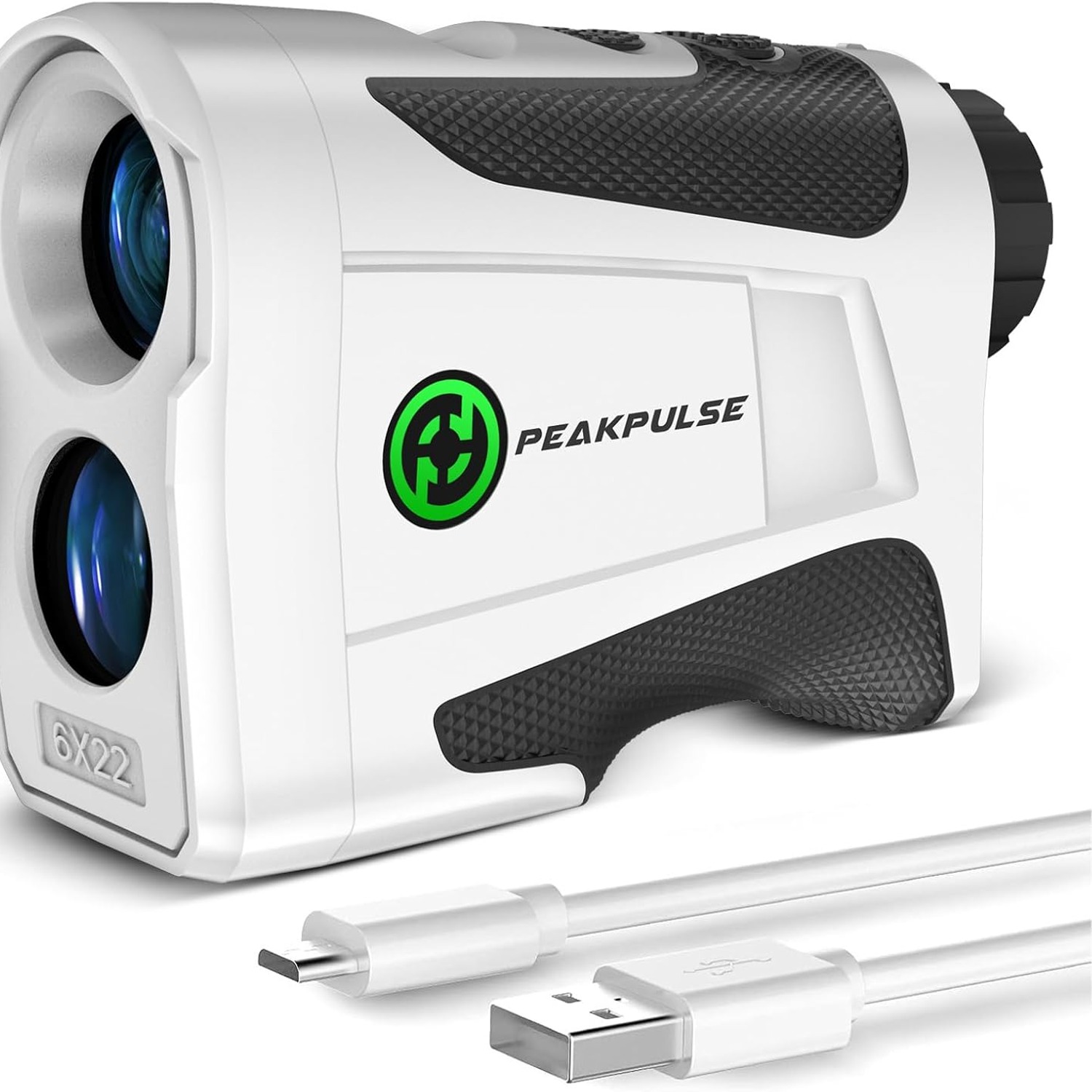
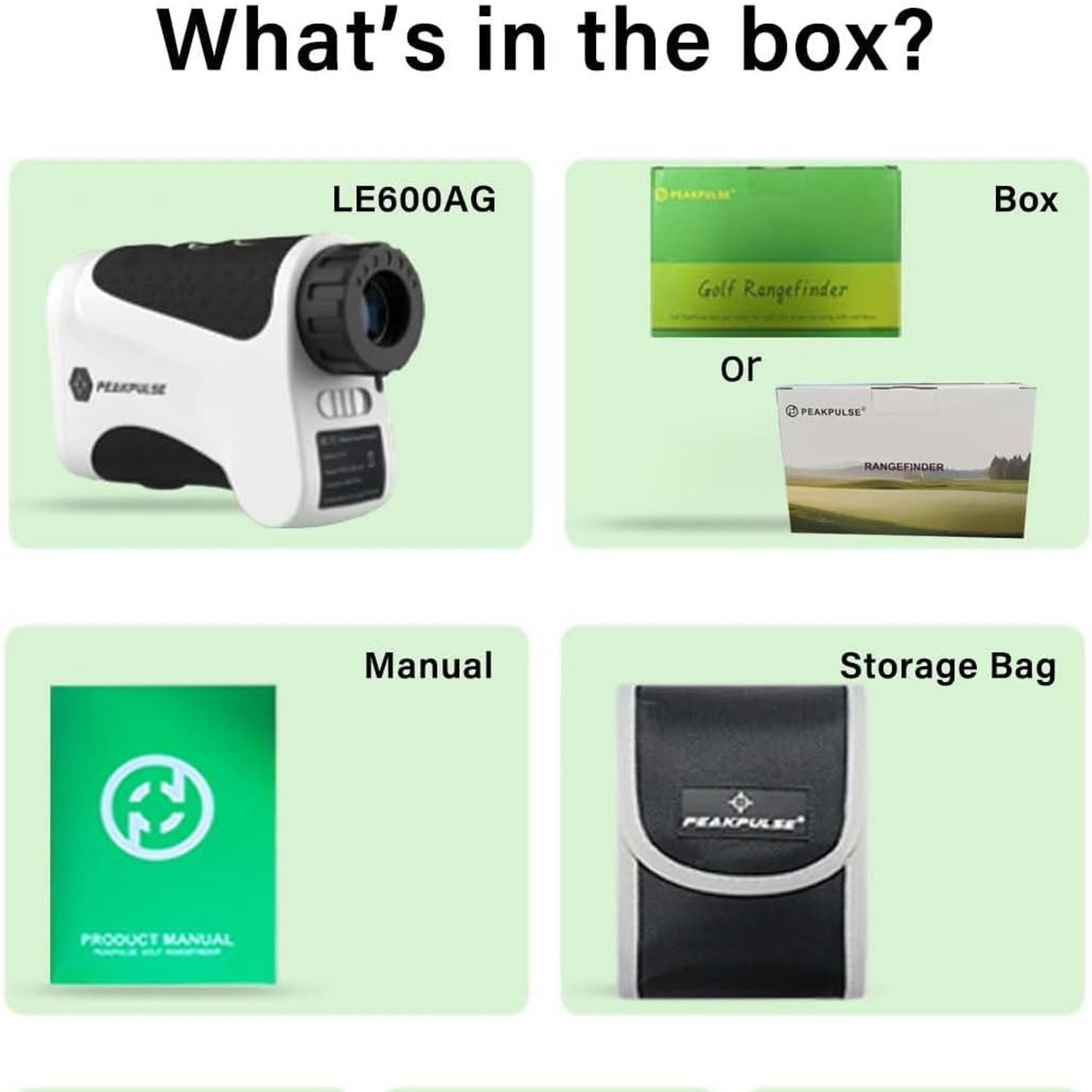
Power comes from one CR2 lithium battery, which is not given by the maker. Order one at the same time. Lithium cells are standard in optics because they hold voltage well in cold conditions and have a long shelf life, so a spare in the bag will still be good months later.
Who this suits
Beginners benefit more than they expect. Early on, most players have no idea how far they actually hit each club, and they guess high because the one good 7 iron they remember went further than the average. Real numbers, gathered over a few rounds, correct that fast. It is the quickest way to stop leaving approach shots short.
Mid-handicappers use it for the obvious thing, which is picking the right club to a flag, and for the less obvious thing, which is knowing carry distances over hazards. The bunker is not "somewhere out there", it is 212 metres away, and now you know whether you can clear it.
Better players lean on it for strategy. Layup distances, landing areas, front edge versus back edge, carry over a corner on a dogleg. Precision becomes a planning tool rather than a rescue tool.
Disc golfers get the same value, and this unit lists disc golf among its sport types. Metal baskets reflect laser light well, so readings tend to be easy to acquire.
Getting good readings
A few habits help. Rest your elbows against your chest rather than holding your arms out, which steadies the view noticeably. Breathe out before you press the button, the same way you would settling over a putt. If a number looks suspicious, take a second reading and compare, because two matching readings are almost always correct.
Keep the front lens clean. Sunscreen fingerprints and dust scatter the beam and make targeting harder than it needs to be. A microfibre cloth in the bag solves this permanently.
Remember the laser needs a clear path. Branches, netting and heavy fog will confuse it. Move a step or two sideways and try again.
Care that keeps it working
Clean the glass with microfibre only, and a lens-safe cleaner if something stubborn is on there. Paper towel and shirt sleeves scratch coatings. Store the unit in its case or a padded bag pocket so grit does not get at the lenses. Dry the body after a wet round rather than leaving it damp. If it is going to sit unused for months, take the battery out so a leaking cell cannot damage the contacts.
Do a sanity check now and then. Stand at a known distance, a marked yardage post works well, and confirm the reading matches. It takes ten seconds and tells you everything is still calibrated.
The short version
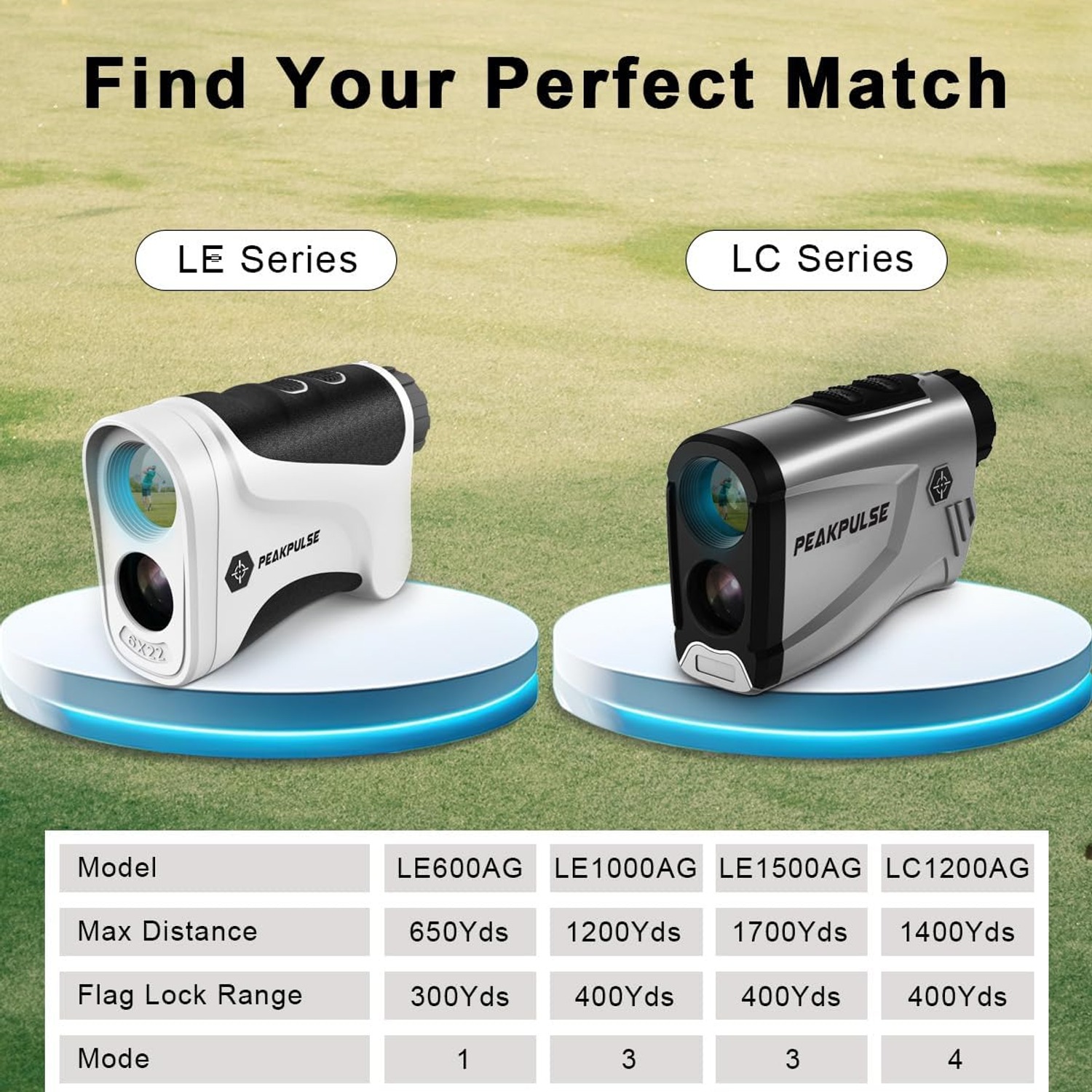
A rangefinder does not improve your swing. It stops you making decisions based on bad information, which turns out to be a big slice of the strokes most golfers waste. This model covers the features that matter: 600 metre range, 6x multi-coated optics, pin seeker targeting so you read the flag and not the forest, three modes with slope you can switch off for competition, a high-contrast display, and an IP54 ABS and rubber body that weighs almost nothing.
Add a CR2 battery, spend a couple of rounds learning your real distances, and the device pays for itself in confidence long before it does in scorecards.