
The complete guide
How To Choose A Mallet Putter That Actually Helps You Hole More
The putts that cost you the most
Ask most club golfers where their score goes and they will talk about a drive that found the trees. Look at the card and the truth is usually quieter. It is the putt from two metres that slipped past the low side. It is the lag putt that finished a metre short and then missed. Those strokes do not feel dramatic, which is exactly why they keep happening.
Two things cause most of them. The first is aim. Standing over a ball, your eyes sit to the side of the target line, and the brain quietly fills in a face angle that is a degree or two open or closed. At two metres that is enough to miss. The second is contact. The sweet spot on a putter face is small, and a strike towards the heel or toe twists the head and bleeds speed.
A mallet putter attacks both problems at once. That is the whole idea behind this design.
How a mallet head works
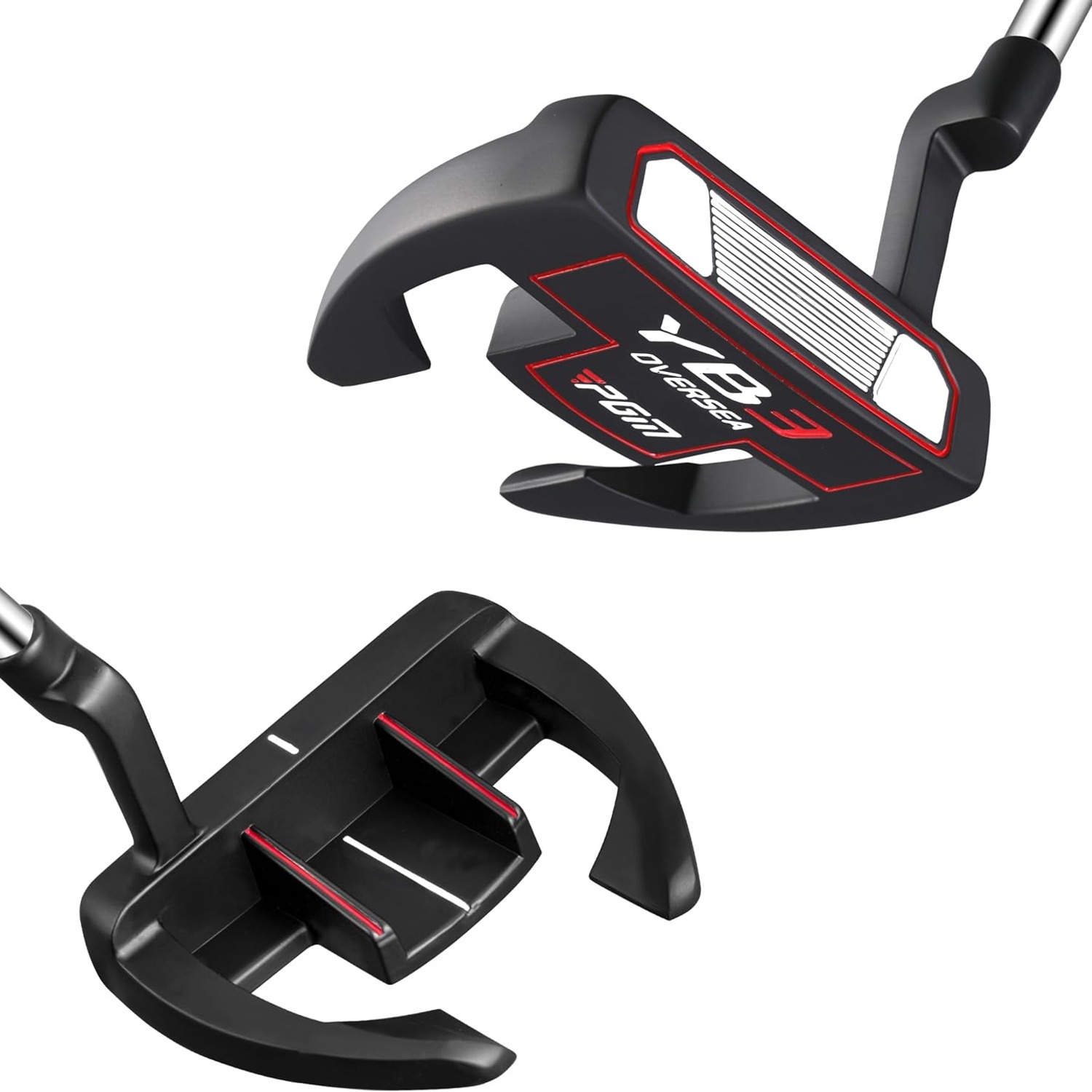
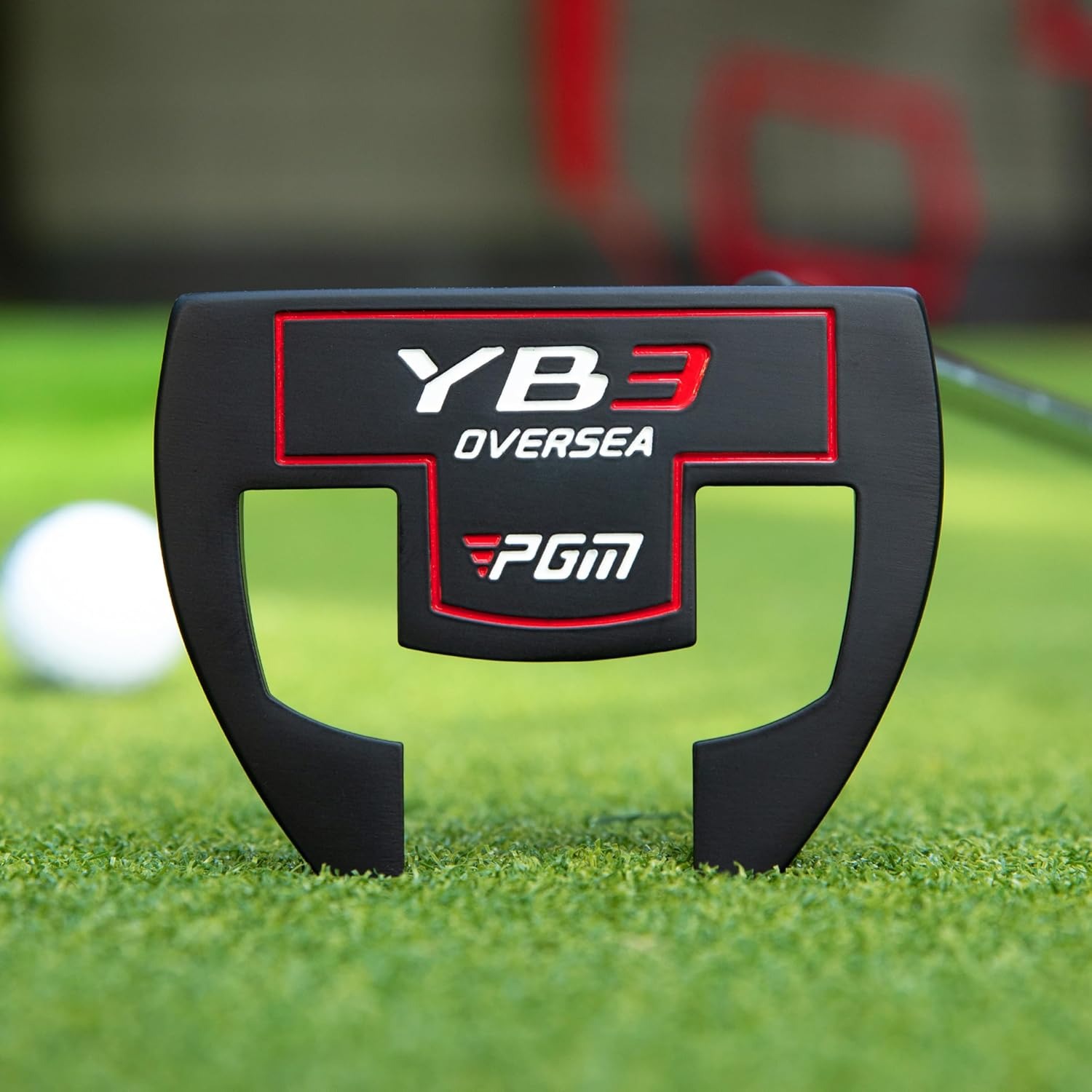
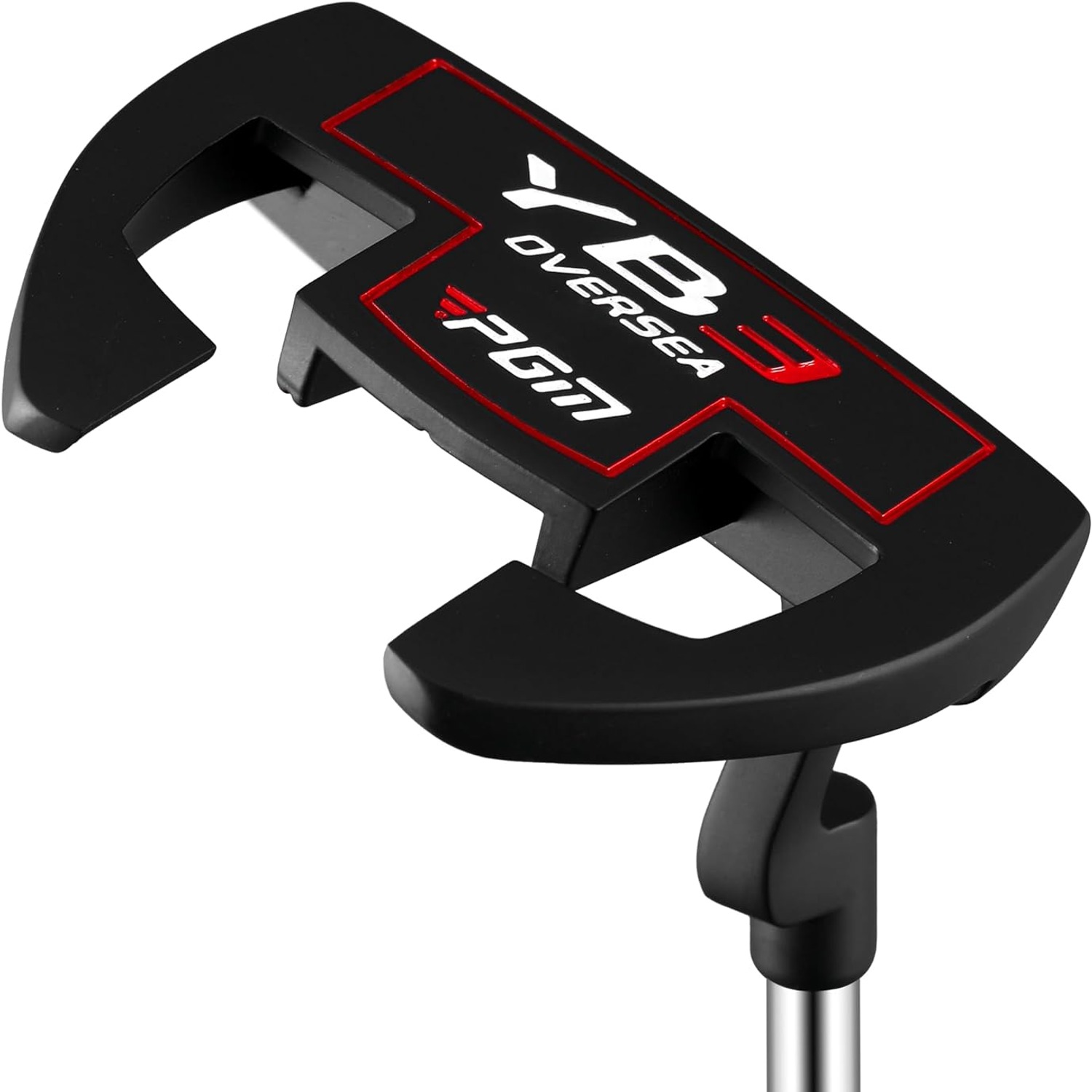
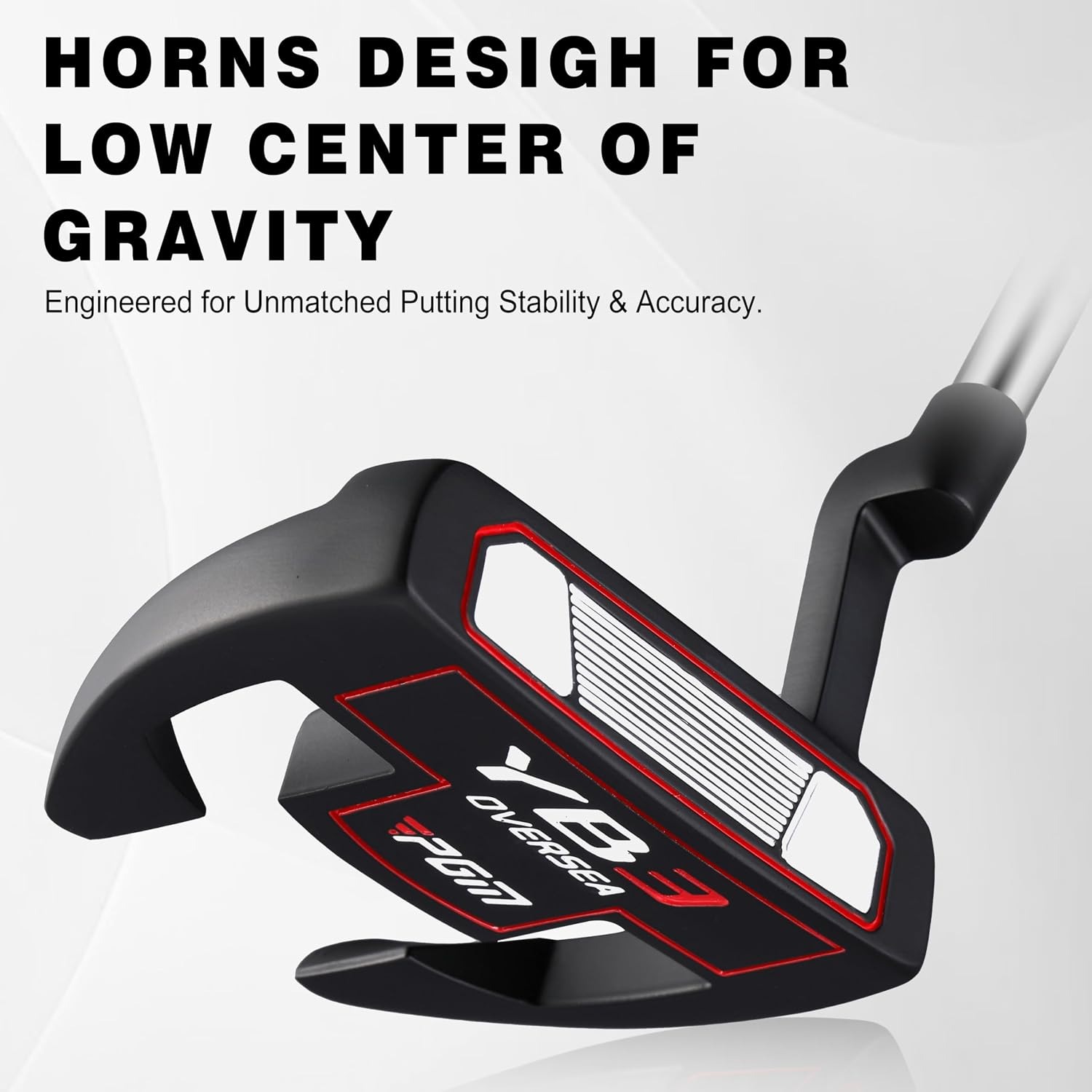
A blade putter has most of its mass in a thin bar behind the face. A mallet spreads that mass wider and further back. When you move mass away from the centre of a head, you raise its moment of inertia, usually shortened to MOI. The higher the MOI, the harder it is to make the head rotate.
In real terms, imagine two putts struck a centimetre off the centre of the face. A low-MOI blade turns noticeably and the ball starts offline. A high MOI putter turns less, so the ball starts much closer to where you aimed. You still lose a little pace, so a slightly off-centre hit comes up short. But short and straight leaves a tap-in. Offline leaves a second putt that is just as hard as the first.
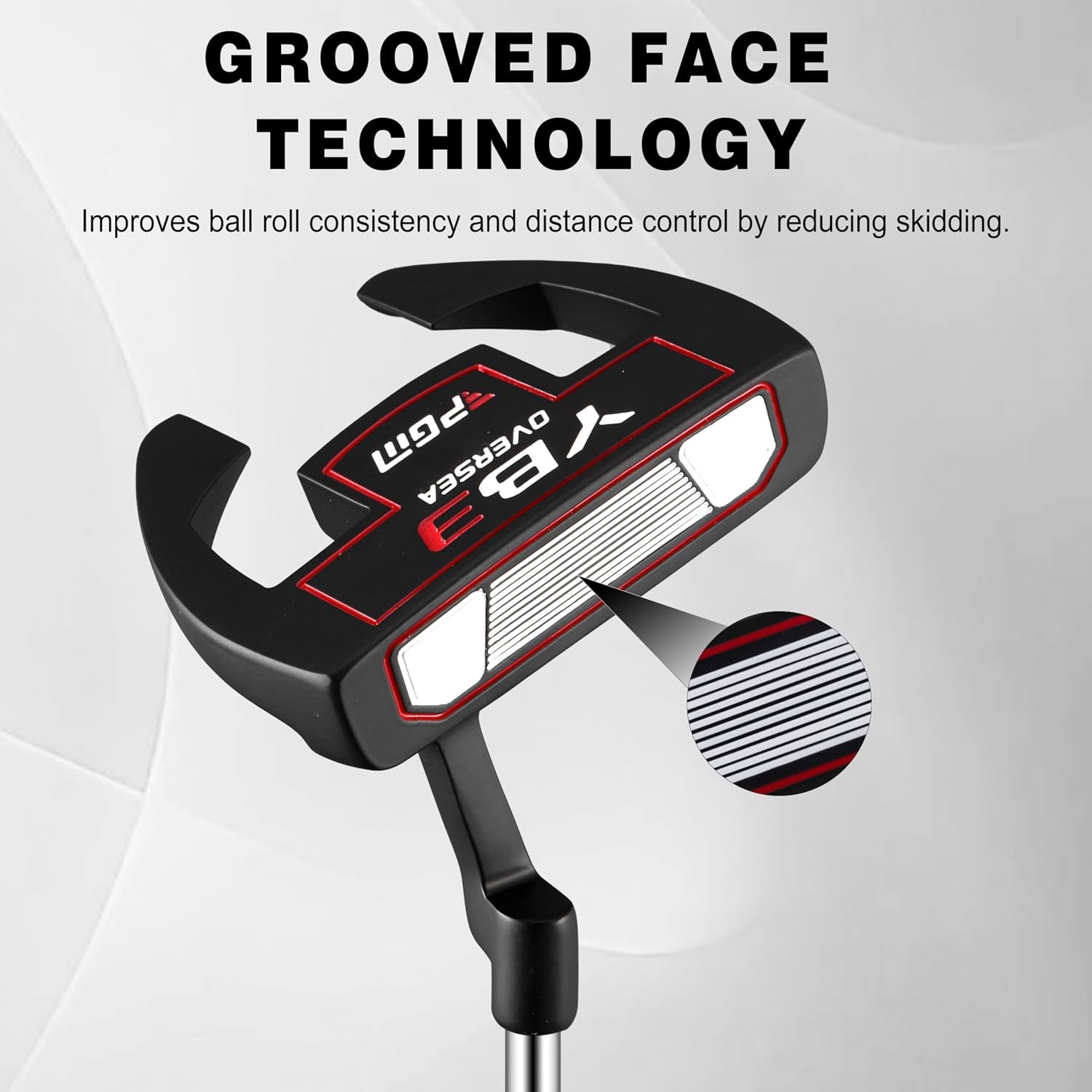
This putter also carries a low centre of gravity. On a green your ball sits in a tiny depression, pressed into the grass. The 3 degrees of loft on the face lifts the ball out of that hollow, and the low centre of gravity gets topspin working earlier. A ball that rolls sooner is less affected by small bumps on its path. A ball that skids reacts to everything.
The alignment line, and why it matters
The crown carries a single bold line in a contrasting colour. It sounds simple. It is, and that is the point.
Here is how to use it well. Stand behind the ball, pick the exact start line (not the hole, the start line, since break changes those), and find something on that line within a metre of the ball. A discoloured blade of grass works. Set the putter down so the line points at that spot, then build your stance around the club rather than setting your feet first and shuffling the putter into place. That order is what makes a golf putter with alignment guide pay off.
If you use a ball with a printed line on it, draw or match that line to the putter's line. Now you have two visual cues saying the same thing, which quiets the doubt that creeps in over short putts.
Who this putter suits
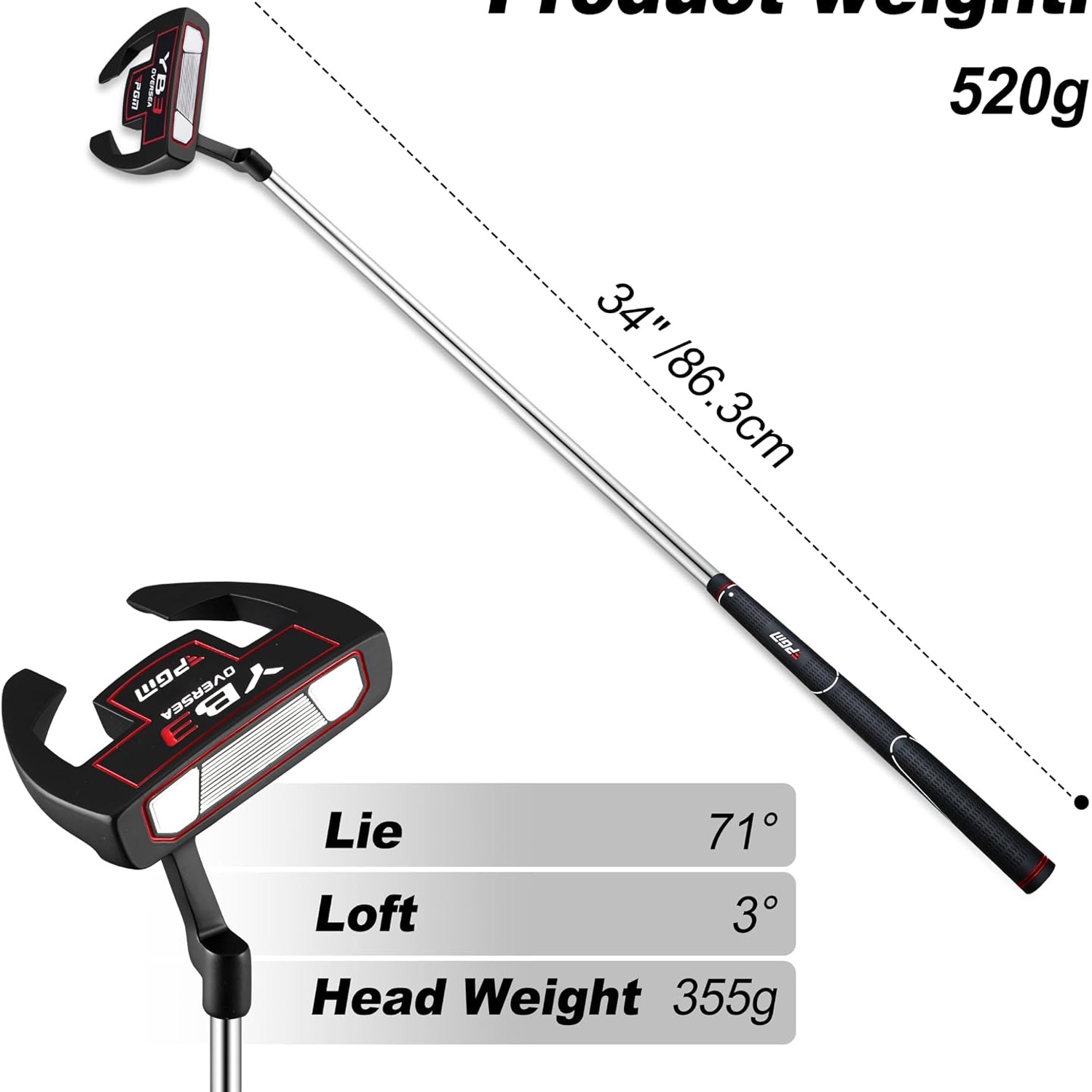
It is a right handed golf putter at 34 inches with a standard grip and regular flex. That combination covers a broad slice of adult golfers without needing a fitting session.
Newer players tend to benefit most. When your stroke is still settling, contact wanders across the face, and a forgiving golf putter hides more of that than a blade ever will. The visible aim line also removes one decision from a part of the game that already has too many.
Experienced players use mallets too, usually for the stability on long putts and the calmer feel. If your stroke runs close to straight back and straight through, a mallet will feel natural. If you have a strongly arcing stroke, you may prefer a toe-hang blade, though plenty of golfers with an arc putt beautifully with a mallet. Feel beats theory.
One group it does not suit is left handed golfers. The head is built for right hand orientation only.
Getting the length right
Length is the spec people get wrong most often. Too long and your hands push away from your body, your eyes sit inside the ball, and you start pulling putts. Too short and you hunch, which tightens the shoulders.
Try this test with any 34 inch putter. Set up as you normally would, hold the club with your hands hanging naturally under your shoulders, and have someone drop a ball from the bridge of your nose. It should land on or just inside your ball. If it lands well outside, the putter is likely too long for your posture.
Height is a rough guide only. Posture matters more. A golfer at 1.80m who stands tall might want 35 inches, while a golfer the same height who crouches might be better at 33. A 34 inch putter is the middle ground and can be shortened by a club fitter if you need it trimmed. It cannot easily be lengthened, which is another reason 34 is a safe starting point.
The 71 degree lie angle is also mid-range. If the toe or heel of the sole sits noticeably off the ground at address, a fitter can adjust it.
Feel, feedback and the steel build
Both the head and the stepped shaft are stainless steel. Steel is not the softest material in putter making, and that is deliberate here. It gives you honest feedback. You hear and feel the difference between a flush strike and a toe strike, and that information is how you fix the pattern.
The stepped shaft design is intended to cut torque through the stroke, so the face stays where you put it. Combined with the standard textured rubber grip, the club gives a fairly firm, direct sensation at impact. If you prefer a muted, insert-style feel, this will seem lively at first. Give it a few sessions. Most golfers adapt within a round or two, and the extra feedback is worth it while you are learning where you strike the face.
The grip itself is synthetic rubber with a texture that holds up in rain and in heat. Standard size settles the hands without taking all the feel out of the fingers.
Looking after it
A putter asks very little. Wipe the head and shaft with a damp cloth when you finish, then dry it properly. Brush grass and sand out of the face if it has packed in, because debris on the face affects contact more than people think.
Put a headcover on it in the bag. The most common damage to putters is not from play, it is from the face knocking against iron heads on a bumpy cart ride. Keep it indoors rather than in a hot boot, and wash the grip with warm soapy water when it starts to feel slick. That is the whole routine.
Practising with it
Buy a putter and then actually use it on a putting green. Three drills cover most of what you need.
Start with a circle of balls at about a metre and go round until you hole ten in a row. That builds the short-range confidence that keeps your hands calm. Then work on pace with long putts to the fringe, where the aim is to finish within half a metre past the hole rather than to hole out. Finally, practise the gate drill, with two tees just wider than the head, to check the putter is moving on the path you think it is.
Many golfers keep a dedicated putter for practice green work and indoor mats so their gamer stays clean. A steel head is fine on both.
The short version
This is a 34 inch right handed mallet putter in black, with a stainless steel head and stepped stainless steel shaft, 3 degrees of loft, a 71 degree lie angle and a standard textured rubber grip. The high-MOI head limits twisting on off-centre hits, the low centre of gravity and small loft help the ball roll sooner, and the bold single-line aim guide makes squaring the face simpler.
If you are a right handed golfer around average height who wants more stability on short putts without paying for a custom fitting, it is an easy club to pick up and use. If you are unsure about length, measure your setup before ordering, or send us your details and we will help you work it out.