
The complete guide
How to Choose a Golf Travel Bag That Actually Protects Your Clubs
The problem nobody warns you about until it happens
You book the trip, you plan the rounds, you get excited about the courses. Then your clubs come off the carousel and the driver has a crack across the crown, or the 3-wood shaft is bent at an angle golf shafts should never be. It is a deeply annoying way to start a holiday, and it happens more often than most golfers expect.
The reason is simple. A golf bag is long, awkward, and heavy at one end. In a baggage hold it gets stacked, slid, dropped from belt height and pushed against hard-sided suitcases. Nothing in that process is gentle. A bare golf bag with a flimsy rain hood over the top is not equipment protection. It is a hope.
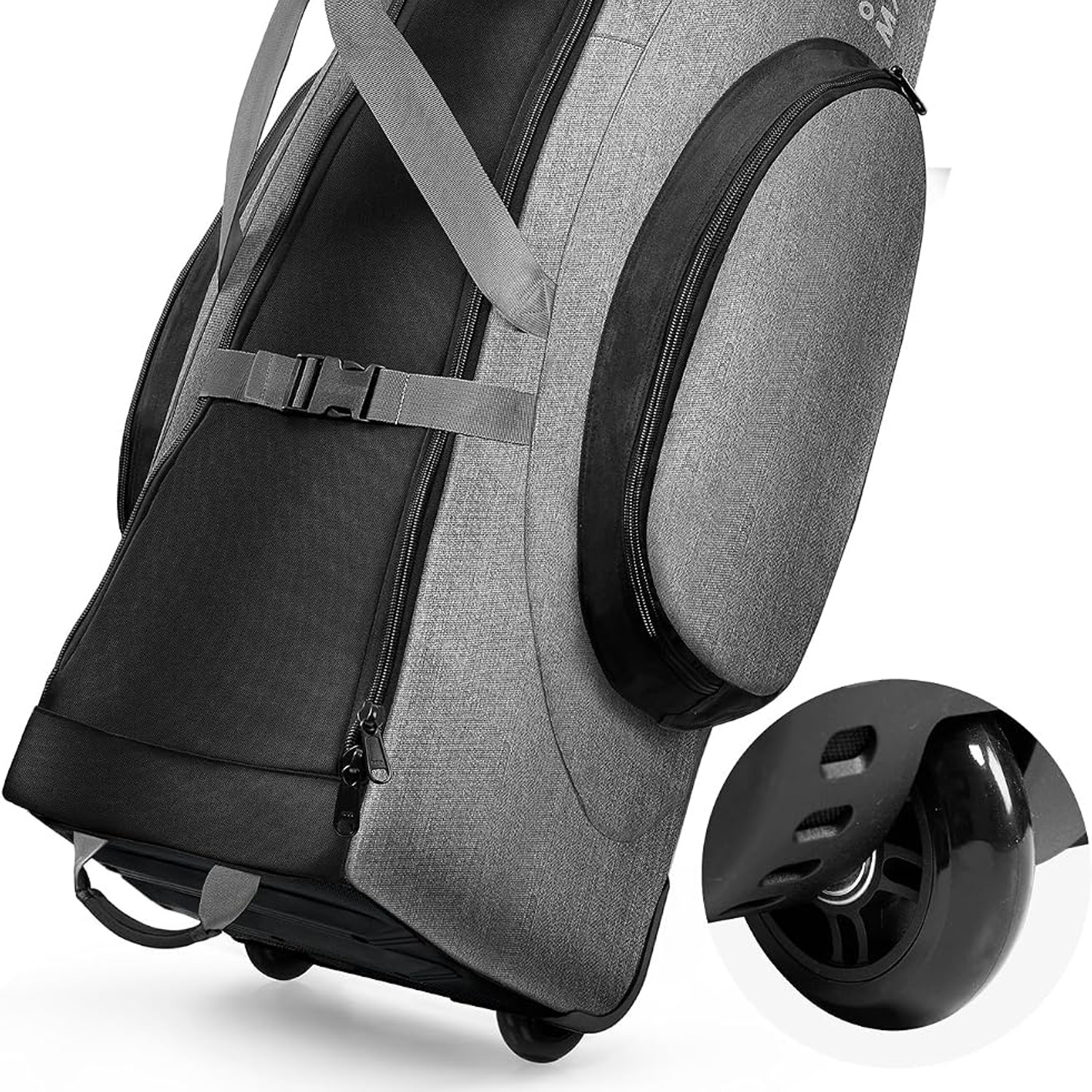
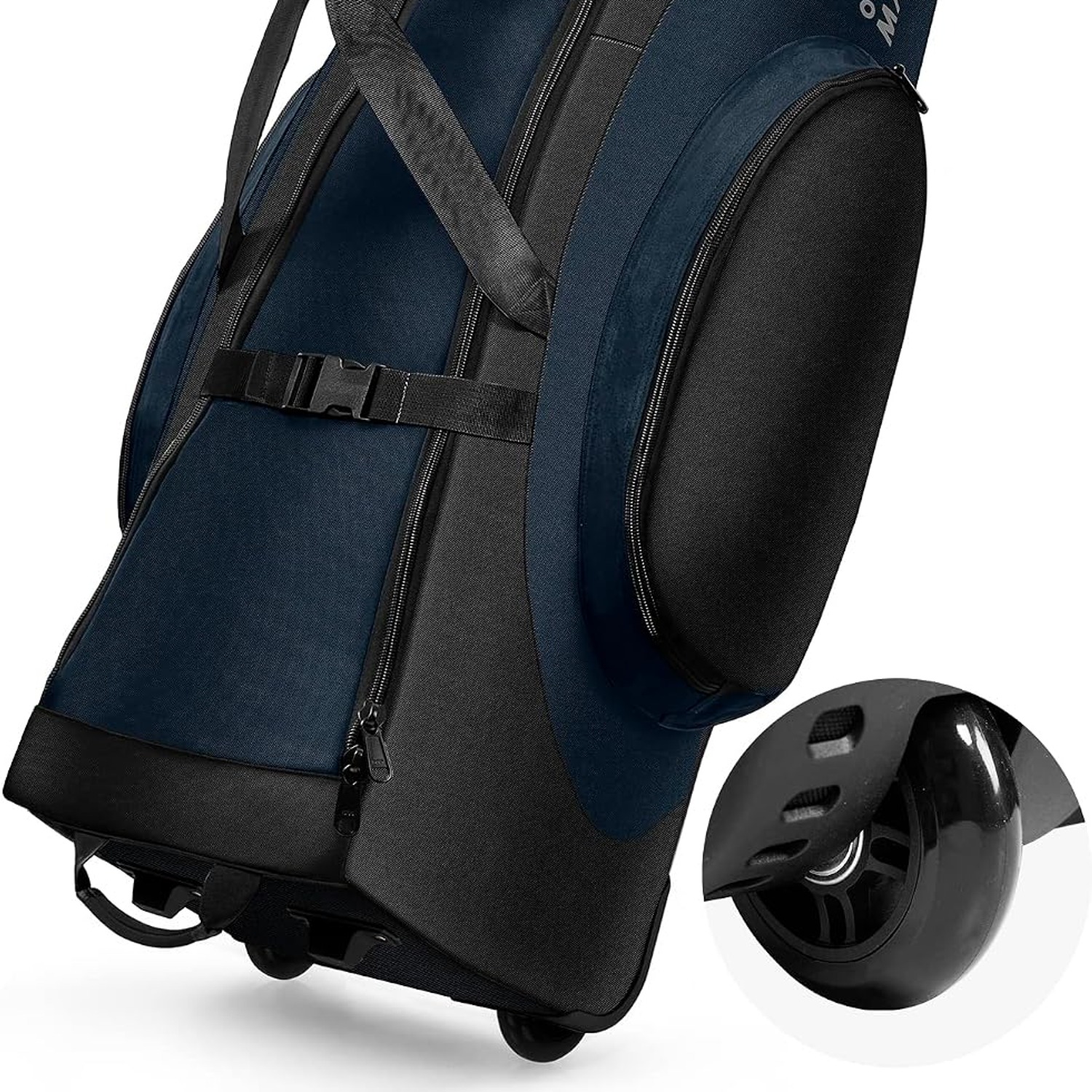
A padded golf travel bag solves it by wrapping the whole thing in a cushioned shell, turning your clubs into one tidy, protected piece of luggage. Add wheels and you also fix the second problem, which is dragging thirty-odd kilos of gear across an airport when you are already tired.
How a padded golf travel bag works
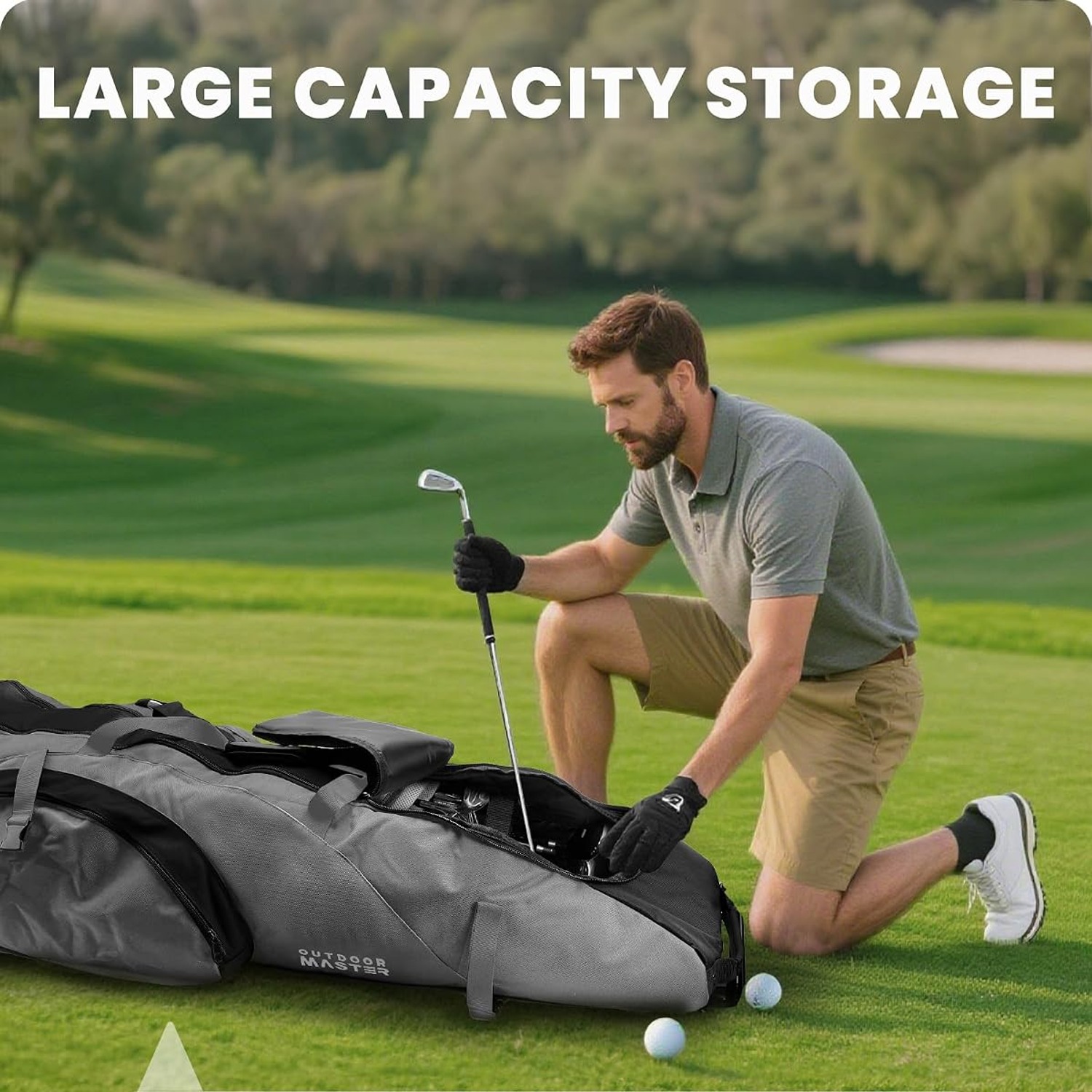
The concept is straightforward. Your loaded golf bag, clubs still in it, goes inside the travel bag. A long zip opens the case up so you lower the bag in rather than forcing it through a narrow mouth. Zip it shut and the set is contained.
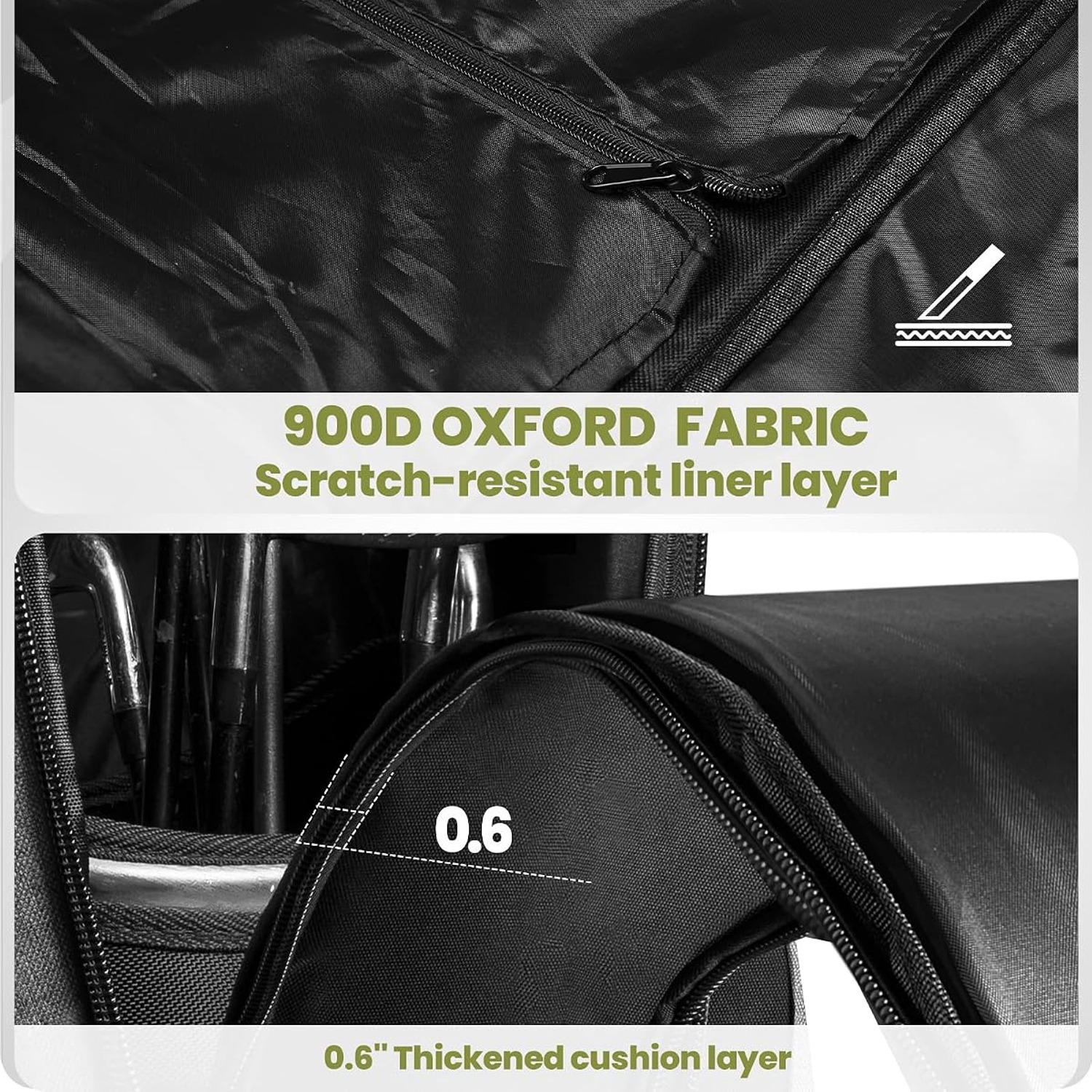
The padding sits in the walls. It does not stop a forklift, and no honest retailer will tell you otherwise, but it absorbs the impacts that cause most real-world damage. Scuffs, knocks against other luggage, pressure from something heavy stacked on top. That is the bulk of what goes wrong, and padding handles it well.
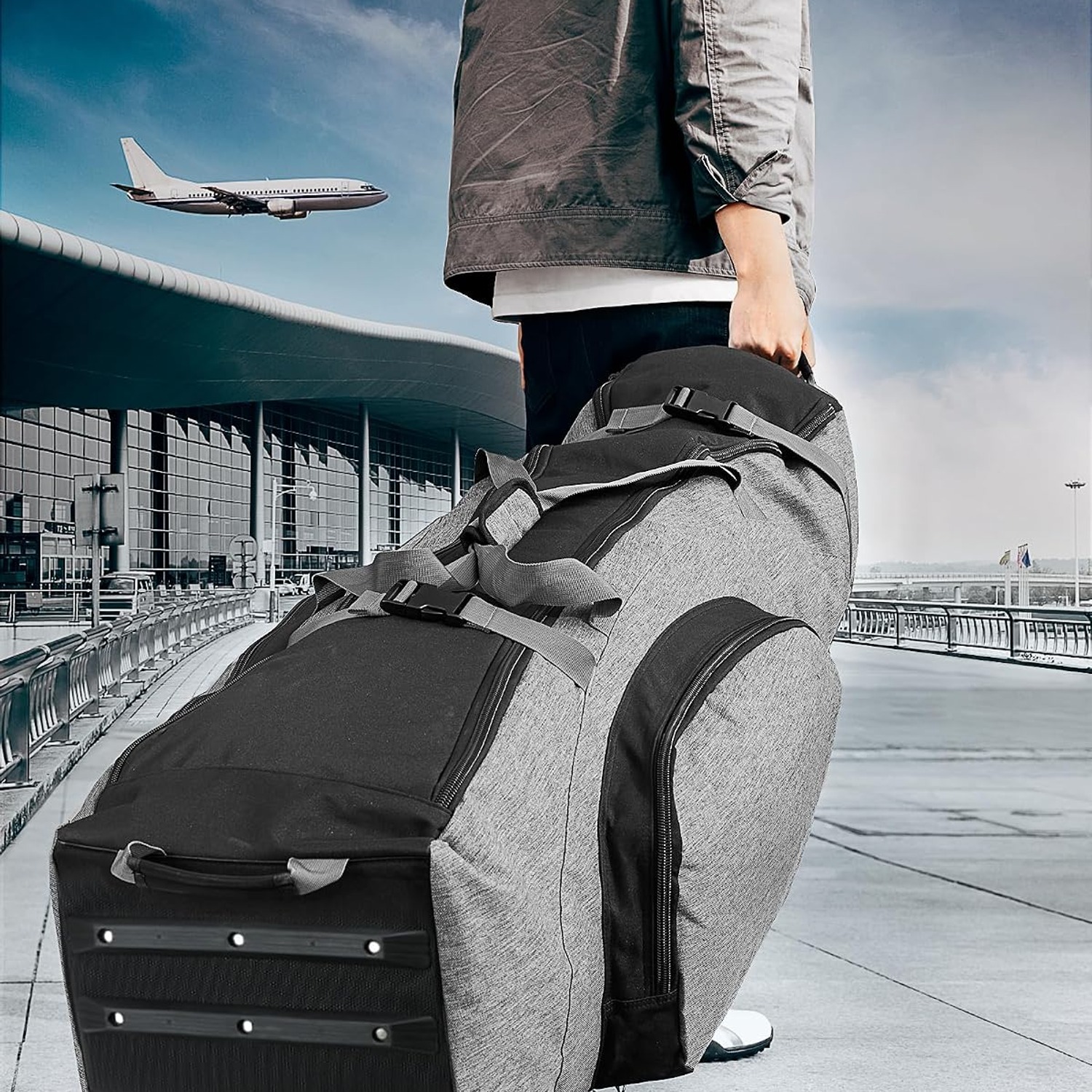
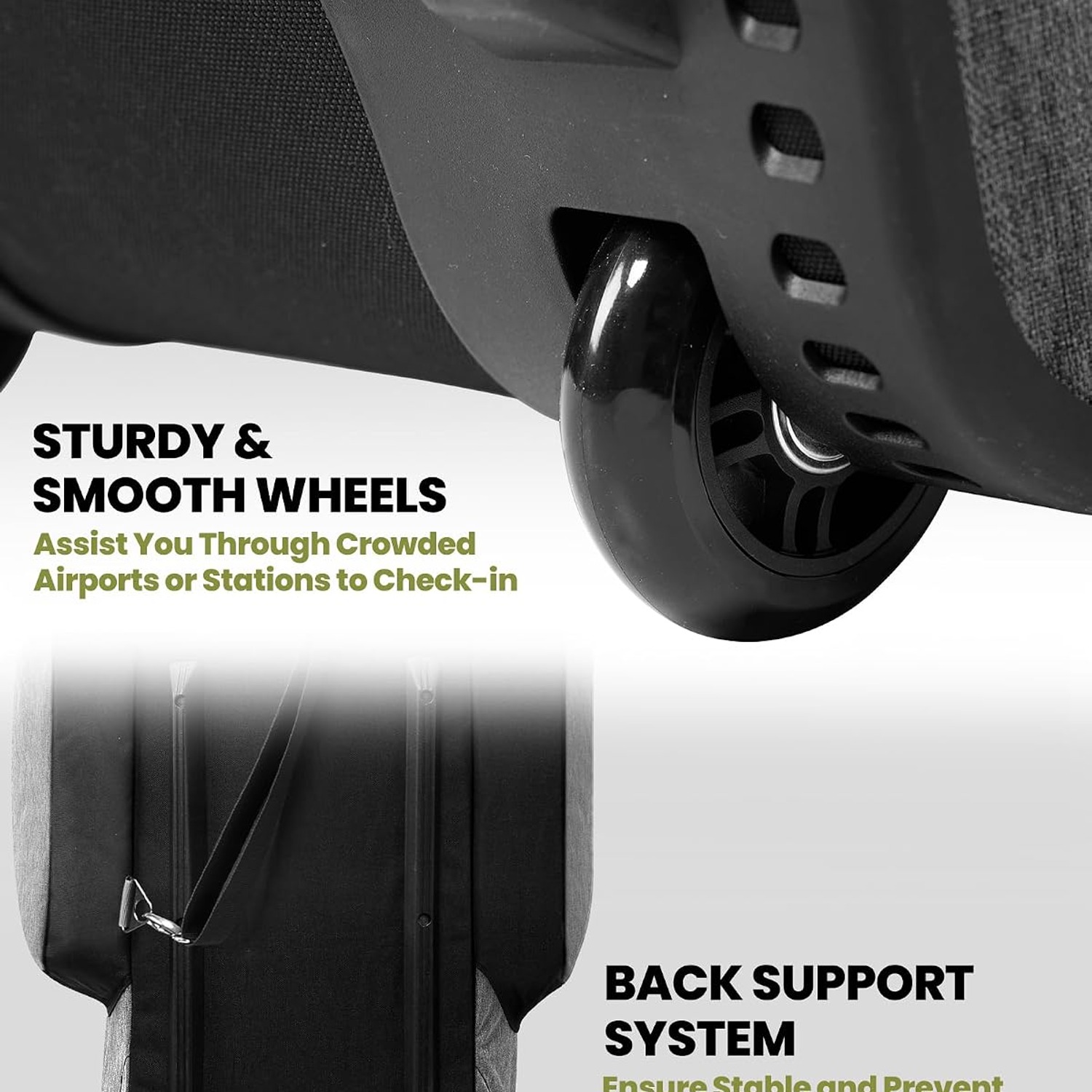
The wheels change how you move. Instead of hoisting the bag on a shoulder and shuffling, you tilt and roll. Over the length of a large international terminal that is the difference between arriving relaxed and arriving sweaty with a sore back. Anyone who has carried a travel bag one way and rolled one the other does not go back.
This particular bag is the E03352, a soft sided padded model with wheels, listed as unisex-adult.
Soft sided or hard case
This is the main decision in the category, so it is worth being clear about the trade-off.
Hard cases are rigid plastic shells. They offer the most crush resistance, and if you fly most weeks with expensive gear they can be worth it. The catch is that they are heavy before you put anything in them, which eats into your airline weight allowance, and they never get smaller. A hard case lives in your garage taking up its full volume all year for the sake of two trips.
Soft sided padded bags, like this one, are what most travelling golfers actually use. They are lighter, they cost less, they cushion well, and crucially they fold down when empty. For a golfer who goes away a few times a year, that storage point is often the clincher. You can keep a folded travel bag on a wardrobe shelf. You cannot do that with a rigid box.
If you want the protection of a hard case within a soft bag, use a support rod. It is a simple pole, sometimes sold as a stiff arm, that sits inside the bag and stands slightly taller than your longest club. Any downward force lands on the rod instead of your driver shaft. It is cheap and it works.
Who this suits
Golfers who fly to play are the obvious group. Annual buddies trips, destination golf, warm-weather winter escapes. If you check clubs more than once a year, you want a proper cover.
It also suits road and rail travellers more than people realise. Clubs stacked in the back of a van with cases and bags, or slid into a train luggage rack, take knocks too. A cover keeps the grips clean and stops the heads clattering against each other.
Caravanners and people who store clubs in a shared garage get value out of it as well, because the bag doubles as a dust and damp barrier at home. And it makes a reliable gift. There is no sizing to worry about, and plenty of keen golfers have never bought themselves one.
How to choose, and what to check
Start with fit. Most standard stand and cart bags fit covers of this type comfortably. If you carry an oversized staff bag or a tour bag with a huge top, measure it and ask before buying. Exact internal dimensions are not listed by the maker, so if the measurement is critical for you, contact us and we will confirm what the maker can tell us.
Then think about weight. Airlines have limits, and every kilo the empty bag uses is a kilo you cannot fill with clubs, shoes and clothes. Soft bags start lighter, which gives you more headroom. The exact weight of this model is not specified by the maker.
Look at the opening. A long zip that runs most of the length of the bag makes loading far easier and safer than a short opening, because you are not levering your clubs in at an angle. That is where shafts get stressed.
Check the wheel setup. Wheels take real punishment on concrete and kerbs, so keep them clear of grit and check them after each trip. Clean wheels last. Clogged ones wear flat and start dragging.
Finally, think about colour and identification. Travel bags blend together on a carousel. A loud luggage tag, a strip of bright tape or a ribbon on the handle saves you standing there squinting at identical black shapes. Colour is not specified by the maker, so check the photos for the current version.
Packing it properly
A few habits make a genuine difference.
Put a towel or a soft jumper over your club heads before zipping up. The heads are the heaviest part and they move the most, so cushioning them is the best single thing you can do.
Take your putter out if it has a long or unusual head, and wrap it separately inside the bag. Many golfers also remove the driver head on adjustable models and pack it in a shoe, which removes the most vulnerable part of the set from risk entirely.
Use the space. Soft clothing packed around the clubs stops everything sliding about and adds padding at no weight cost beyond the clothes you were taking anyway. Avoid valuables, as checked luggage is not the place for them.
Weigh it at home before you leave. A set of luggage scales costs very little and saves a lot of stress at the check-in desk.
Care and storage
Cleaning is simple. Wipe the outer fabric with a damp cloth and mild soap, then let it dry completely before you fold it away. Do not machine wash it and do not put it in a dryer.
Air it out after a trip, especially if it got rained on between the taxi and the terminal. Damp fabric stored folded is how a bag develops a smell that never quite leaves. Leave the zip slightly open when it is on the shelf.
Give the wheels a look over each time. Clear out grit and check nothing has worked loose. Keeping the zip clean helps too, because sand and dust in the teeth is the usual cause of a zip failing right when you need it.
The short version
Clubs get damaged in transit because baggage handling is rough and a rain hood is not protection. A padded golf travel bag with wheels fixes both halves of the problem, cushioning your set in the hold and saving your shoulders on the ground.
This model, E03352, is a soft sided padded bag with wheels in a unisex-adult fit. It loads through a zip opening, rolls when full, and folds down when empty so it is not taking up space in your garage for eleven months of the year. Add a support rod and a towel over the heads and you have covered off the realistic risks.
Material, colour, weight, dimensions and country of origin are not specified by the maker. If any of those matter to your decision, ask us and we will confirm what we can before you buy.