
The complete guide
The Honest Buyer's Guide to Putting Green Mats
The problem with putting practice
Ask most club golfers where they lose their shots and they will tell you a story about a drive into the trees. Look at their scorecard and the truth is duller. Three putts. Missed four footers. A lag putt that finished eight feet short on a fast green.
Putting is the part of golf that decides scores, and it is also the part almost nobody practises. Not because golfers are lazy, but because the practice green is twenty minutes away, it closes at dusk, and standing on it for half an hour in the wind is a hard sell after work.
A putting green mat removes every one of those excuses. The surface lives in your house. You can use it in socks at nine at night. Ten minutes a day, five days a week, is roughly an hour of putting practice a week that you were never going to get otherwise.
What makes this mat different
Plenty of cheap mats are a strip of fake grass with a plastic cup glued at one end. They are better than nothing, but they teach you one thing at one speed, and the roll is often so slow that your stroke grows a hitch to compensate.
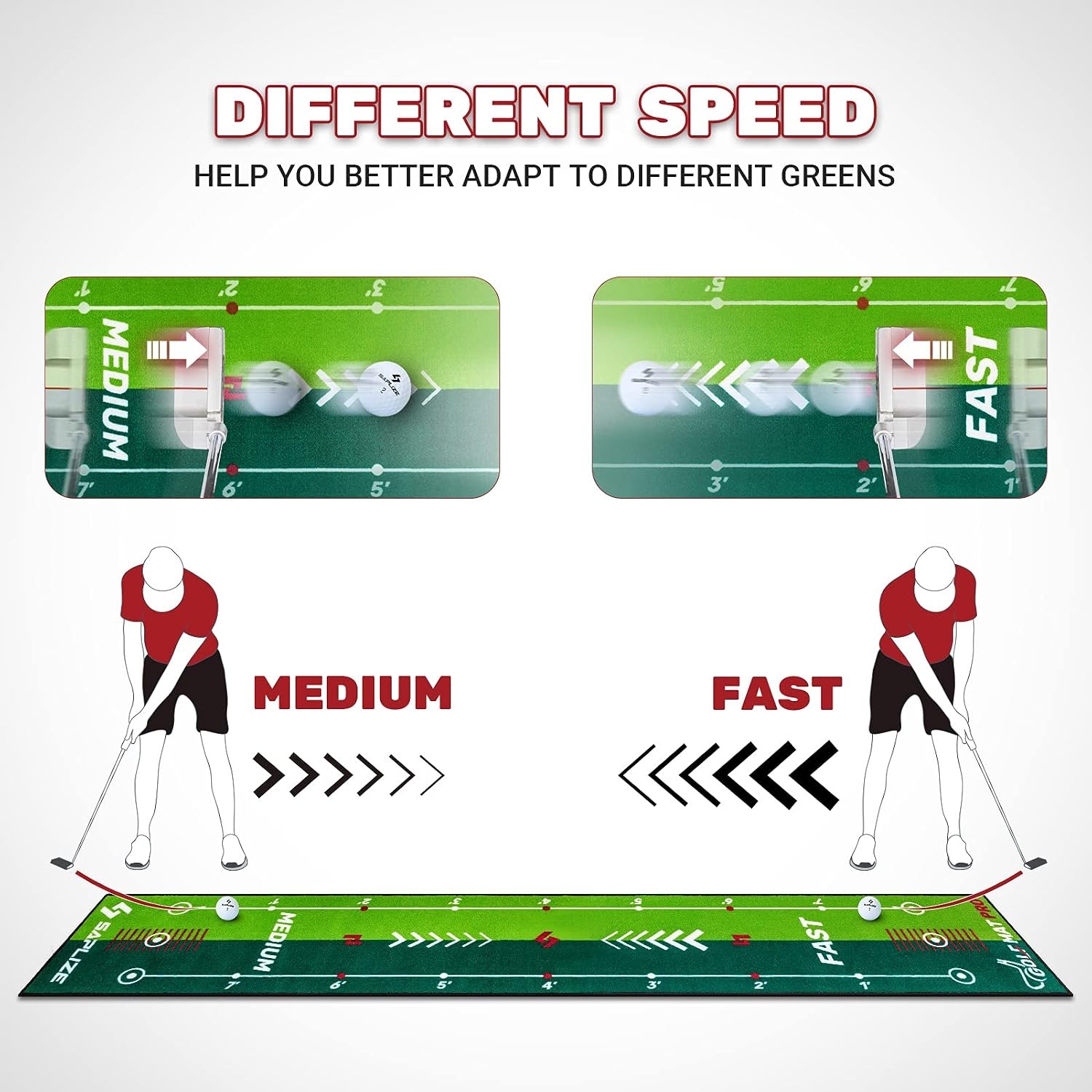
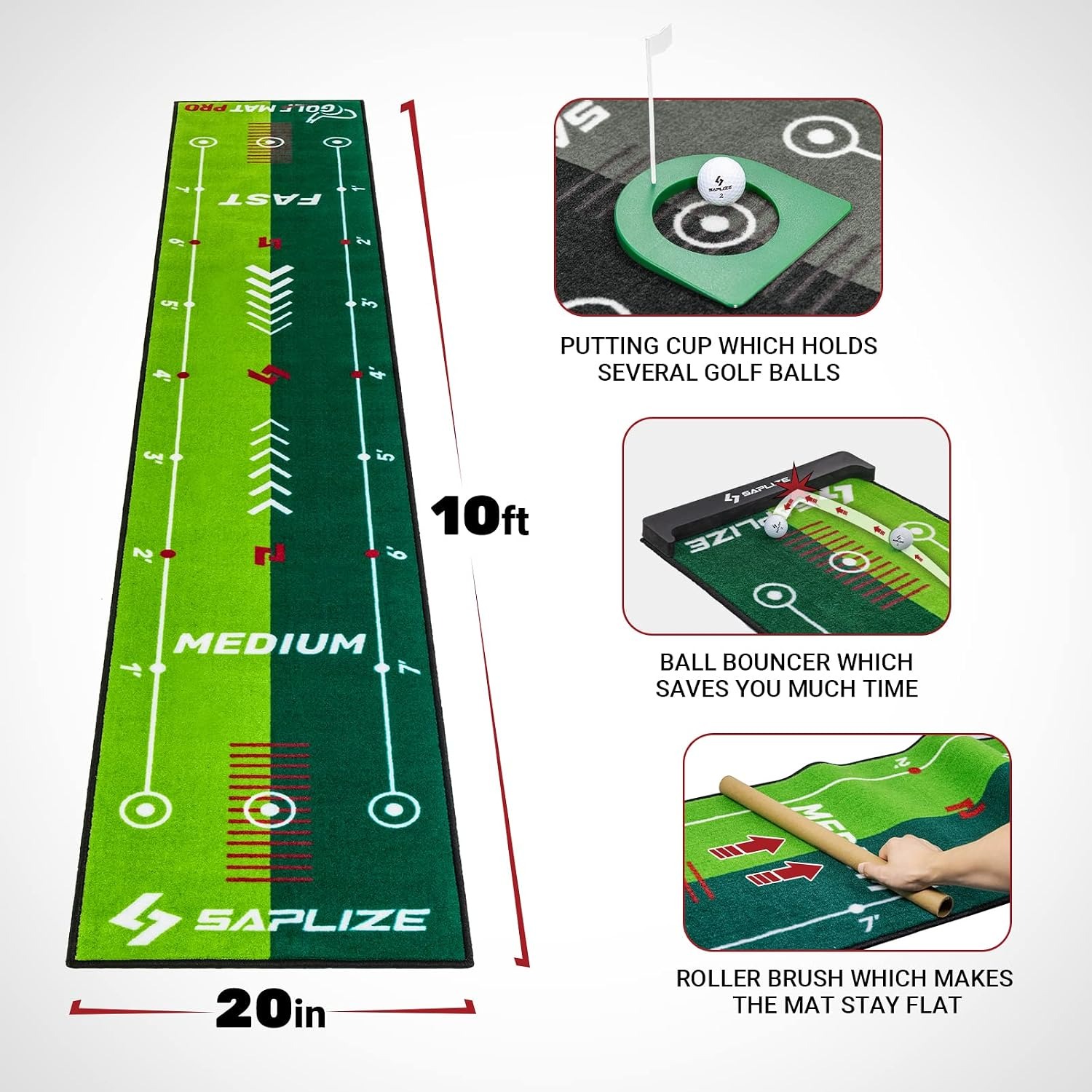
This one is built around two speeds. Putt from one end and the surface rolls fast, rated at 11. Putt from the opposite end and it runs at a medium 9. You change speeds by turning around, which sounds trivial until you realise what it does to your training.
Pace is the skill that separates good putters from poor ones. Line is relatively easy to learn. Pace changes with the weather, the mowing, the time of day and the club you happen to be playing. If every practice putt you ever hit rolls at the same speed, you are training a single reflex that falls apart the first time a green runs quick. Alternating between a fast and a medium surface on the same mat trains your hands to ask a question before each putt instead of defaulting to one length of stroke.
The mirror does the job your eyes cannot
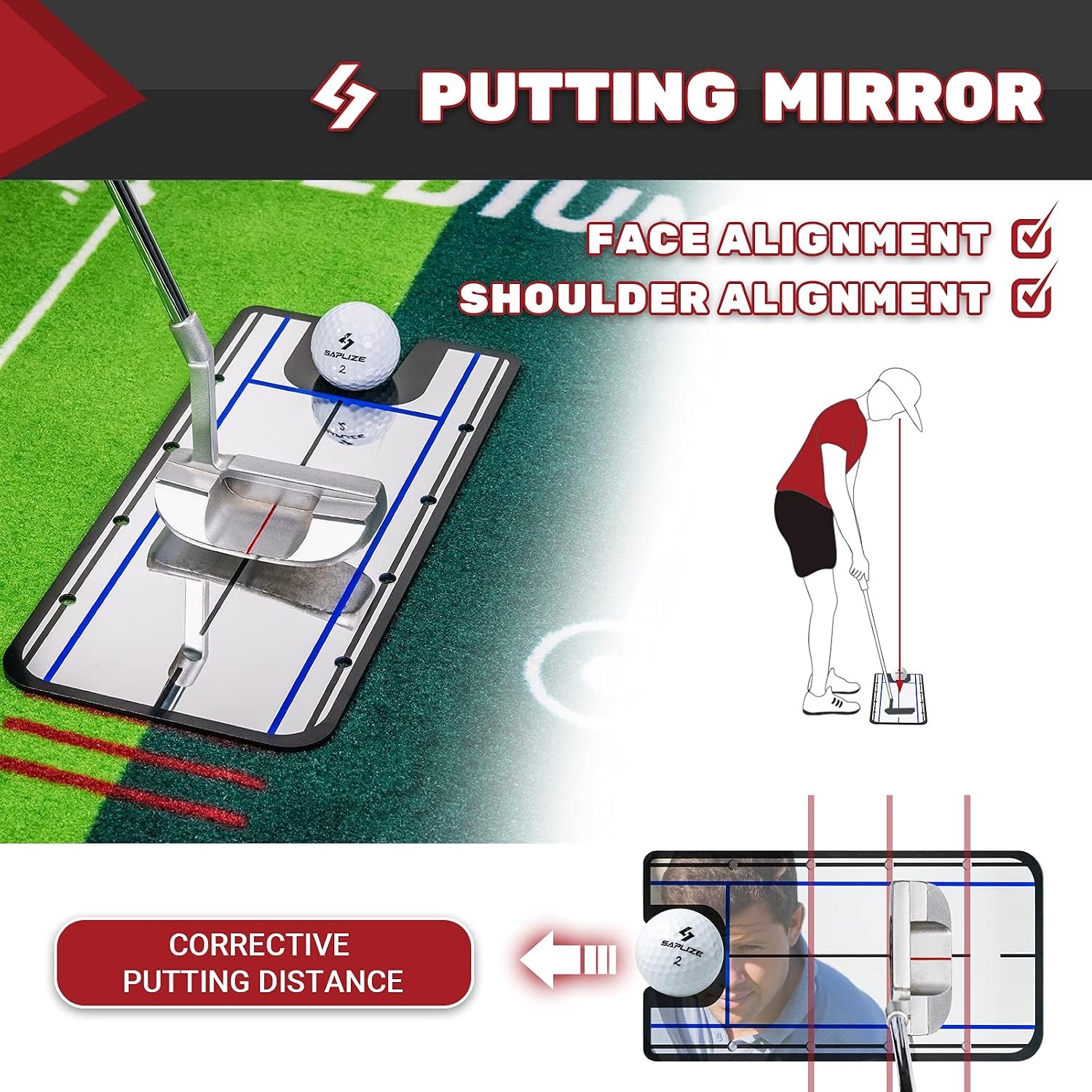
The second feature worth understanding is the alignment mirror built into the setup area. When you stand over a putt, you cannot see your own position. Your brain tells you your shoulders are square and your eyes are over the ball, and your brain is frequently wrong. Most amateurs set up with their eyes inside the ball line and their shoulders open to the target, which pushes putts and encourages a cut across the ball.
The mirror makes that invisible problem visible. You set the ball on the reflective panel, look down, and you can see exactly where your eyes sit and where your shoulders point. Adjust until it looks right, then make the stroke. Do that a few dozen times and the corrected position stops feeling strange, which is the whole point. You are not practising putts so much as practising setup, and setup is where most putts are won or lost before the putter ever moves.
The extras, and why they are not gimmicks
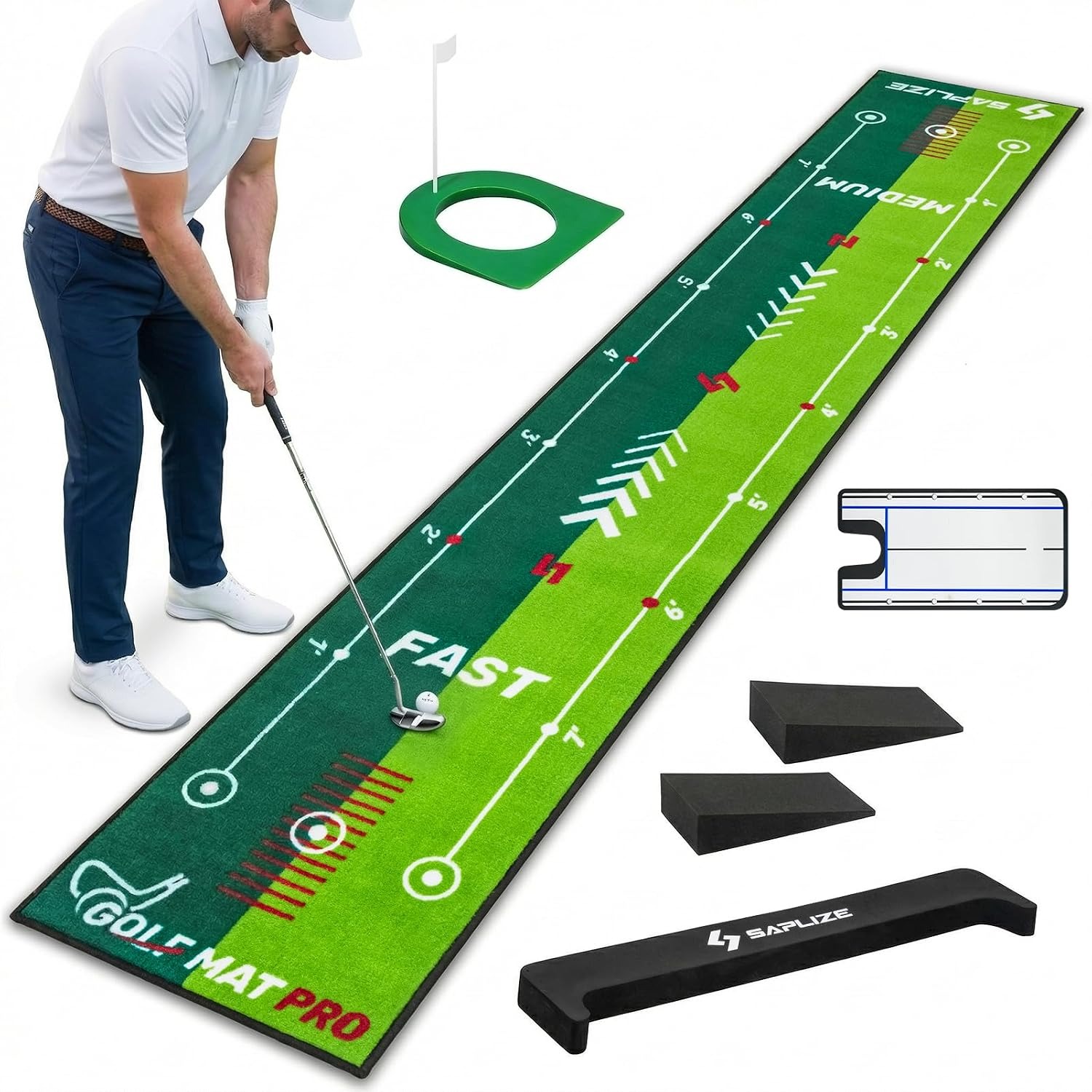
The mat comes with a handful of training pieces that sound like packaging filler but earn their place.
The printed distance numbers give you structure. Random putting is pleasant and does very little. A ladder drill, three balls from the first number, then the second, then the third, with a rule that you only move back once all three are holed, turns practice into something measurable. You will notice within a fortnight whether you are improving.
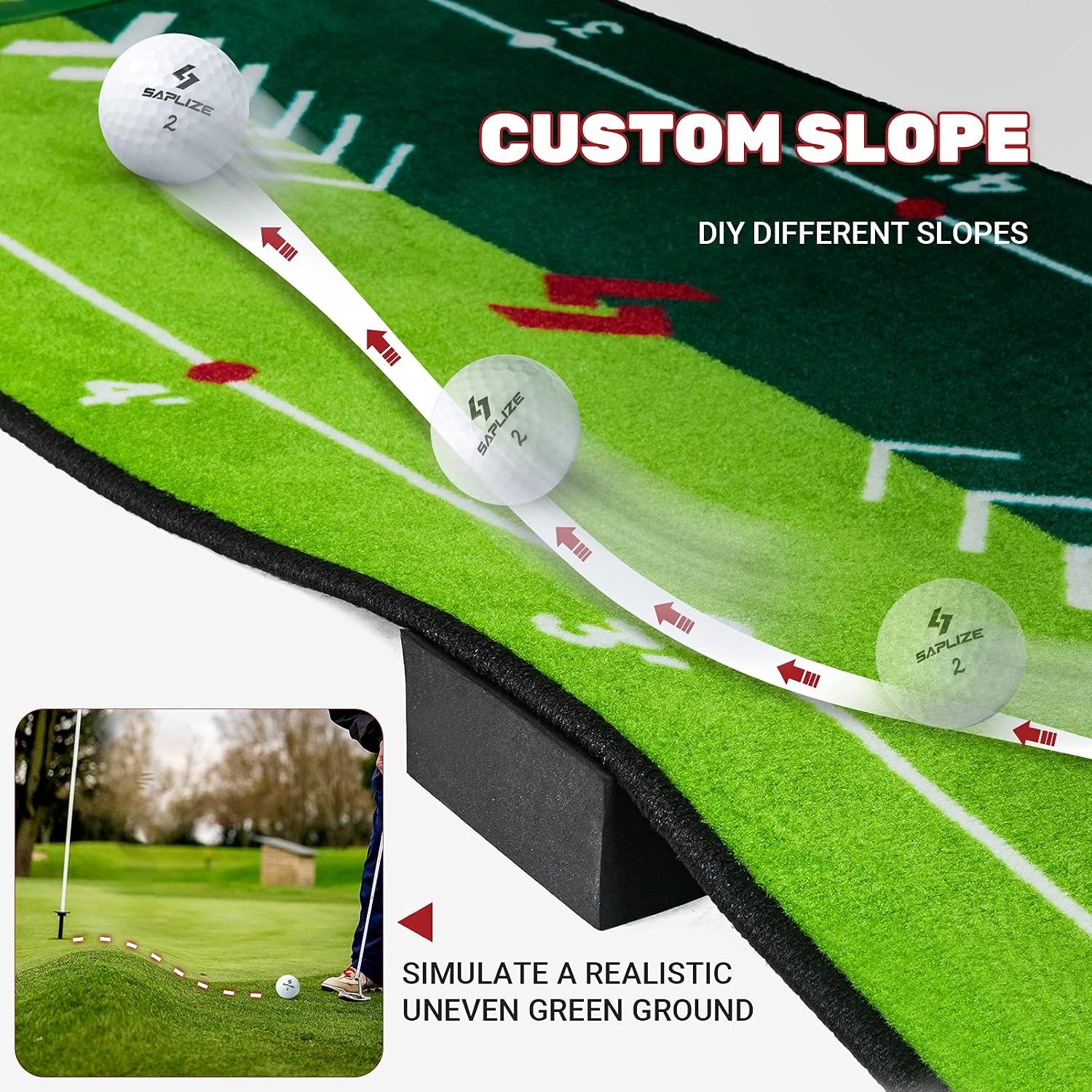
The foam wedges slide under the mat to lift a section and create a slope. Flat putts are useful for grooving a stroke, but no real green is flat. A slope makes the ball break, and a breaking putt forces you to pick a line and commit a pace to it at the same time. That combination is where three putts come from.
The putting hole gives you a target with a pass or fail answer. The ball bumper at the far end stops balls escaping across the room, which matters more than it sounds. A session where you spend half your time crawling behind furniture is a session you will not repeat.
Who it suits
Beginners get the most immediate return, because the mirror teaches a correct setup that would otherwise take a coach and several lessons to install. If you have been golfing a year and nobody has ever checked your eye position, this will change something.
Mid handicappers benefit most from the two speeds and the slope wedges. You already have a serviceable stroke. What you lack is distance control, and distance control is a touch skill that only responds to repetition.
Low handicappers tend to use a mat like this through winter and in the weeks between rounds, purely to keep the stroke from drifting. Ten minutes most evenings keeps the tempo honest.
It is also, bluntly, a good present. It arrives as one kit, needs no assembly and works straight away, which makes it a sensible gift for a golfer who has everything else.
Choosing a spot in the house
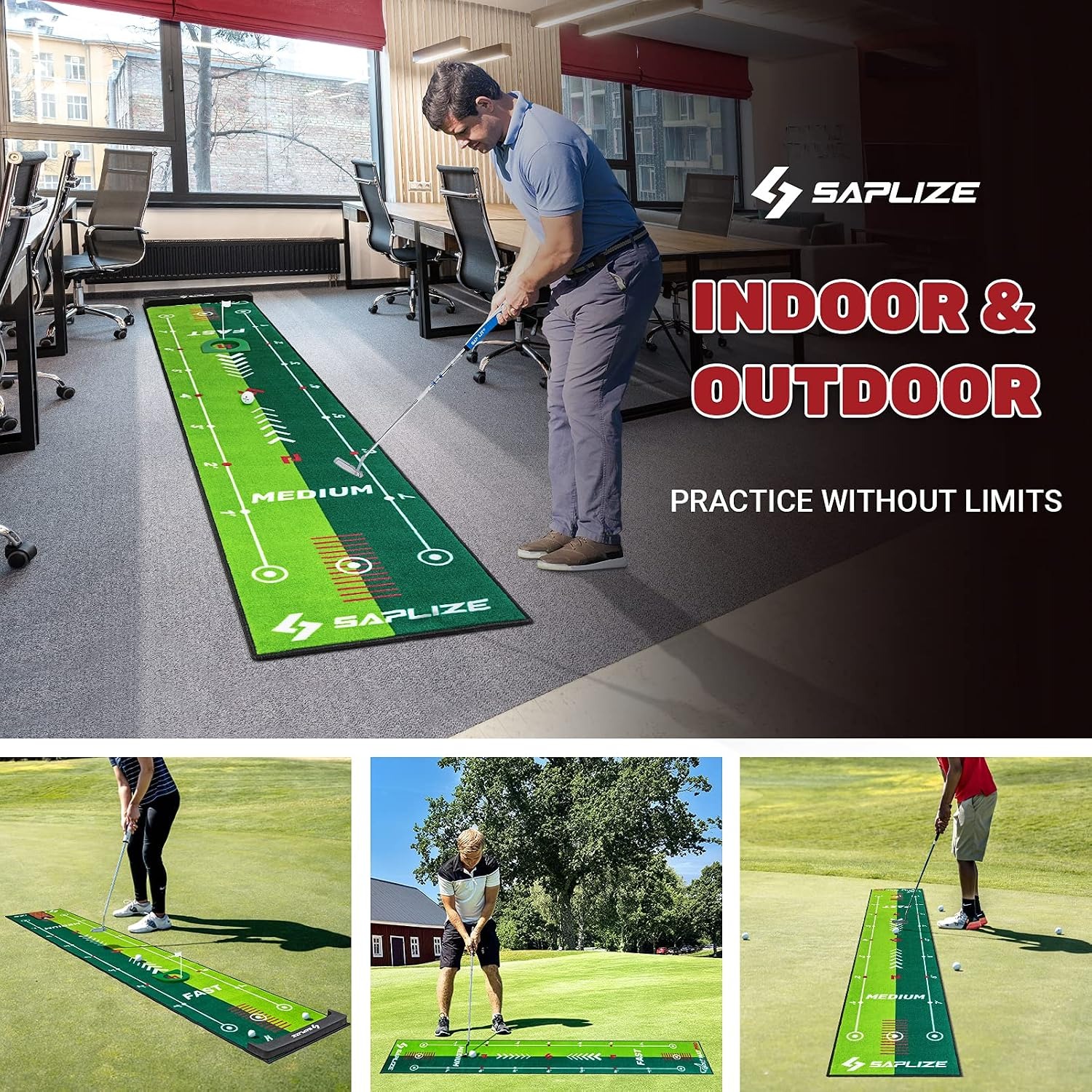
You need a flat run of at least 10 feet plus a bit of space behind you for your stance and backswing. Hallways are the classic answer. Long lounge rooms work. So do office corridors, garages and covered patios.
Hard floors give the truest roll. Timber and tile are ideal, and the rubber-style non slip backing is designed to hold position on them. Short firm carpet is fine. Thick plush carpet is the one to avoid, because the padding underneath makes the roll uneven and you will end up blaming your stroke for the floor's problem.
Lighting matters more than people expect. Putting in a dim hallway makes it hard to read the mirror and hard to see the line. A lamp at the target end solves it.
Looking after it
Treat it like a rug and it will last. Let it lie flat for a day or two when it first arrives so any packing creases relax. Brush the pile occasionally with a soft hand brush in the direction of the nap to keep the fibres standing up, since a flattened nap slows the roll in patches and makes the surface read falsely.
Vacuum on a low setting to clear dust and pet hair. Spot clean marks with a damp cloth and a little mild soap, blot, and let it dry completely before rolling it away. Keep it clear of sharp heels, dog claws and radiators, and store it rolled rather than folded hard under something heavy.
A simple ten minute routine
If you want a routine that works, try this. Two minutes of setup checks on the mirror with no ball, just getting the eyes and shoulders right. Three minutes of short putts on the fast end, aiming for a run of ten in a row. Three minutes of the ladder drill, moving back through the distance numbers. Two minutes on the slope with the foam wedges under the mat, picking a line and committing.
That is it. No heroics, no hour long sessions that you abandon by week three.
The short version
Putting is where scores are made, and a mat at home is the only realistic way most people will practise it often enough to improve. This one gives you 10 feet of surface, two genuine green speeds, a mirror that corrects the setup faults you cannot see, distance markers for structured drills, wedges for slope work, a hole to aim at and a bumper to catch stray balls. It folds away, it suits left and right handers, and the backing keeps it steady on hard floors.
Clear a hallway, roll it out and give it ten minutes a day. The scorecard notices before you do.