
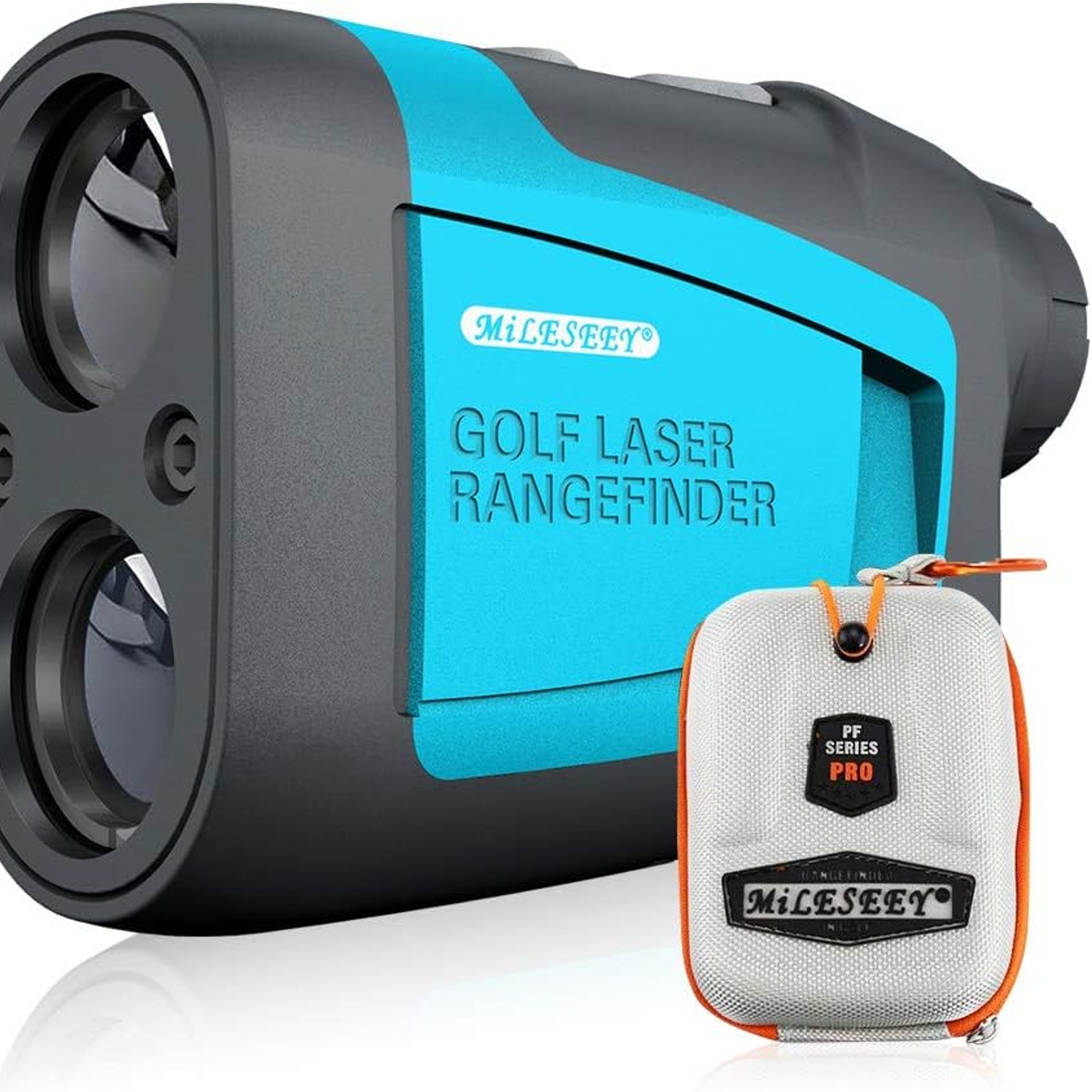
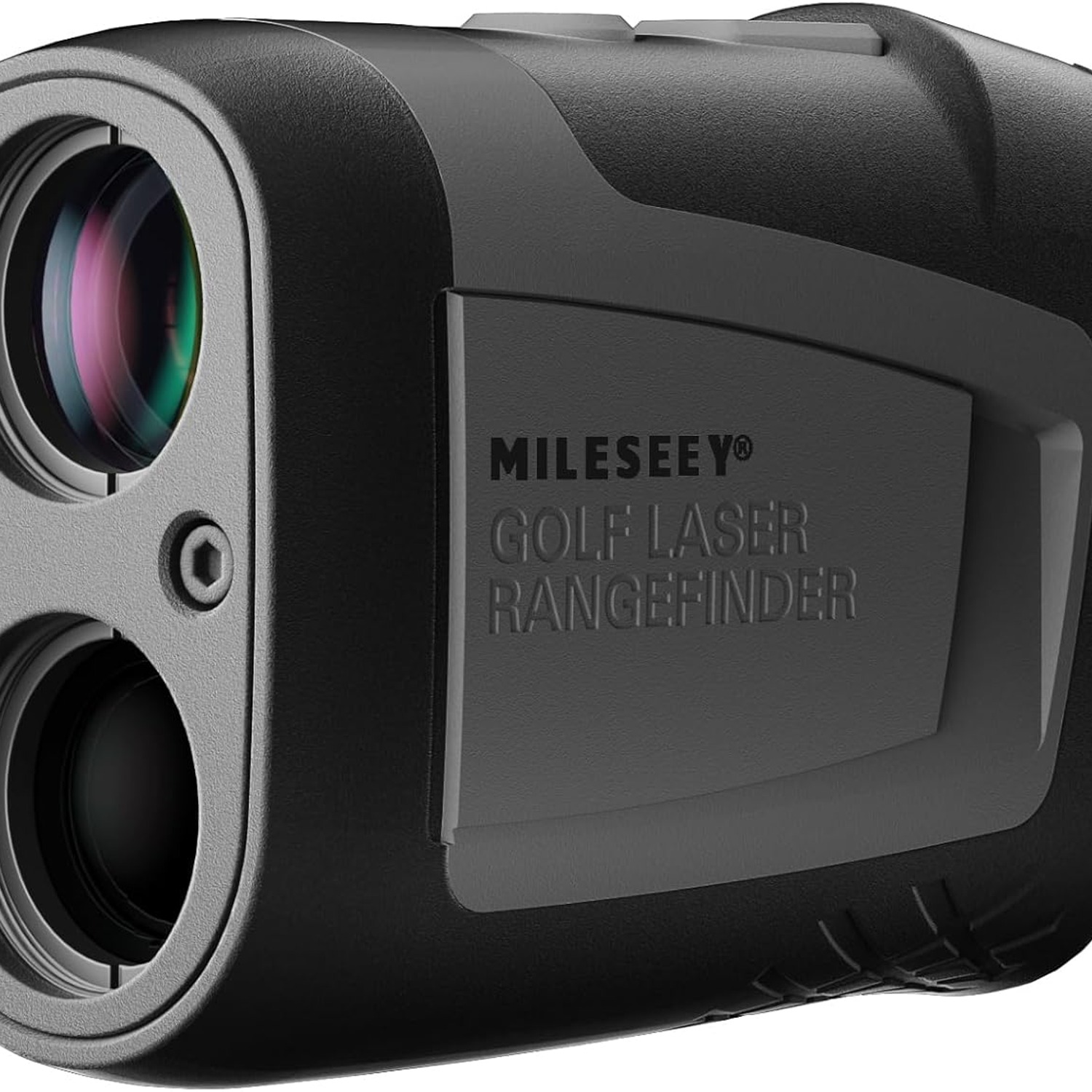
The complete guide
How to Choose a Golf Rangefinder with Slope (Buyer's Guide)
The problem with "about 150"
Walk any weekend fourball and listen to the conversation on the approach shot. Someone paces off a sprinkler head. Someone else checks a marker post that may or may not be to the centre of the green. A third player shrugs and says it looks like a seven iron. Then two of the three shots finish short, because the green sat up a slope nobody accounted for.
That is the real cost of guessing. It is not one terrible hole. It is a string of approaches that come up ten yards light, over and over, until the scorecard looks worse than the golf actually was.
A laser rangefinder fixes the input. You point, you press, you get a number. What you do with the number is still up to you, but at least the decision is based on something.
How a laser golf rangefinder works
The principle is simple. The unit fires a short, invisible laser pulse at whatever you are aiming at. The pulse hits the target, bounces back, and the rangefinder measures the time it took to return. Because the speed of light is a known constant, that round trip time converts directly into distance. This is usually called time-of-flight measurement.
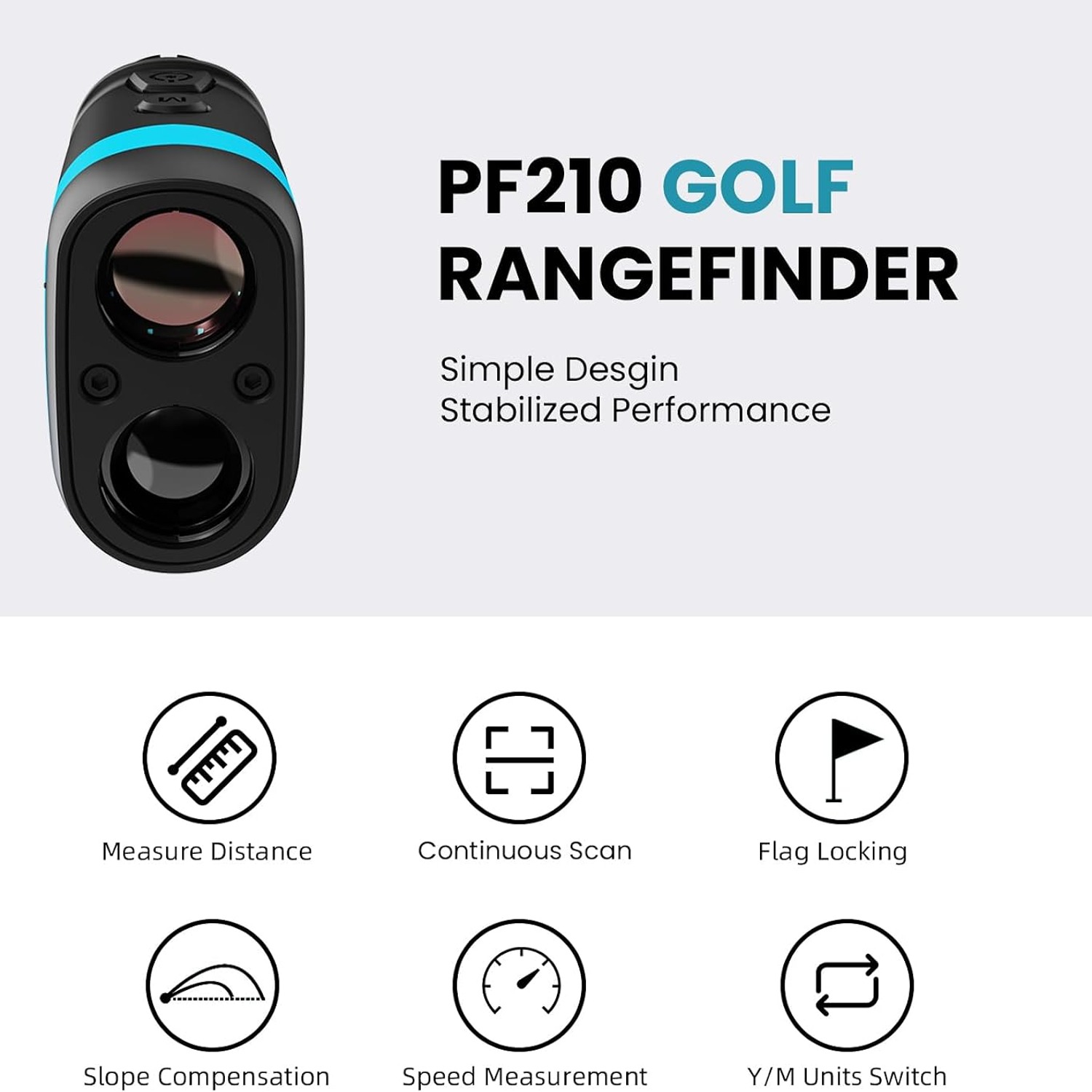
Everything else is refinement. The optics help you aim at the right thing. The scanning mode helps the unit decide which return signal matters. The slope function adds a second layer of measurement on top of the first.
This model reads out to 660 yards, or 600 metres, with a stated accuracy of around half a metre. In practical terms that means the number on the display is not the thing limiting your golf.
What the slope switch really gives you
Slope is the feature people buy for and then underestimate.
When you shoot a flag that sits twenty feet above you, the straight-line distance your laser measures is not the distance you need to carry the ball. Gravity does not care about the hypotenuse. A shot that plays uphill needs more club than the raw number suggests, and a steep downhill shot needs less.
With slope switched on, the rangefinder measures the vertical angle at the same time as the distance and shows you a compensated figure. You stop having to do the mental arithmetic that most amateurs get wrong anyway, usually by not doing enough of it.
The switch matters as much as the feature. Competition rules in most places allow a distance-measuring device but prohibit slope-adjusted readings. A physical switch means you can disable the function and show an official the setting without digging through menus. Practice rounds with slope, counting rounds without. Check your local competition conditions, because they do vary.
Flag lock and why it is not optional
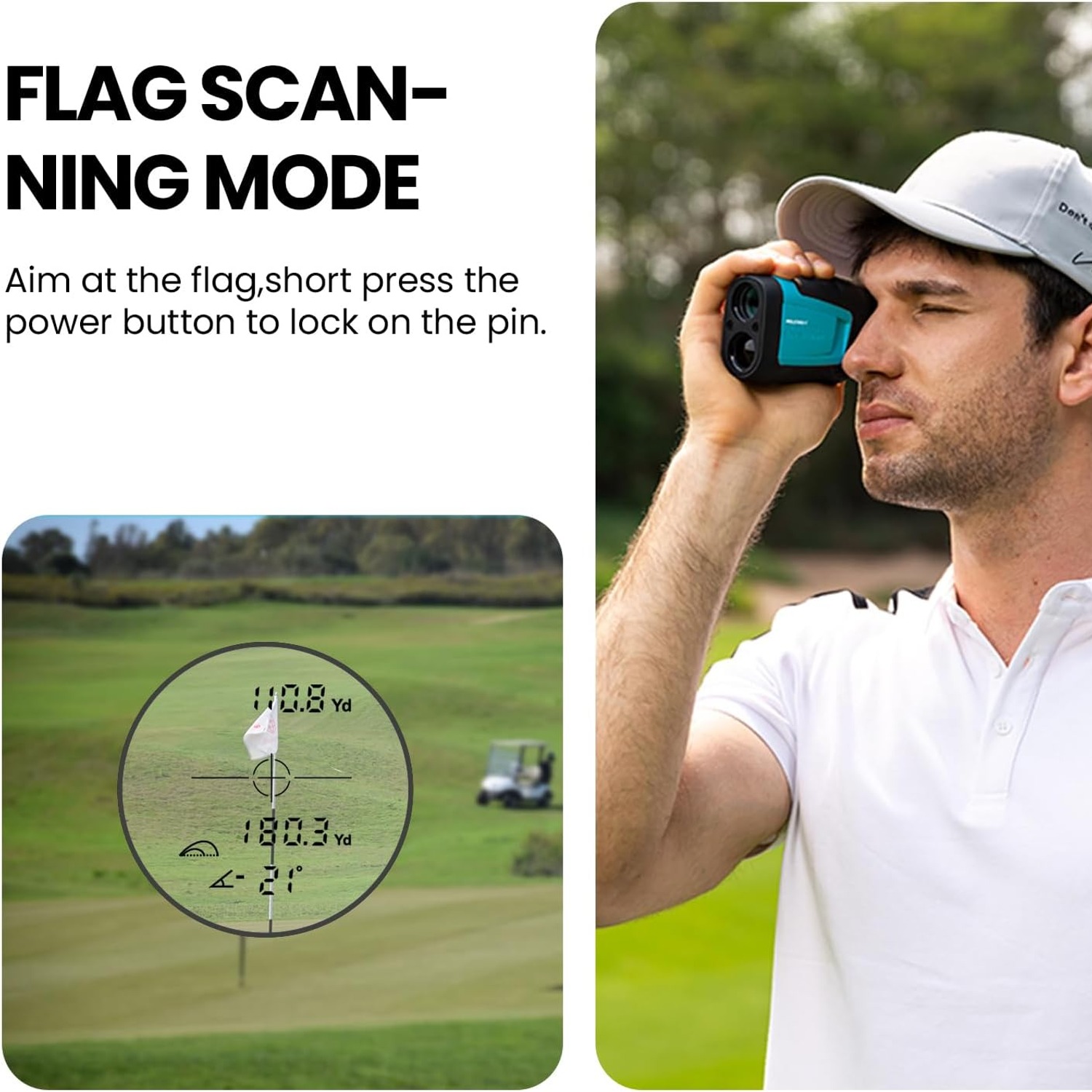
Here is the single most common complaint about cheap rangefinders. You aim at the pin, press the button, and get a reading that is twenty yards too long, because the laser sailed past the thin flagstick and bounced off the tree line behind the green.
Scanning solves it. You hold the measure button and sweep slowly across the green, left to right or right to left. The unit takes continuous readings during the sweep and locks onto the nearest returned target. The flagstick is nearer than the trees, so the flagstick wins. On this model, flagpole locking is quoted to 200 yards.
In use it takes about two seconds and becomes automatic within a round. If you are comparing a flag lock golf rangefinder against a basic point-and-shoot model, this is the feature worth paying for.
Optics, and why 6x is the sensible number
Magnification sounds like a bigger-is-better spec. It is not.
At 6x, a 170-yard flagstick fills enough of the view to aim at confidently, and you can still hold the image reasonably steady with your hands. Push magnification higher and every small tremor is magnified too, so the picture dances and locking onto a thin pin gets harder, not easier.
The lens here is multi-coated, which cuts reflections inside the barrel and gives better contrast in flat light. There is also dioptre adjustment of plus or minus 5D, so you can focus the eyepiece to your own eyesight. Spend one minute setting that up when the unit arrives. Twist the eyepiece until the display reticle is crisp, then check a distant target. Most people who complain about a blurry rangefinder never did this step.
The field angle is seven degrees, a sensible compromise between finding the flag quickly and holding it once you have it.
Who it suits
Improvers get the most from it. If you are breaking 100 or chasing 90, knowing that the shot is 148 and not 160 will save you more strokes than any new driver.
Low handicappers use it differently. They are measuring to carry hazards, to lay-up numbers, and to back edges, and they want the accuracy to be tight enough that the number is never the variable.
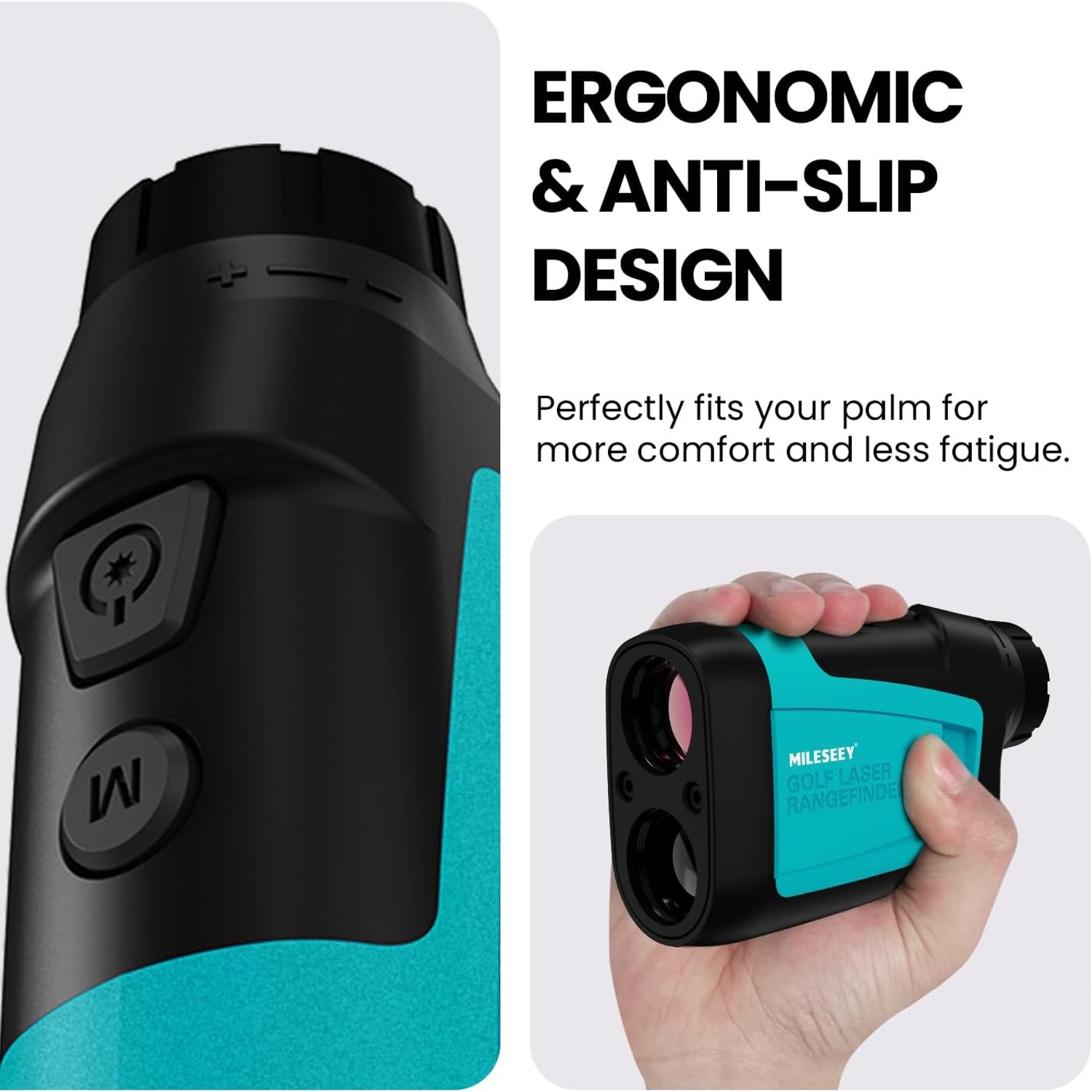
Walkers appreciate the size. At 168 grams and 11 x 3.8 x 6.5 cm it genuinely fits a pocket, which is a different experience to a brick that lives in the bag and gets left behind on half your shots.
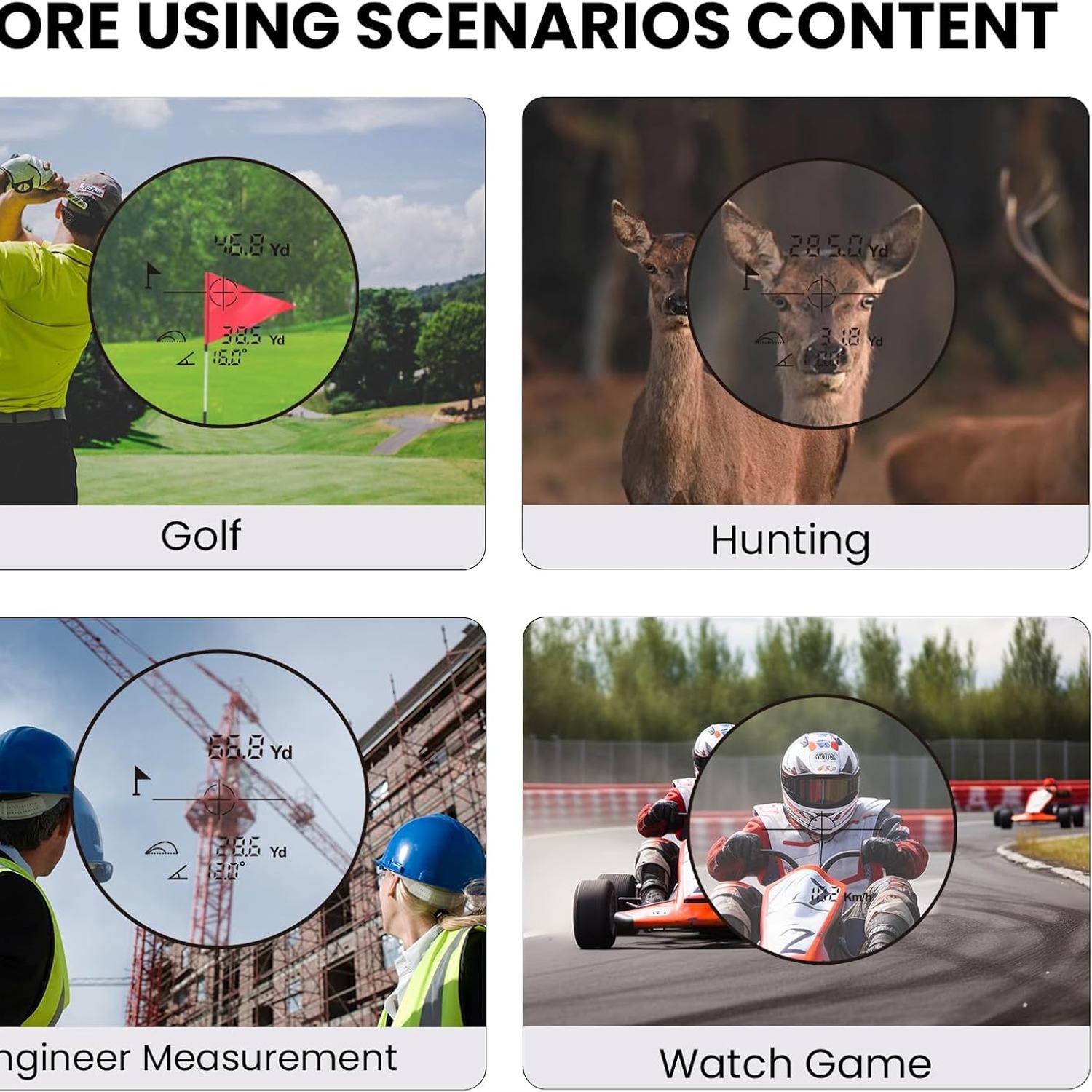
There is also crossover use. The unit is listed for hunting as well as golf, and it includes angle and speed measurement with a speed range of 18 to 300 km/h. If you want one device that handles a round of golf and some outdoor measuring, that flexibility is worth noting.
Choosing between models
A few questions sort most of the decision.
Do you play competitions? If yes, insist on a switchable slope rather than a model with slope permanently on or permanently absent.
How far do you actually need to measure? Anything over about 400 yards is comfort margin on a golf course. A 660-yard range means the unit is never straining at the distances you really shoot.
How are your eyes on a grey day? Dioptre adjustment and coated optics matter more than most buyers expect, especially in early morning or late evening light.
How wet does it get where you play? IPX4 water resistance covers rain and spray. It does not cover dropping the unit in a water hazard, so a pouch and a wrist strap earn their keep.
Looking after it
Treat the lens the way you would treat a pair of glasses. Blow or brush off grit first, then wipe with a clean microfibre cloth. A shirt sleeve grinds sand into the coating and that damage does not come back.
Keep the unit in a pouch between rounds so it is not rolling loose with tees and pitchmark repairers. Avoid leaving it in a hot car, which is harder on batteries and seals than anything that happens on the course.
It runs on a lithium CR2 battery, included. Carry a spare, particularly in cold weather, since low temperatures reduce output on any lithium cell. If the rangefinder is going into storage for months, take the battery out.
The product carries a two-year warranty, so keep your order confirmation somewhere you can find it.
The short version
A laser golf rangefinder does one job, and this one does it with the features that matter. It reads to 660 yards with half-metre accuracy. The slope switch gives you real playing distances on uphill and downhill shots and turns off cleanly for competition. Flag lock scanning to 200 yards means you measure the pin rather than the scenery. Six times magnification with coated optics and dioptre adjustment keeps the view sharp, and 168 grams in a rubber shell keeps it in your pocket rather than your bag.
If you have spent the last few seasons guessing yardages, this is the upgrade that shows up on the card first.