
The complete guide
How To Choose A Golf Towel And Brush Kit That Actually Gets Used
The problem with a dirty club face
Grooves are not decoration. They are there to channel grass and moisture out of the way so the ball can grip the face for a fraction of a second. Pack them with mud and you remove most of that grip. The shot comes off low, with no spin, and it runs out ten metres past the flag. You did nothing wrong with the swing.
The annoying part is how fast it happens. One shot from damp rough and the face is caked. One divot on a soft fairway and the sole plate is holding half a kilo of turf. If you only clean clubs when you get home, you are playing most of your round with equipment that is not doing its job.
Most golfers know this. The reason they still play with dirty clubs is that the cleaning kit is inconvenient. A towel stuffed in a pocket takes three seconds to find, which is three seconds you do not have when your group is moving. A brush that lives in a side pouch stays in the side pouch. The kit that gets used is the kit that hangs where your hand already goes.
What a waffle microfibre towel does differently
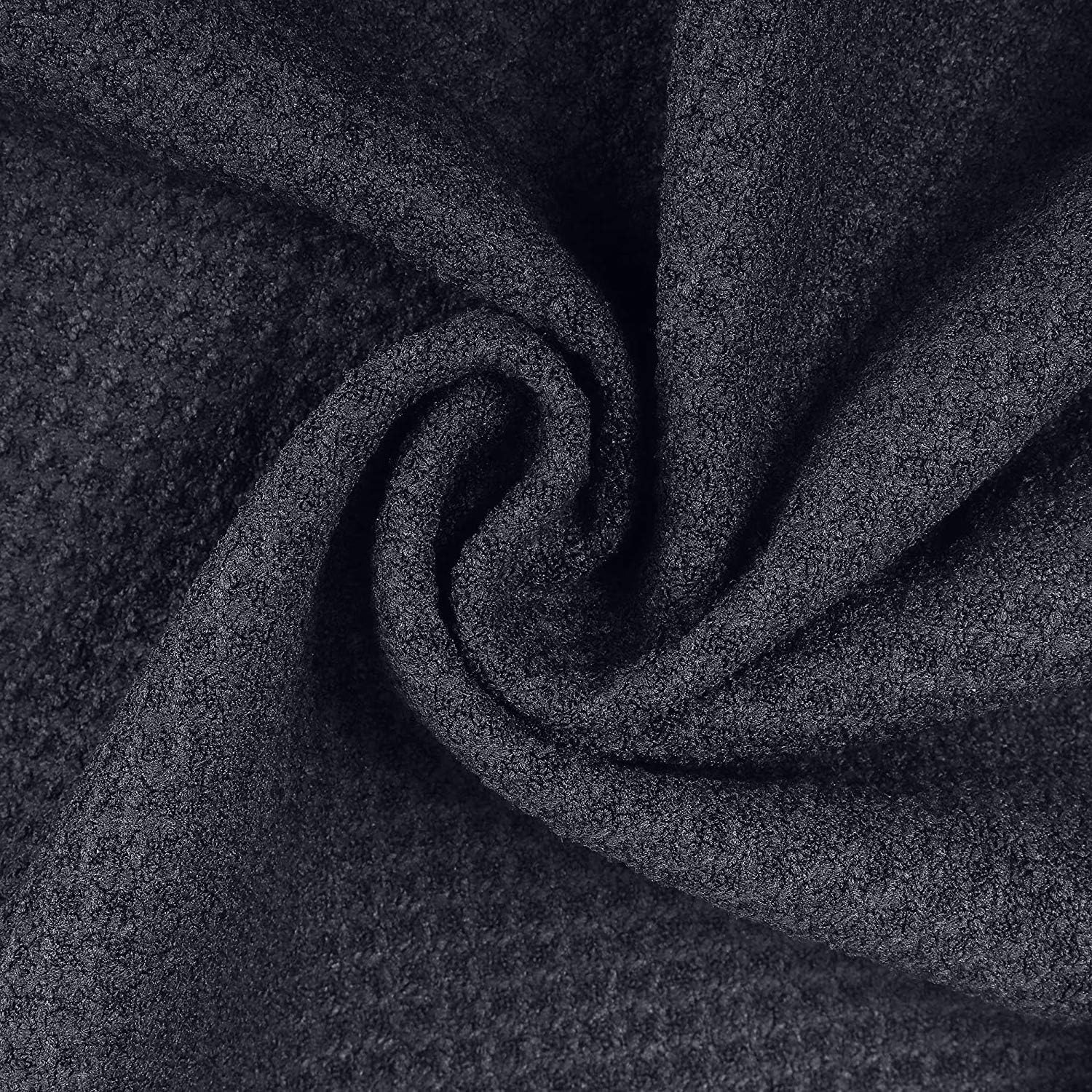
Microfibre is made from fibres far finer than cotton. That matters in two ways. The fibres have more surface area, so they hold more water, and they have more edges, so they pick up dirt rather than pushing it around. A microfibre golf towel of this size will soak up a lot more than it looks like it should.
The waffle weave adds a second layer of usefulness. Instead of a flat surface, you get a grid of raised squares and sunken pockets. The raised parts act like scrapers on caked mud. The pockets hold the loosened dirt so it does not end up back on the face. Run a flat cotton towel over wet sand and you will feel it slide. Run a waffle over the same mess and it bites.
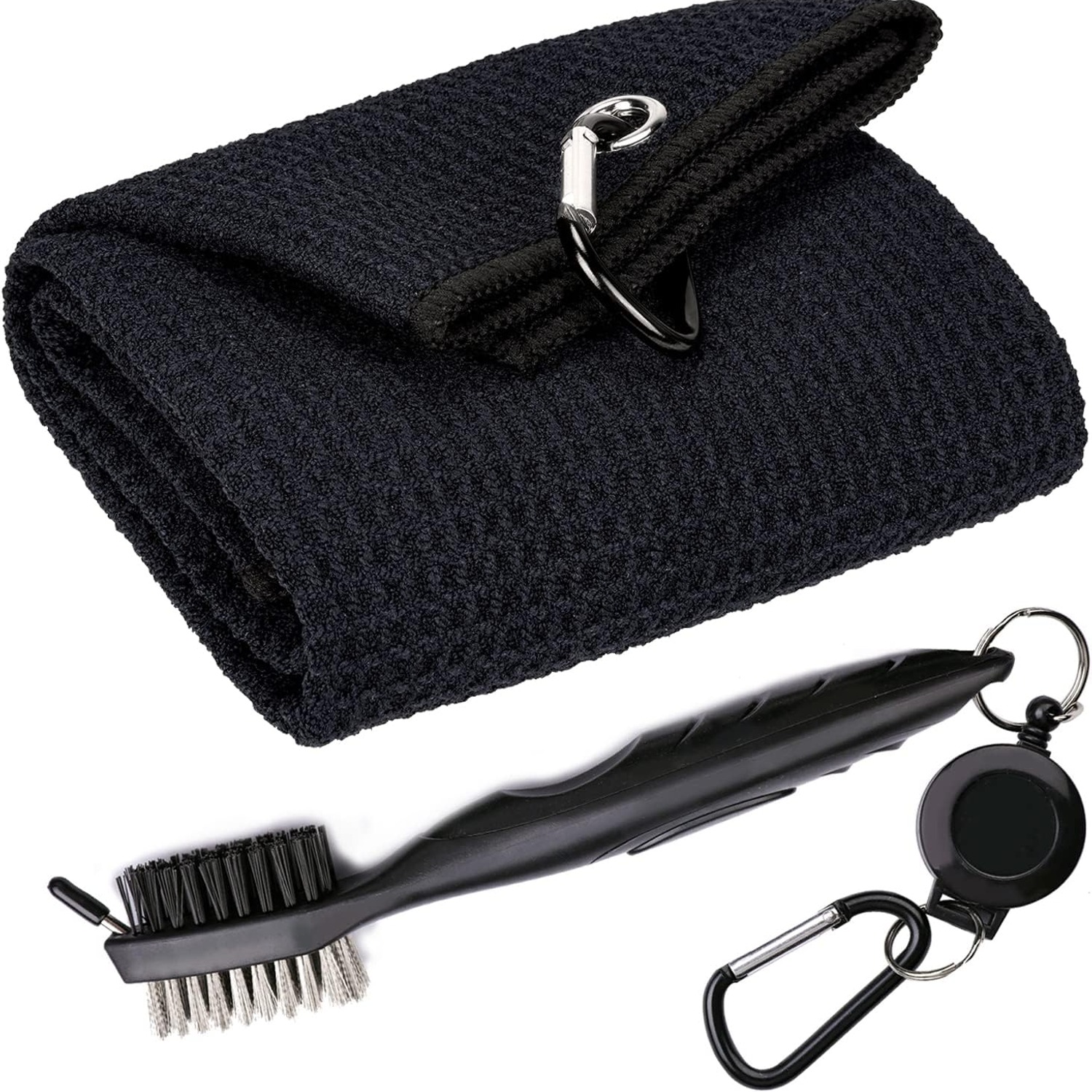
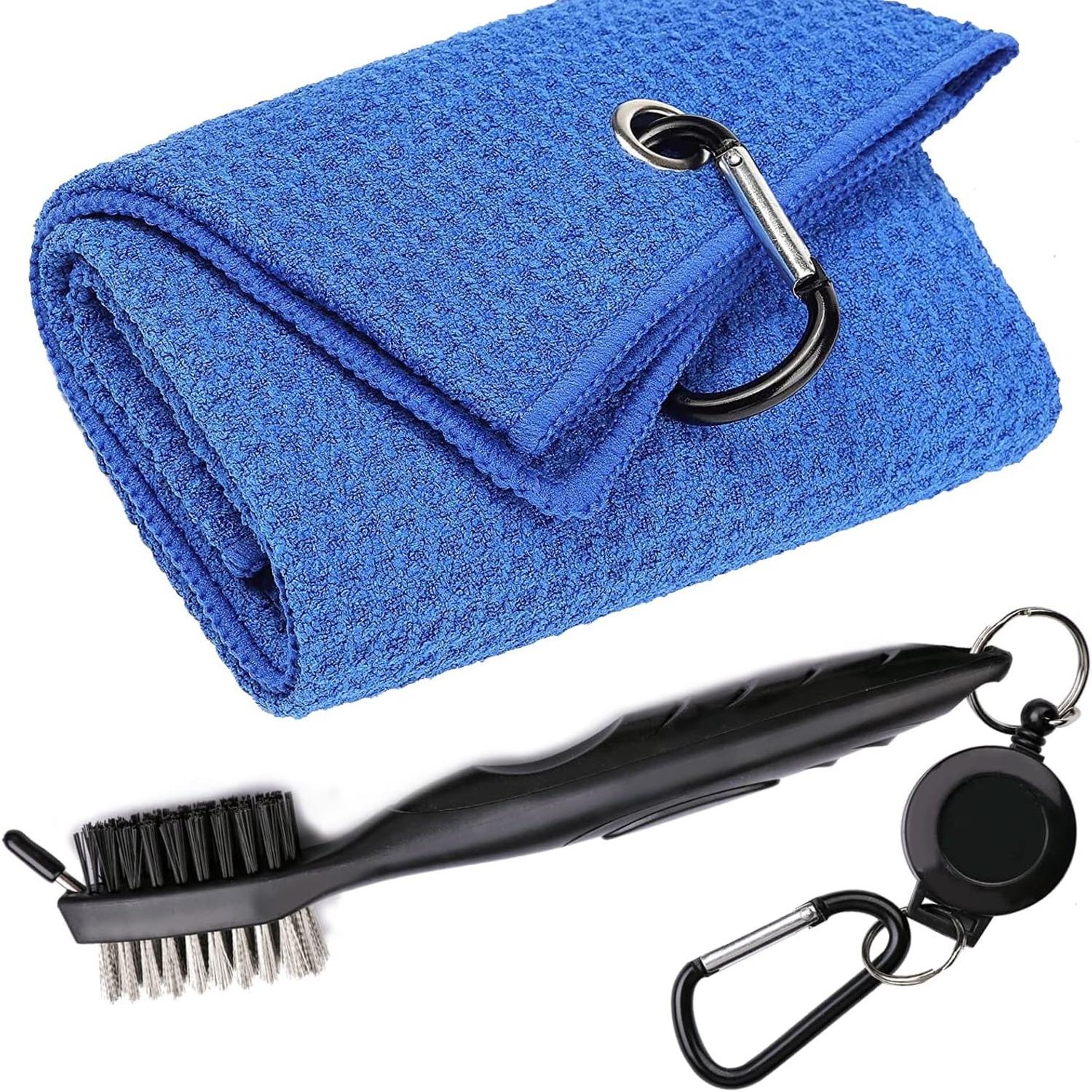
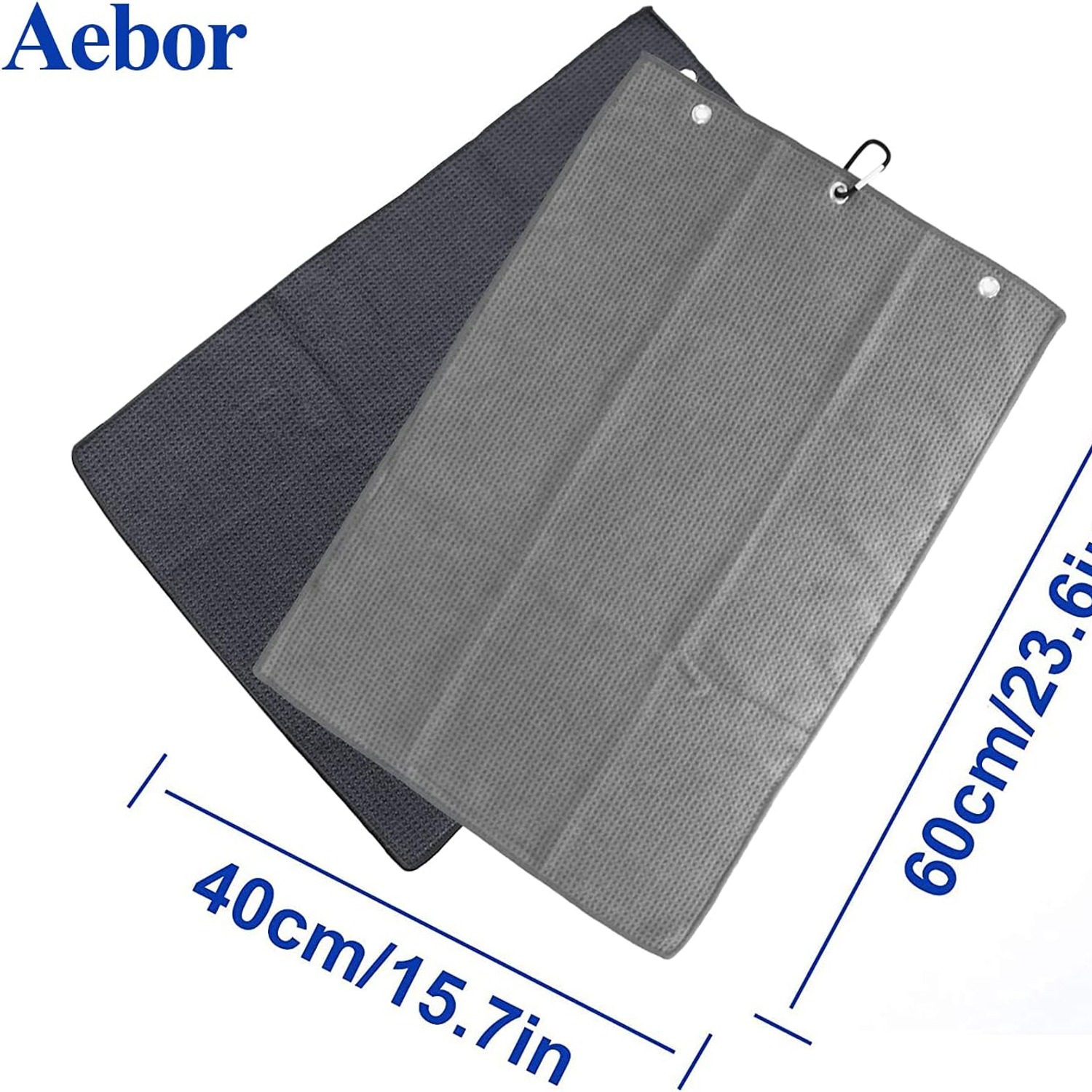
This towel is 59.9 cm by 39.9 cm, which folds neatly into three. That fold matters more than it sounds. Dampen one third and leave the other two dry, and you have a wet pass and a dry finish in one piece of cloth. No second towel, no soaked mess hanging off the bag.
Black also earns its place. Golf towels get filthy. A pale towel looks ruined after two rounds even when it is working perfectly, and that tempts people to leave it at home.
The brush does what the towel cannot
A towel will clear surface dirt. It will not clear a groove that has dried solid overnight, and it will not shift turf welded to the back of a wedge. That is what the brush is for.
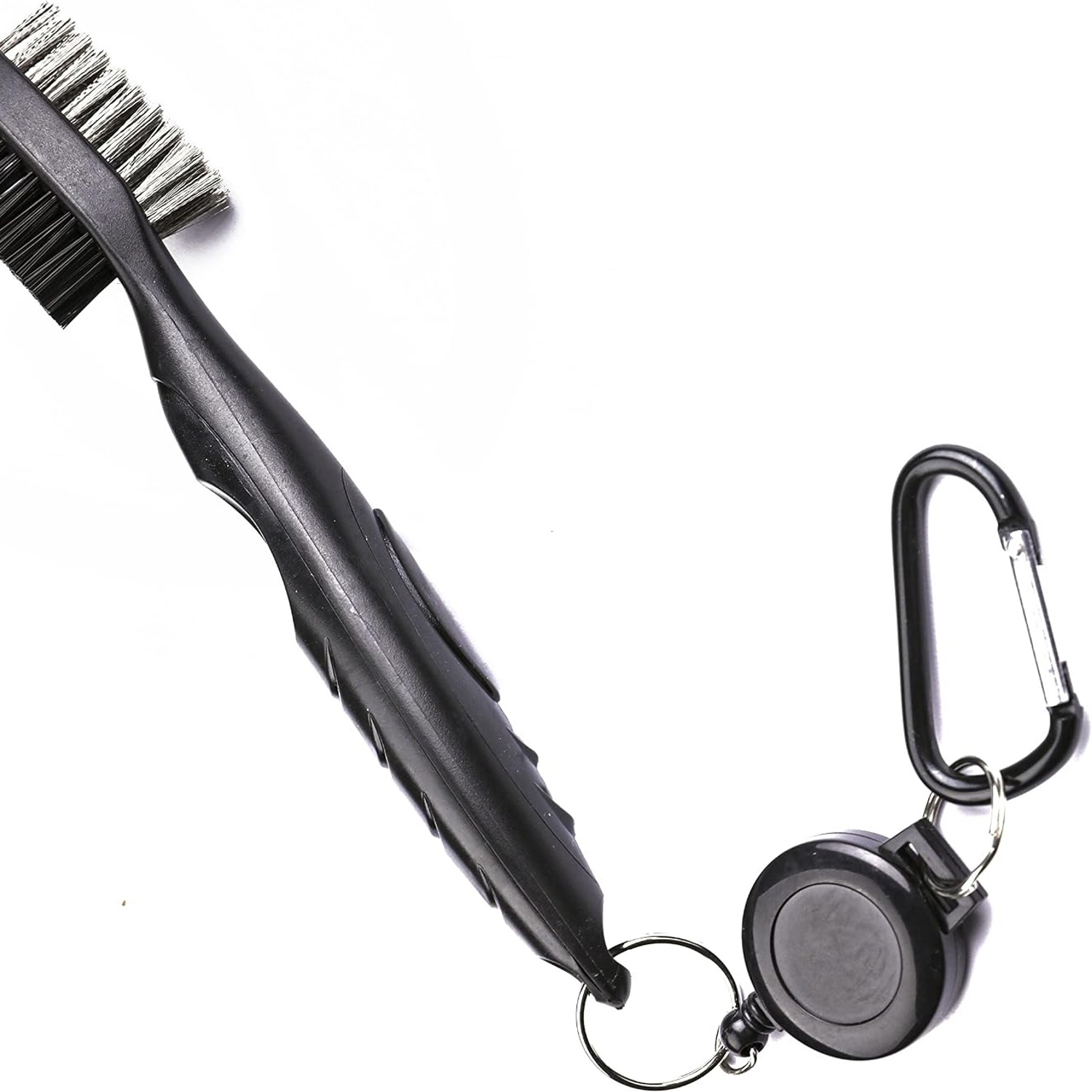
This one is two-sided. The softer bristles are for woods, hybrids and anything with paint you care about. The firmer bristles are for iron faces and sole plates, where you need some force. Folded into the handle is a pointed pick for grooves that have gone solid. Work the pick along the groove, not across it, and the packed soil comes out in a line.
Grip design matters more than people expect, because you often use a brush with wet hands in cold weather. An ergonomic body with some texture means you can apply pressure without the thing squirting out of your fingers.
The retractable zip-line is the detail that makes the whole thing stick. The brush clips once to your bag and stays there. You pull it out roughly two feet, clean, and let go. It winds itself back. No unclipping, no setting it down on the green, no finding it two holes later. If you have ever bought a loose brush and lost it inside a month, this is why that happened.
Who this suits
Beginners benefit most, oddly enough. New players tend to hit more fat shots and more out of rough, so their clubs get dirtier faster. Learning to clean the face between shots builds a habit that keeps their equipment performing while they are still working out what a good strike feels like.
Regular players usually already own a towel, but it is often four years old, stiff as cardboard and no longer absorbing anything. Softener build-up does that. A fresh waffle towel feels like a different piece of equipment.
Range users should take this seriously too. Mat surfaces and compacted dirt leave residue on faces, and a long session will dull your grooves well before any round does. Clip the kit to your range bag and it costs you nothing.
It also works as a gift. Golf gifts are a minefield because most of the market is novelty tat. A towel and brush kit is plain, it is useful, and it will be in the recipient's bag next season. That is a better outcome than a headcover shaped like an animal.
How to choose between options
Start with size. Too small and you run out of clean surface by the fifth hole. Too large and it flaps around on the walk. A hand-towel footprint like this one is the common middle ground, and the tri-fold shape keeps it tidy.
Then look at the attachment. A sewn-in carabiner is worth more than almost any other feature, because a towel without a clip ends up in a pocket and then ends up unused. Check the brush has a retractor too, not just a loop of string.
Weave type comes next. Flat microfibre is fine for polishing and wiping dry dust. Waffle earns its keep on mud. If you play on soft courses, in winter, or anywhere with sand, waffle is the one.
Finally, think about how many you want. One on the bag is the minimum. A second in the car for shoes, trolley wheels and the boot liner saves your good towel from the worst jobs. Plenty of people run two and never think about it again.
Keeping it working
Hand wash only on this one. Warm water, a small amount of mild detergent, work the dirt out with your fingers, rinse until the water runs clear, hang it to dry. That is the whole routine and it takes two minutes.
The one rule to remember is no fabric softener. Softener coats the fine fibres and fills the gaps that make microfibre absorbent in the first place. The towel will feel lovely and will stop working. Bleach is also out, as it breaks the fibres down over time.
For the brush, rinse the bristles under a tap and pick out anything stuck at the base. Let it dry fully before clipping it back, because a damp brush pressed against a bag panel will eventually smell. That is it.
Store the kit clipped to the bag rather than loose in a locker. Partly so you can find it, partly because a towel balled up wet in a dark bag is how mildew starts.
The short version
Dirty grooves cost you spin and control, and the only reliable fix is cleaning kit you can reach without stopping. This pairs a waffle microfibre towel, 59.9 cm by 39.9 cm with a carabiner clip, and a two-sided brush with a groove pick on a retractable line.
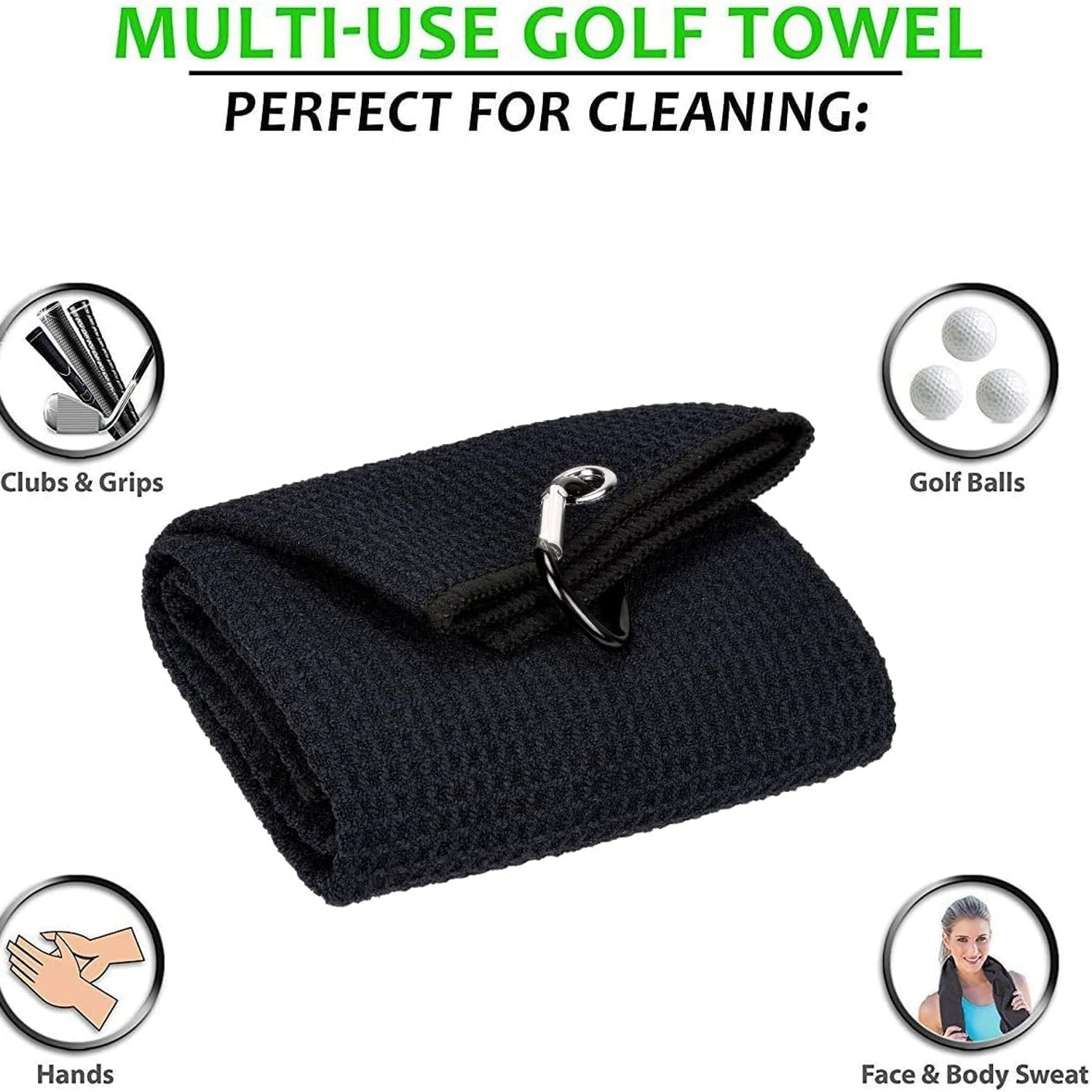
The towel handles mud, sand, grass, grips and golf balls. The brush handles packed grooves and sole plates. Both clip to the bag and stay there. Hand wash the towel, skip the softener, rinse the brush, and the set should give you several seasons of regular play.
If you want one thing in your bag that quietly improves how your clubs perform, this is a sensible place to start.