
The complete guide
How to Choose a Golf Club Brush with a Water Bottle
The problem nobody talks about on the tee
Watch a four-ball on a soft Saturday morning and you will see the same thing happen over and over. Someone hits a wedge out of a damp lie, the face comes up packed with turf, and they give it two hard knocks against their shoe. Then they walk to the green and hit the next one. Three holes later the face still has mud in the grooves and they wonder why the ball is running fifteen feet past the pin.
Grooves are not decoration. They exist to move water, grass and grit out of the way at the moment of impact so the clubface can actually grab the ball cover. Fill them in and you have changed the club. The ball comes off with less spin, flies a little further and lands a lot hotter. On a full iron that might cost you a green. On a greenside wedge it is the difference between a tap-in and a long putt back.
Most golfers know this perfectly well. The reason they play dirty clubs is purely practical. The ball washer is at the tee you already left, the tap is at the clubhouse, and the towel in the bag went damp and dirty by the third hole. A golf club brush with a water bottle built in exists to close that gap. The water comes with you.
How a brush with a water bottle actually works
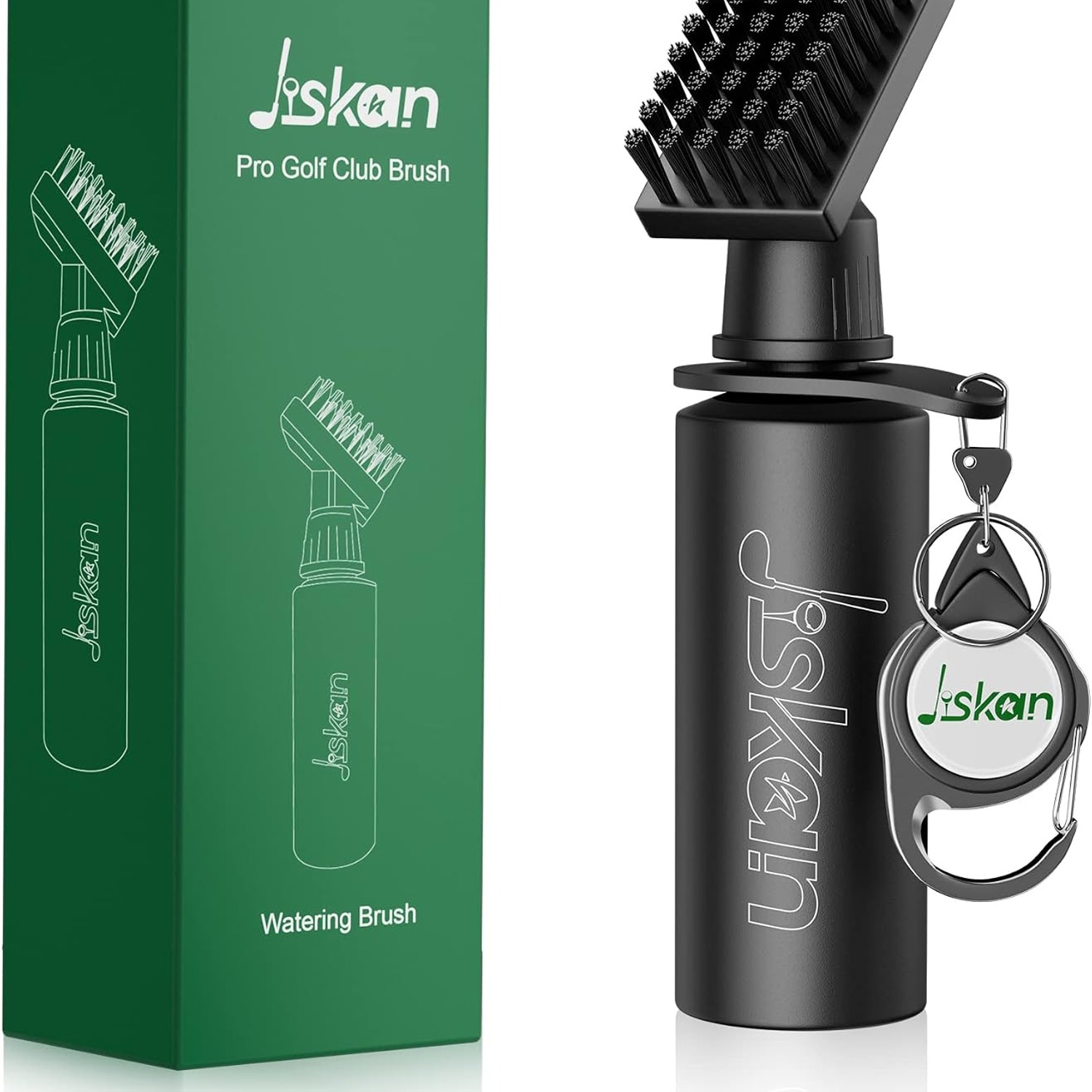
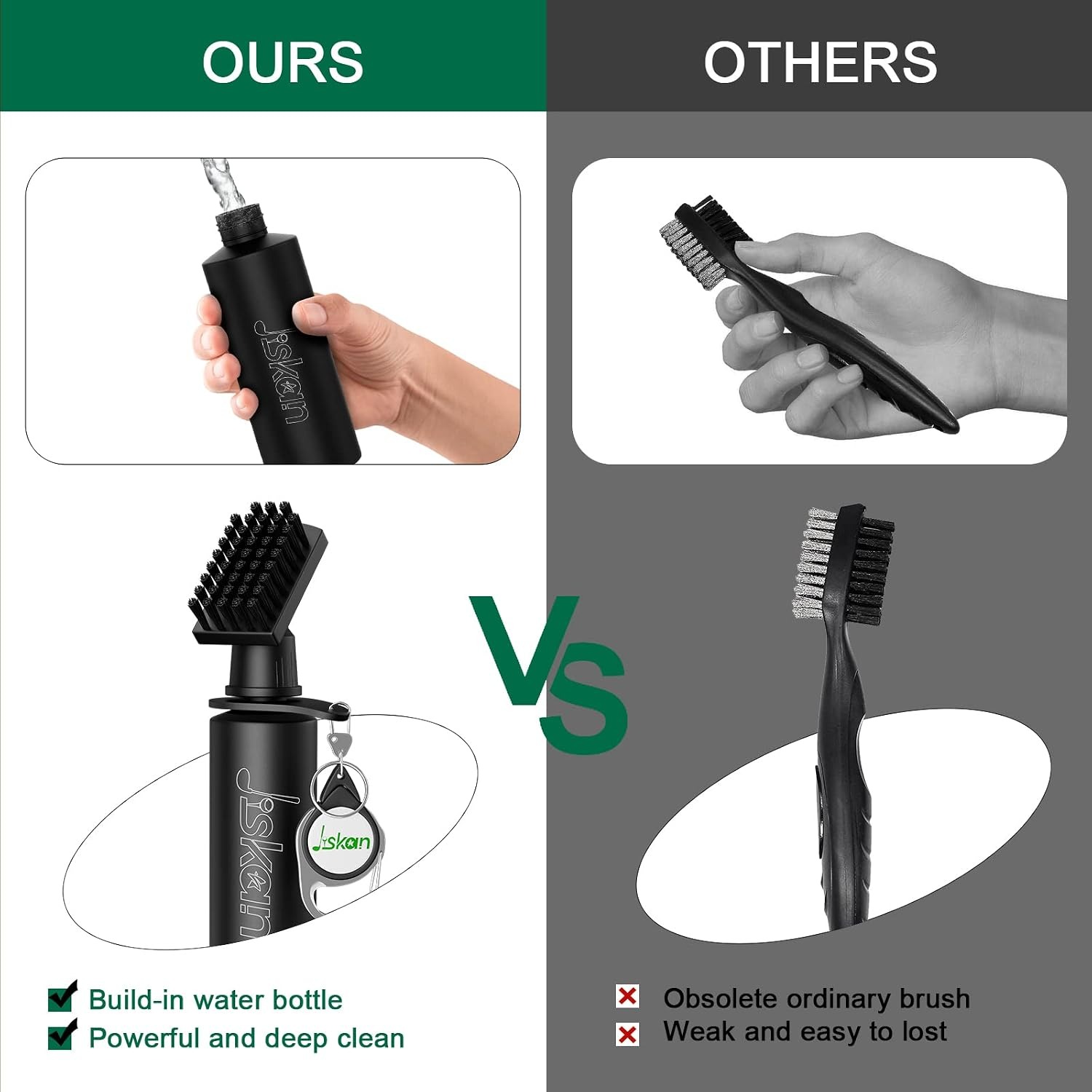
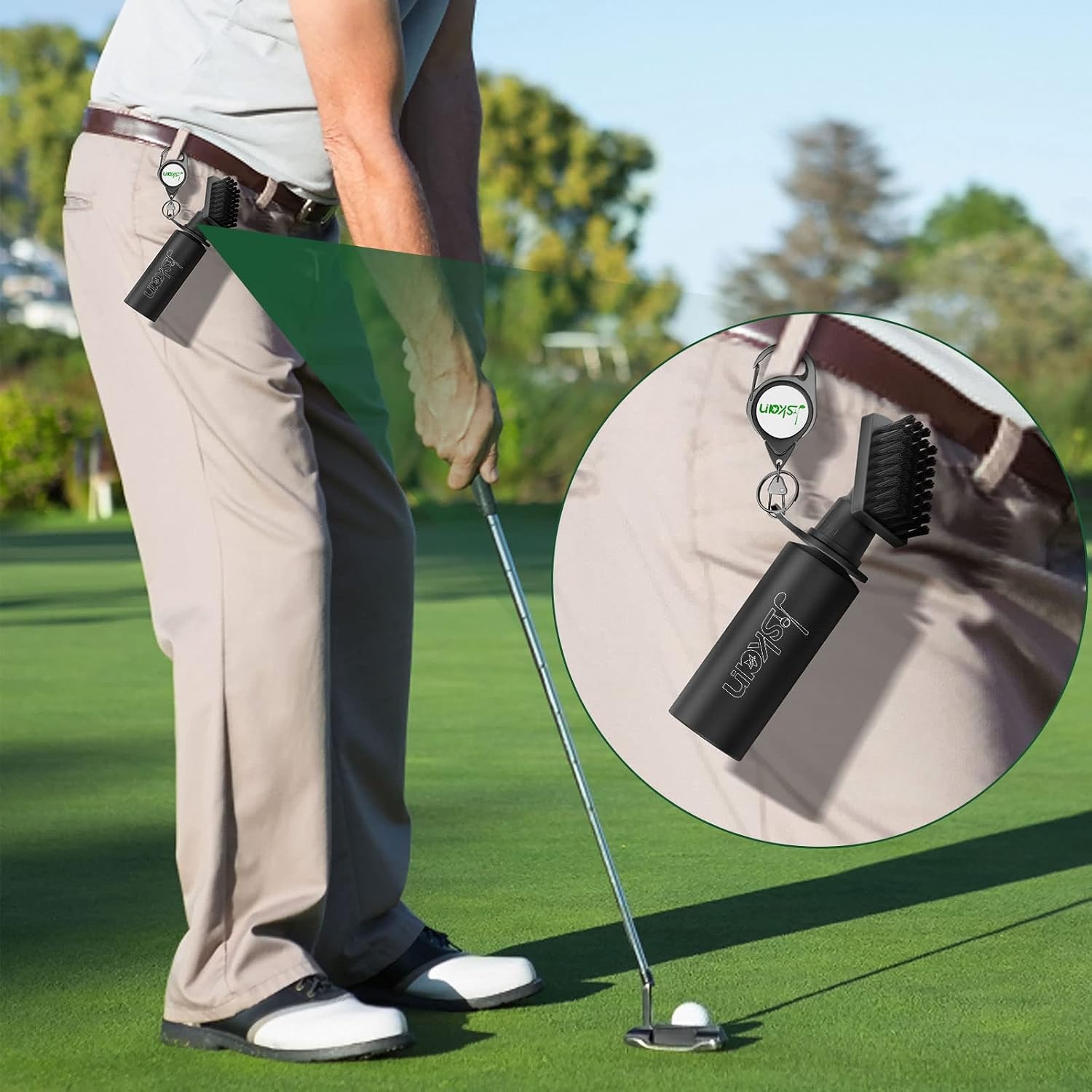
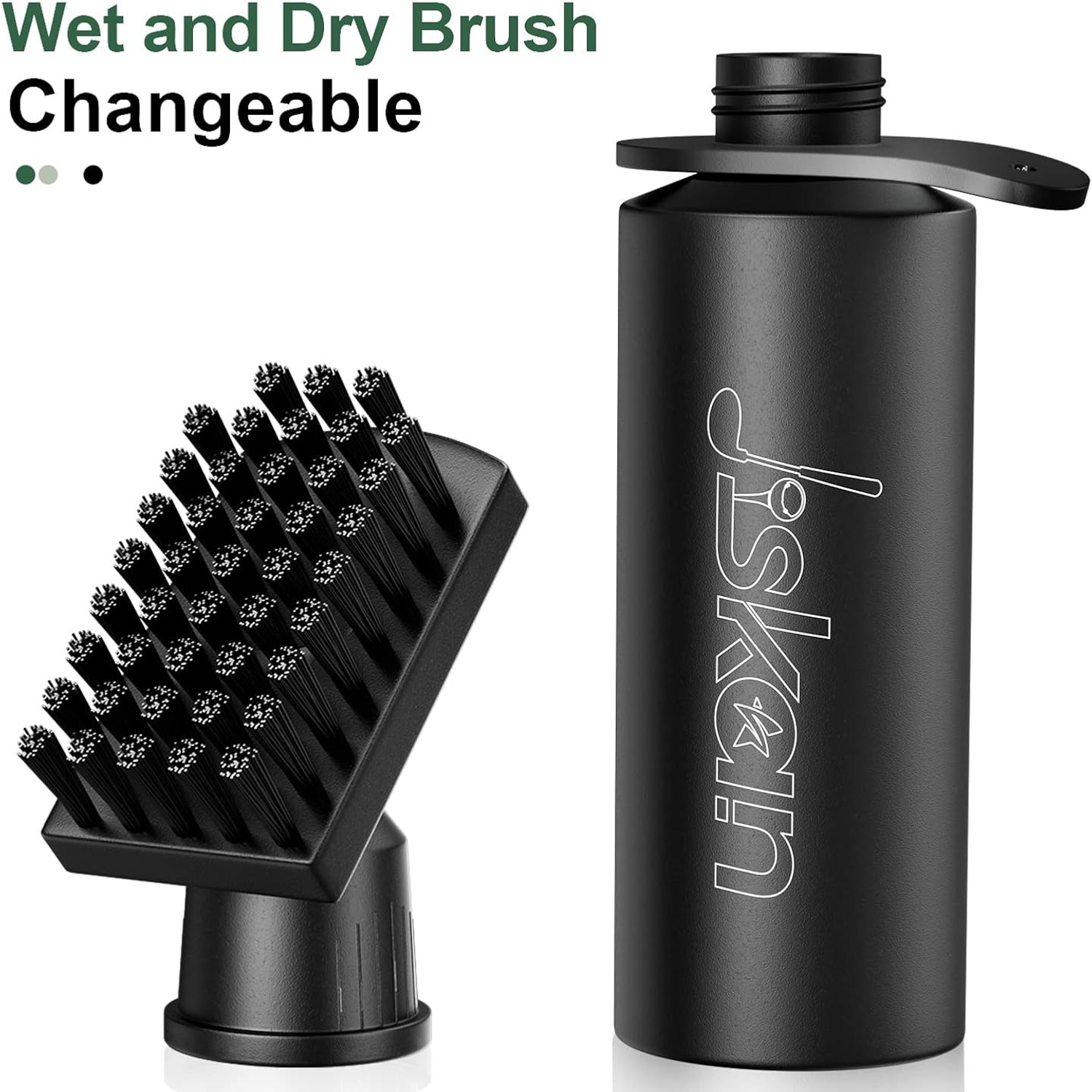
The design is simple on purpose. The handle is a squeeze bottle. You fill it with water, screw the cap down, and the brush head sits at the top. When you want water, you squeeze the body and it feeds through to the bristles. That gives you a wet scrub on demand.
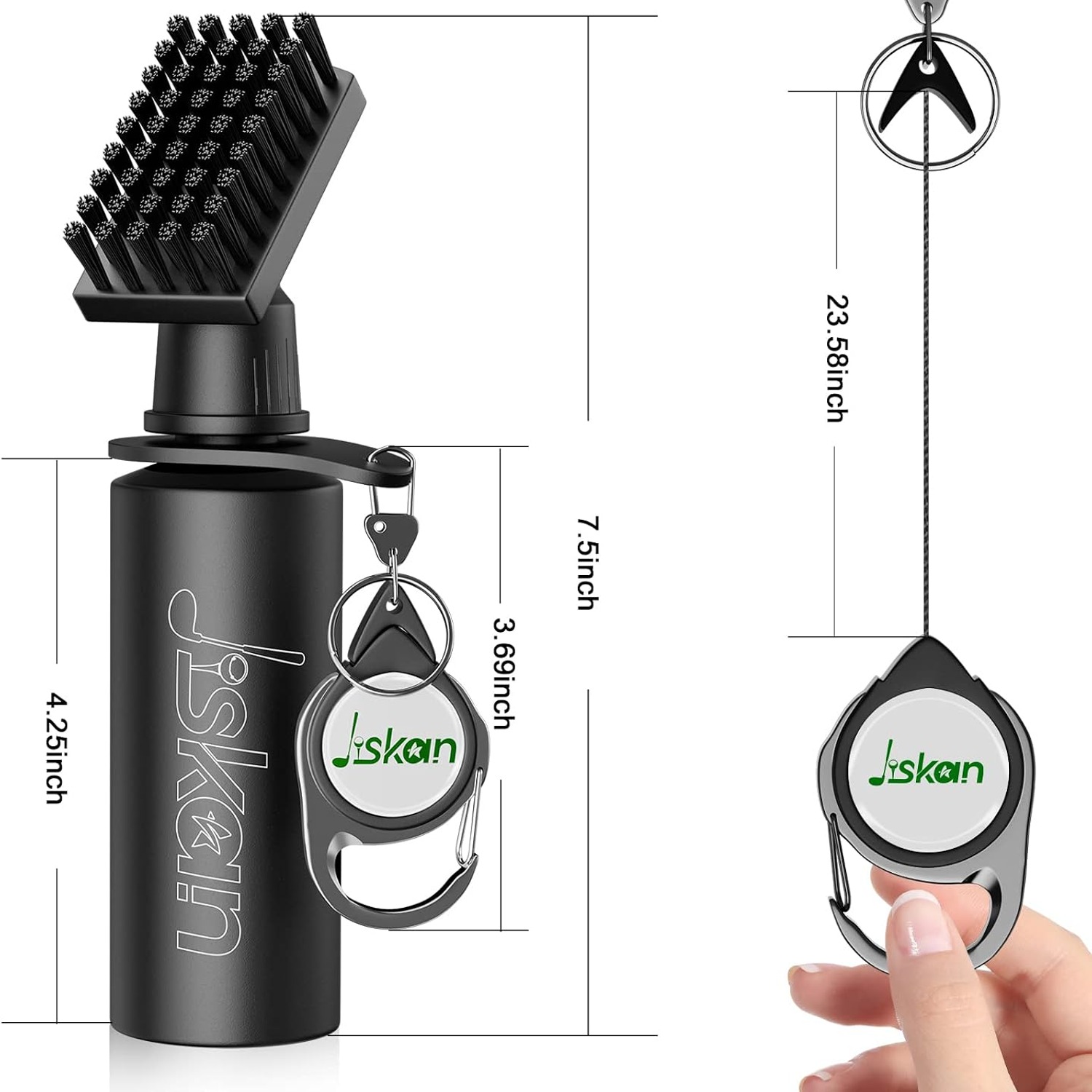
This one is 7.5 inches long and holds 4 ounces of water. Four ounces does not sound like much until you realise how little you need for a single clubface. A short squeeze, maybe half a second, is plenty. Used sensibly, one fill will see you through a round with water left over.
The second mode matters just as much. When the club is dry and dusty rather than caked, you just brush it. No water, no mess. That is why a good golf club cleaner needs both options. Soaking a dry face is wasteful, and dry brushing a mud-packed one is useless.
The brush head on this model is oversized compared with the small clip-on brushes many people carry. More bristle area means fewer strokes to cover a full iron face, and it also makes the tool useful beyond clubs. Spiked shoes, muddy balls, trolley wheels, the base of a bag that has been standing in wet grass. A bigger head turns a single-purpose gadget into something you reach for all the time.
Who this suits
If you play on soft courses, in winter, or anywhere with sandy bunkers and heavy rough, this is an easy call. Those conditions put dirt on your clubface every single shot and the quality of your contact suffers quietly all day.
It also suits people who are serious about their short game. Wedges live and die on spin. A face that is clean at the point of contact behaves predictably, and predictability is most of what separates a good chipper from a lucky one. Plenty of buyers treat a brush like this as a dedicated best golf wedge cleaner and only reach for it on scoring clubs.
Beginners benefit more than they expect. Newer players tend to take fatter divots and catch more turf, so their clubs get dirtier faster. Building the habit of cleaning the face before the next shot is cheap, easy and genuinely improves how the ball comes off.
Finally, it works as a gift. It comes in a presentation box, so it needs nothing more than a ribbon. For the golfer who already owns four rangefinders and a drawer full of novelty tees, a practical item they will use most weekends is usually the better choice.
What to look for when choosing one
Bottle capacity. Too small and you are refilling at every tee. Four ounces is a workable middle ground, enough for a round of normal use without adding noticeable weight to your bag.
Head size. Small heads look neat and clean slowly. A wider head covers the face in a couple of passes, which matters when your group is already walking off.
The seal. This is the one that catches people out. Cheap squeeze-bottle brushes leak into bags, which is why so many golfers have given up on the concept entirely. Look for a design that treats the cap and seal as a feature rather than an afterthought, and get into the habit of closing it properly.
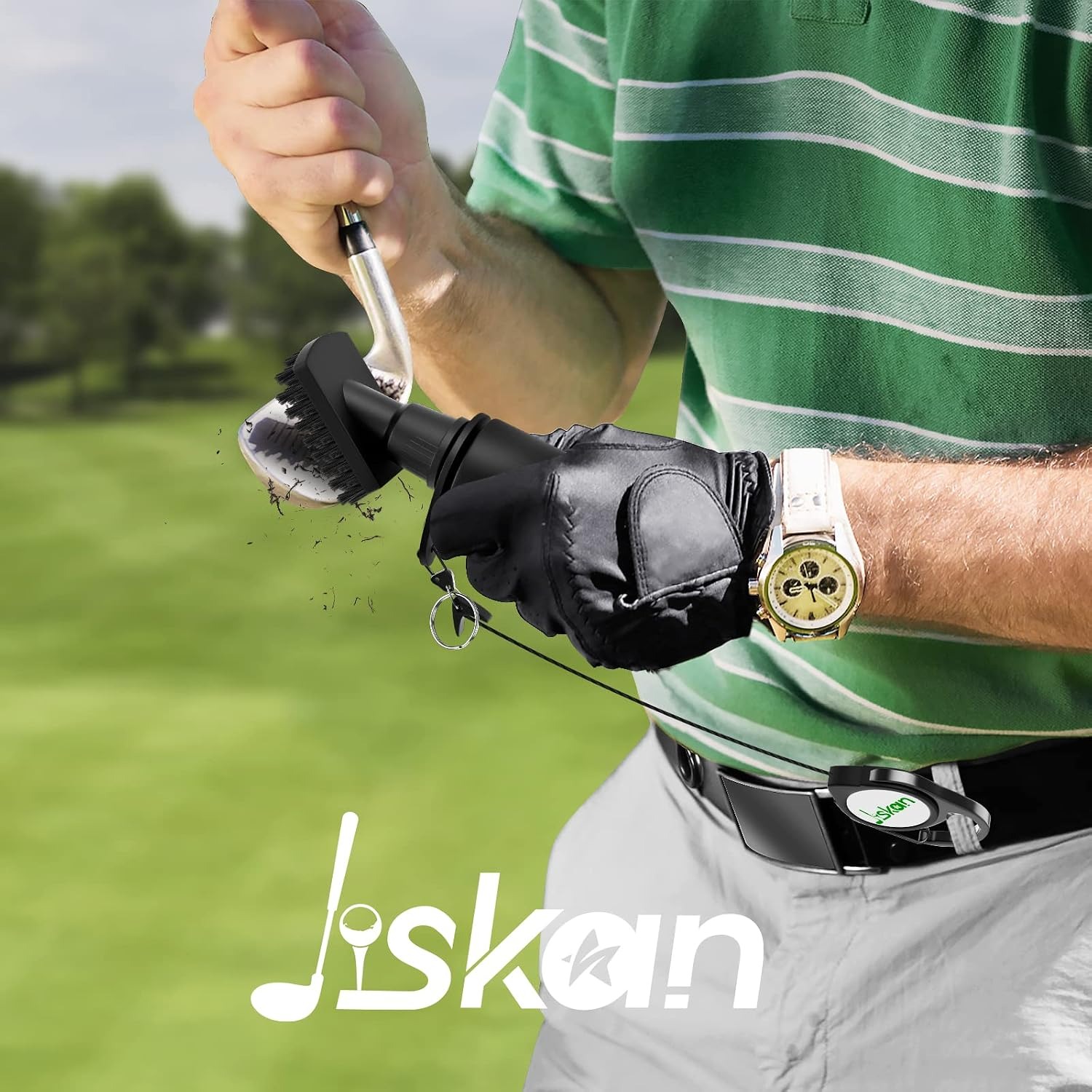
Attachment. A retainer clip is not a small detail. If the brush lives in a side pocket, you will stop using it by the fifth hole because reaching for it is a chore. Clipped to a strap, a cart rail or your belt, it is in your hand before you have thought about it. This one includes a clip in the box.
Simplicity. No batteries, no charging, no moving parts beyond a cap. The fewer things that can fail, the longer it keeps working.
Using it well on the course
Clean the club straight after the shot, not at the next tee. Dirt that has dried on takes four times the effort to remove. A quick squeeze and three or four passes while you are walking takes seconds.
Work along the grooves rather than across them. Running the bristles in the same direction as the lines pushes debris out the end instead of packing it tighter.
Keep a towel handy. The brush does the hard work, the towel finishes the job and stops you putting a wet club back in the bag. Together they are a far better system than either one alone.
Do not forget the sole and the back of the head. Mud there changes how the club sits at address and how it moves through turf, especially on wedges with wide soles.
Looking after it
Care is mostly about what you do at the end of the round rather than during it. Tip out whatever water is left, leave the cap open, and let the inside dry. Water sitting in a closed bottle in a warm boot for a fortnight will go stale, and nobody wants to squirt that on their clubs.
Rinse the brush head under a tap to flush sand and grit out of the bristles. Grit is what wears bristles down, far more than the brushing itself. A few seconds under running water adds months to the life of the head.
Stick to plain water in the bottle. Detergents and cleaning solutions can leave a film on the face and may not agree with the seal over time. If a club is truly filthy, give it a proper wash at home with warm water and a soft brush, then let the on-course brush handle day-to-day maintenance.
Check the clip now and then. Clips loosen with use, and a clip that has gone slack is a brush you will lose somewhere between the ninth green and the tenth tee.
A note on gifting
If you are buying this for someone else, the gift box does the presentation work for you. It is a sensible pick for Father's Day, a birthday or a club prize, and it sits in the price range where a present feels thoughtful without being awkward. The practical angle helps. Among golf accessories, the ones that get used are rarely the flashiest, they are the ones that solve a problem the person has every time they play.
The short version
Dirty grooves cost you spin and control, and the reason people play with them is that water is never where the dirt is. A golf club brush with a built-in squeeze bottle fixes exactly that. This one is 7.5 inches, holds 4 ounces, has a larger than usual brush head, comes with a retainer clip so it stays attached to your bag or cart, and arrives in a gift box. No batteries, nothing to charge, nothing to learn.
Fill it before you tee off, clip it on, brush the face after every shot off the turf, and empty it when you get home. That is the entire routine, and it will do more for your contact than most of the gear in your bag.