
The complete guide
Iron Head Covers Buyer's Guide - Fit, Materials and Keeping a Set Tidy
The problem nobody notices until it is too late
Most golfers do not damage their irons on the course. They damage them between shots. Clubs go back into the bag, the bag goes over a shoulder or onto a buggy, and for the next two hours a set of forged or cast heads rub against each other and against the bag dividers. Multiply that by a season and you get the result most of us know well: a nine iron with a bare patch on the toe, a pitching wedge with paint fill missing from the cavity, a ferrule with a white scratch across it.
None of that changes how the club flies. That is worth saying plainly, because some head cover marketing implies your scoring will suffer if you leave your irons naked. It will not. What suffers is resale value and how your gear looks on the first tee, and for plenty of people those two things are worth twenty-odd dollars to protect.
Knitted iron covers are the oldest and simplest answer. They have been around since golfers were carrying hickory, and the design has not changed much because it did not need to.
How a knitted cover actually works
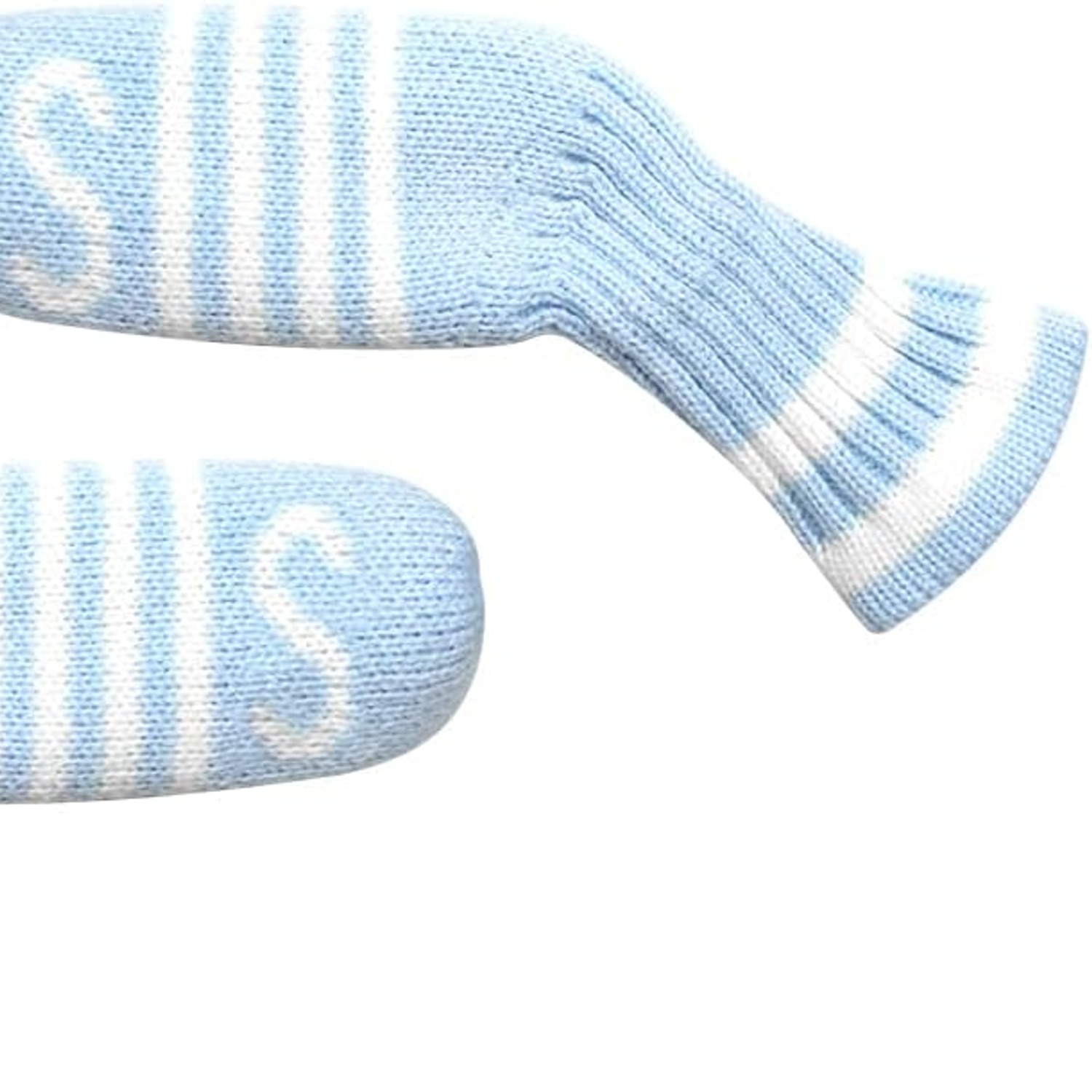
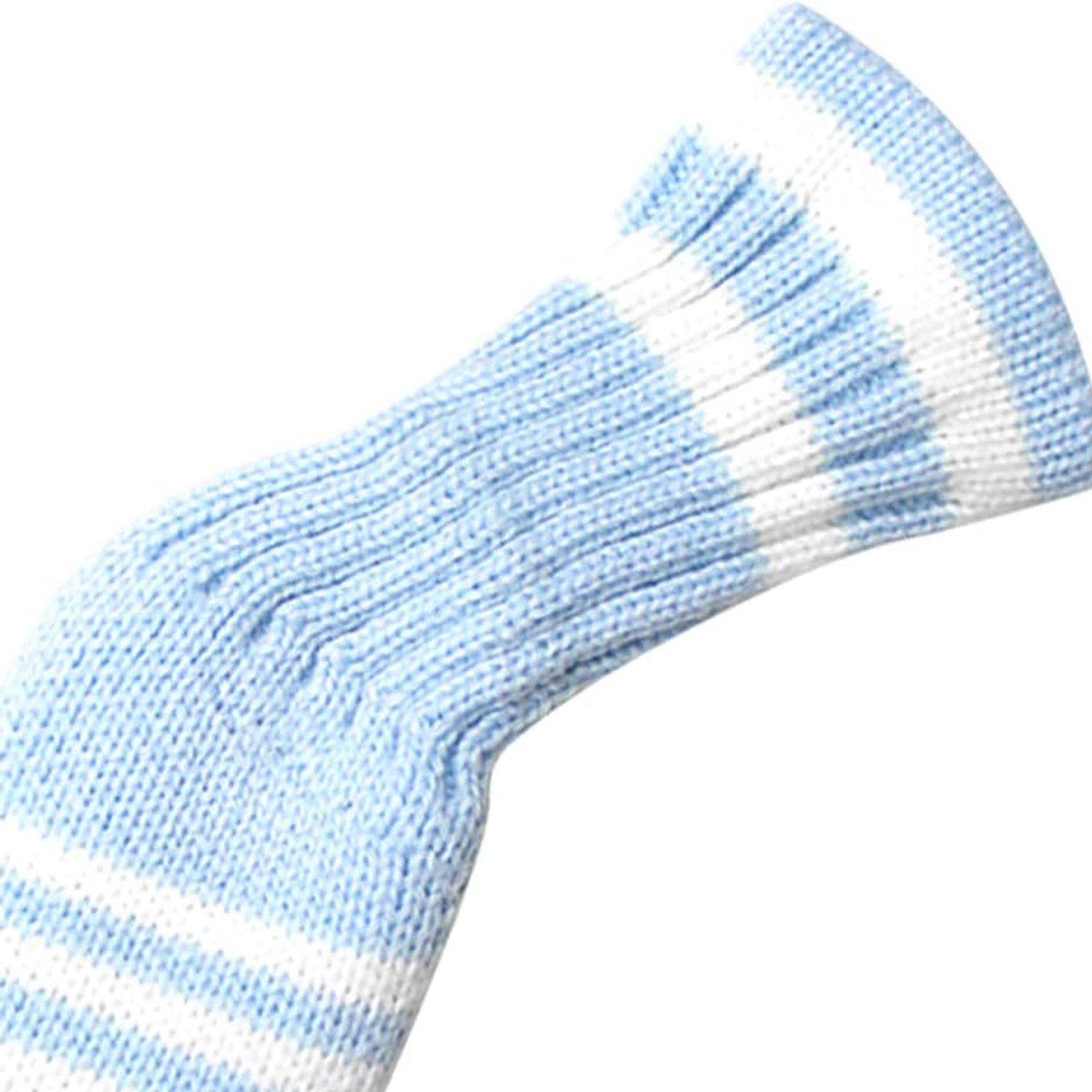
A sock-style cover is a tube of knitted yarn, closed at one end, shaped loosely to the profile of a club head. You pull it on. The knit stretches to take the head and then contracts around the narrow part near the hosel, which is what keeps the cover in place.
That gripping action is doing all the work, and it is why knit quality matters more than anything else on a cover like this. A single-layer knit made from thin yarn stretches past its recovery point after a few dozen pull-ons, and then it sits loose. A loose cover slides off in the bag, you find it at the bottom under a glove, and eventually the covers stop getting used.
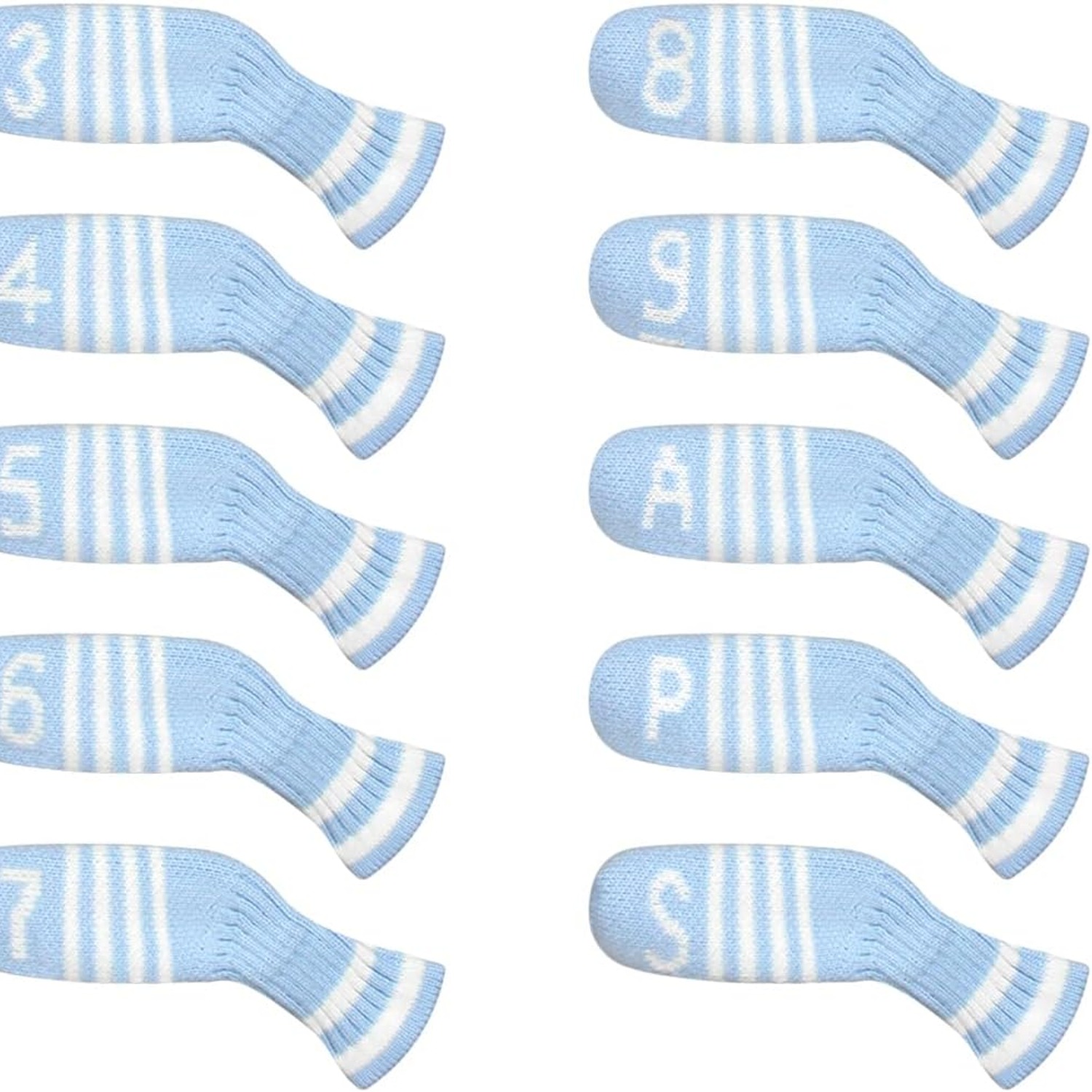
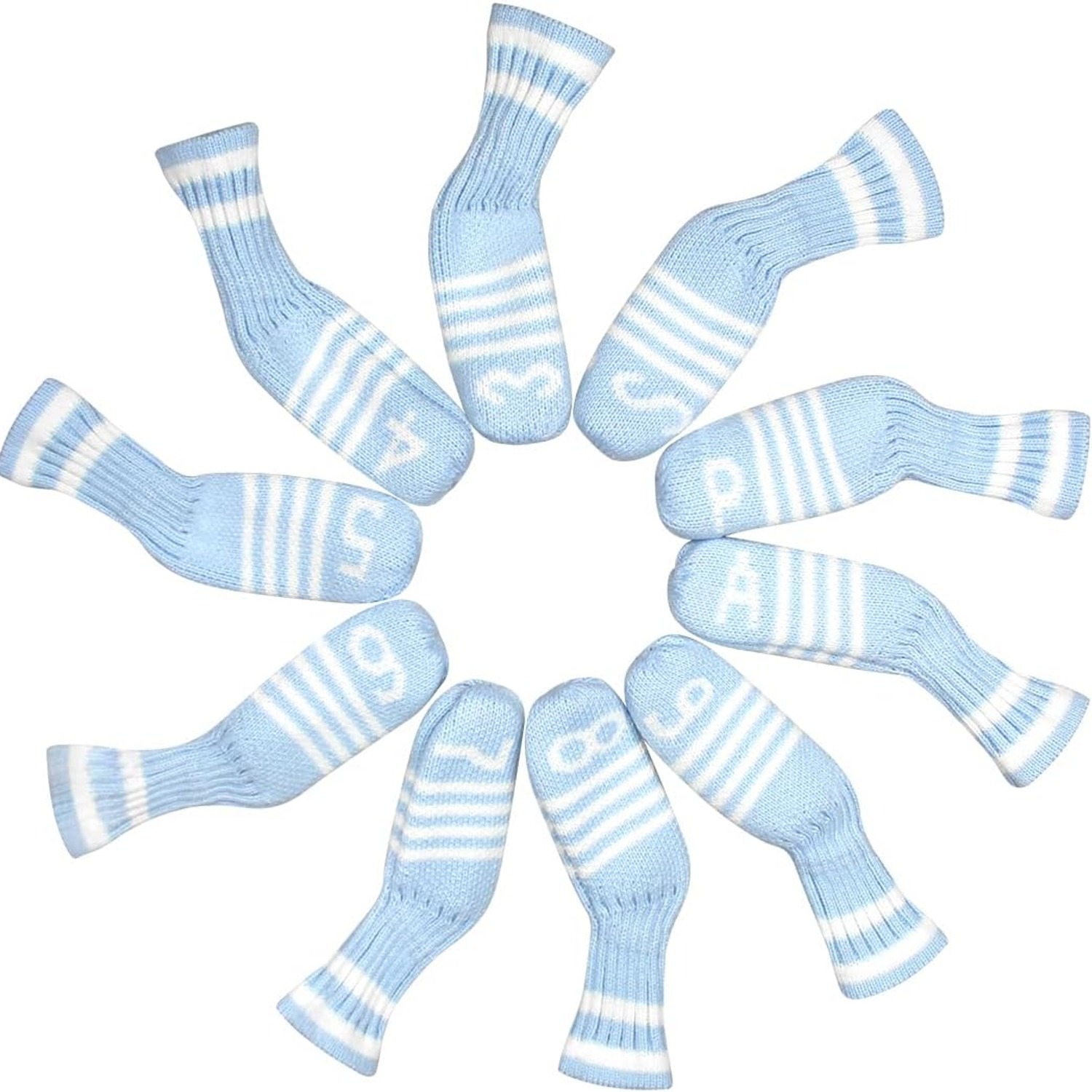
This set uses a double-sided knit in acrylic. Double-sided simply means the fabric is worked on both faces rather than having a flat inner side, which gives a thicker cover with more spring in it. Acrylic is the usual yarn for this job. It holds dye well, so blue and white stays blue and white rather than fading to grey, it does not absorb much water, and it dries quickly after a wet round. Wool looks lovely and performs badly in rain. Synthetic leather looks smart and is a pain to pull on and off eight times a round.
Who these suit
If you carry a full set of irons and play regularly, ten covers is about right. You will use eight or nine of them and keep a spare, which matters more than you might think, because leaving one on a tee box is the single most common way golfers lose head covers.
They also suit people who are protecting something specific. Maybe you bought a used set in good condition and want to keep it that way. Maybe you have a set you intend to sell on in two years and know that clean faces add to the price. Maybe you just like how a bag looks with matching covers across the irons, which is a perfectly good reason on its own.
They are less suited to a couple of situations. If you are a fast player who takes pride in playing ready golf, you may find that pulling covers on and off slows you down. Some golfers only cover the wedges, which take the worst of the bag contact, and leave the mid irons bare as a compromise. And if you store your clubs in a bag with narrow individual tubes, thick covers can make returning a club slightly fiddly.
Getting the fit right
Iron heads vary more than people assume. A classic blade is thin front to back and shallow. A modern game-improvement iron can be nearly twice the depth, with a wide sole and a thick topline. A stretchy knitted cover handles that range better than any moulded cover, which is exactly why sock covers remain popular.
Still, there are limits at both ends. On very small junior heads, a full-size cover will be baggy and more likely to slip. On the very largest hybrid-style irons, the cover goes on but sits tight, and that constant stretch shortens its life.
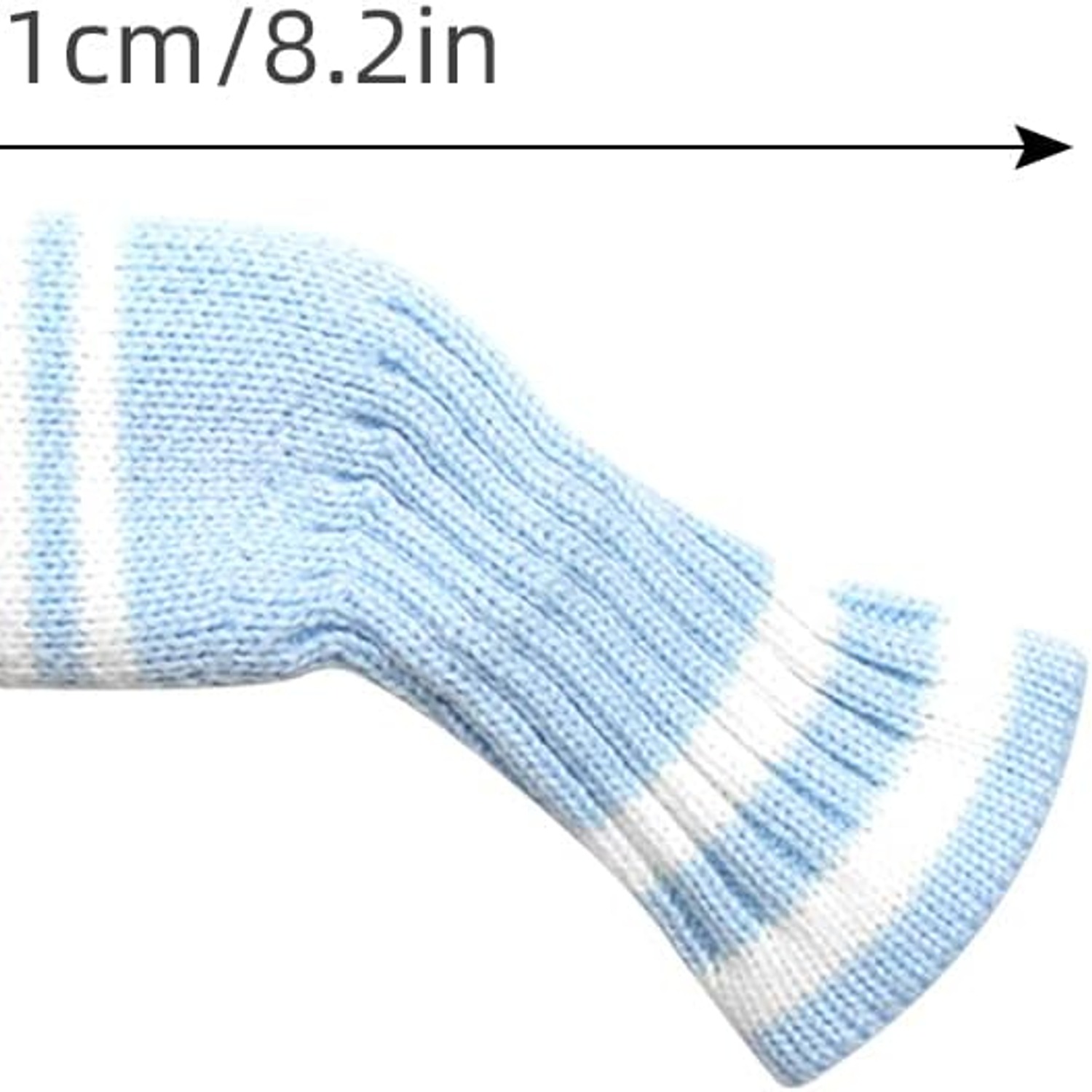
A quick way to check is to measure your iron head at its widest point, heel to toe, and at its deepest point, face to back. If your heads are in the normal range for adult irons, a stretch cover like this will fit. If one of those measurements is unusually large, ask before you buy. We would rather answer the question than process a return.
The other fit question is hybrids. The shorter, more iron-like hybrids in a combo set usually slide in fine. Full-size hybrids with a deep, rounded head are a different shape entirely and are better matched with a cover designed for them.
Living with them day to day
The habit takes about a round to form. Cover off, hit the shot, cover back on when the club returns to the bag. If you play in a group that moves quickly, keep the cover in your pocket between the shot and the bag rather than fumbling at the club.
Rain is the one thing worth a bit of care. Acrylic does not soak up much water, but a wet cover sitting on a club head for three days in a garage is not doing the club any favours. The fix is simple. When you get home from a wet round, pull the covers off, lay them flat somewhere with air moving, and put them back on when everything is dry. Do the same with the clubs themselves and you will never see rust on a shaft.
For cleaning, hand washing in cool water with a mild detergent is all that is needed, and only a couple of times a season for most people. Squeeze rather than wring, reshape the cover while it is damp so it dries in the right profile, and dry flat. Keep them off radiators and out of a tumble dryer, both of which will shrink and stiffen acrylic. Do not iron them. If a cover picks up a grass stain, a gentle soak usually lifts it.
Choosing between cover types
Knitted sock covers are the quickest to use and the cheapest to replace, and they give a bag a traditional look. The trade-off is that they offer soft protection rather than hard protection, and they loosen with age.
Neoprene covers are snugger and hold shape longer, but they take a touch more effort to remove and can hold moisture against the head if put away damp. Synthetic leather covers look the smartest and last the longest, and they usually cost several times as much for a full set of irons. Moulded plastic clip-on protectors cover only the face and are fast to use, but they look utilitarian and tend to pop off.
For most golfers who just want their irons to stop scuffing each other, a knitted set is the sensible choice. It is the lowest-friction option, and the one most likely to actually get used every round, which is the only measure that matters.
Gifting them
These are one of the easier presents for a golfer. Clubs, balls and gloves all come down to personal preference, but head covers are low risk. A set of ten in blue and white suits almost any bag, and the recipient can put them to use the same week. If you are buying for someone who plays a lot, it is a safe bet that their current covers, if they have any, have seen better days.
The short version
Irons get scuffed in the bag, not on the course. A knitted cover stops metal touching metal, costs very little, and takes a second to use. This set gives you ten acrylic covers with a double-sided knit and a straightforward pull-on fit, sized for blade and cavity-back irons from most brands and for the shorter hybrids in a mixed set.
Wash them by hand now and then, dry them flat, and put them away dry. Do that and a set will see you through several seasons. If you are unsure whether they will suit your particular heads, tell us what you play and we will give you a straight answer before you order.