



The complete guide
How to Choose a 3-Piece Urethane Golf Ball
The problem with picking a golf ball
Walk into any pro shop and you will see twenty boxes that all promise longer drives and more spin. They cannot all be right. The honest truth is that most golf balls are built around a trade-off, and the brand that admits it is the one worth listening to.
Here is the trade-off. A hard ball with a firm cover transfers energy efficiently on a full swing, which means distance, and it resists scuffing, which means durability. But that same hard cover slides up the face of a wedge instead of gripping it, so your 60 yard pitch lands and keeps running. A soft ball with a grippy cover does the opposite. Lovely on a chip, sometimes a touch shorter off the tee, and easier to scuff on a cart path.
Three-piece construction is the industry's answer to that trade-off. Add a layer in the middle and you can tune each part for a different job. That is what this dozen is doing, and it is why this kind of ball has become the default for anyone who has moved past purely chasing yardage.
How a 3-piece ball actually works
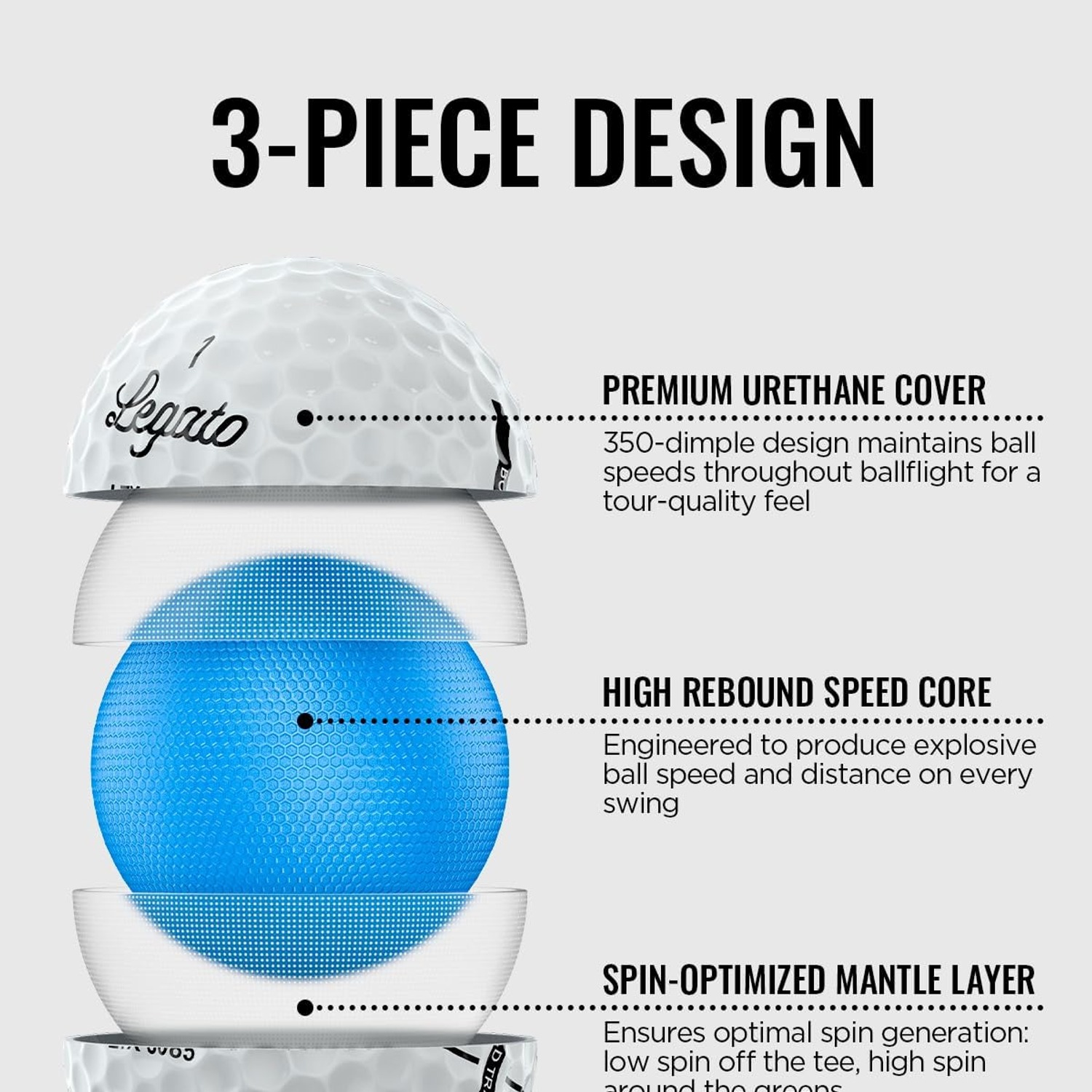
Think of it as an onion with three layers, each with a purpose.
The core is a rubber centre and it does most of the work on full shots. When your driver hits the ball, the core compresses and springs back. How much it compresses is described by the compression rating, which is 85 here. That number sits in the middle of the scale, below the firm tour balls and above the very soft low compression ones.
The mantle sits around the core. Its job is to pass energy from the clubface to the core on hard swings while staying out of the way on soft ones. It also helps control spin off the driver, which is what keeps long shots from climbing too high and dropping short.
The cover is thin and, on this ball, cast polyurethane. Urethane is the material tour players have used for decades because it is soft enough for wedge grooves to grab. On a chip or a pitch, the grooves bite into the cover and impart spin. That spin is what makes a shot check up near the pin rather than release toward the back of the green.
The 350-dimple pattern finishes the job. Dimples create a thin turbulent layer of air that clings to the ball, which reduces drag and generates lift. A dense pattern is generally tuned for a stable, repeatable flight rather than a dramatic one. You are aiming for a ball that does the same thing every time, especially into a breeze.
Who this ball suits
The 85 compression works well with moderate swing speeds, so you are not fighting a ball that is too firm to activate. The urethane cover gives you short-game control you can actually use.
It also suits improving players who have started to think about where the ball lands rather than just how far it goes. Once you can reliably hit greens from inside 100 yards, a urethane cover starts to make a visible difference to your scorecard.
Faster swingers can play it too. Plenty of good amateurs prefer a mid compression ball for the softer feel around the green. If you swing very hard and want a lower, more penetrating flight, you may eventually prefer a firmer tour ball, but there is nothing here that holds a good player back.
Who should think twice? If you are brand new to golf and losing six balls a round, spend less until that settles down. The best soft feel golf balls are wasted in the trees.
Matching compression to your swing
Compression gets talked about as if it were a strict rule. It is more of a guideline, but a useful one.
Low compression balls, roughly in the 50s and 60s, are built for slower swings. They squash more easily, so a player who does not generate much clubhead speed still gets good energy transfer. Mid compression, around 80 to 90, covers the broad middle of the golfing population. High compression balls in the 90s and above are aimed at fast swingers who would otherwise over-compress a softer ball.
As a rough guide, if your driver carries somewhere between 200 and 250 yards, an 85 compression ball is well within your window. If you are not sure of your numbers, feel is a decent test. Hit a few wedges and a few drives. If the ball feels like a brick on wedges, it is too firm. If drives feel mushy and seem to fall out of the air, it may be too soft.
Getting the most from the urethane cover
A urethane cover rewards clean contact, so there are a few habits worth building.
Keep your grooves clean. Wedge grooves full of dirt cannot grip the cover, and you lose most of the spin advantage you paid for. A quick brush between shots does more for spin than any ball change.
Pay attention to the lie. Spin comes from the groove meeting the cover directly. Grass or water between the two acts as a lubricant, which is why a flyer lie from light rough sends shots sailing. Wet conditions reduce spin the same way, so plan for more release.
Retire damaged balls. Urethane is softer than ionomer, which is the trade for the extra bite. A cart path scrape or a bunker rake nick will change how the ball flies, usually by making it curve unpredictably. If you can feel the damage with a fingernail, the ball goes in the shag bag.
Using the alignment track
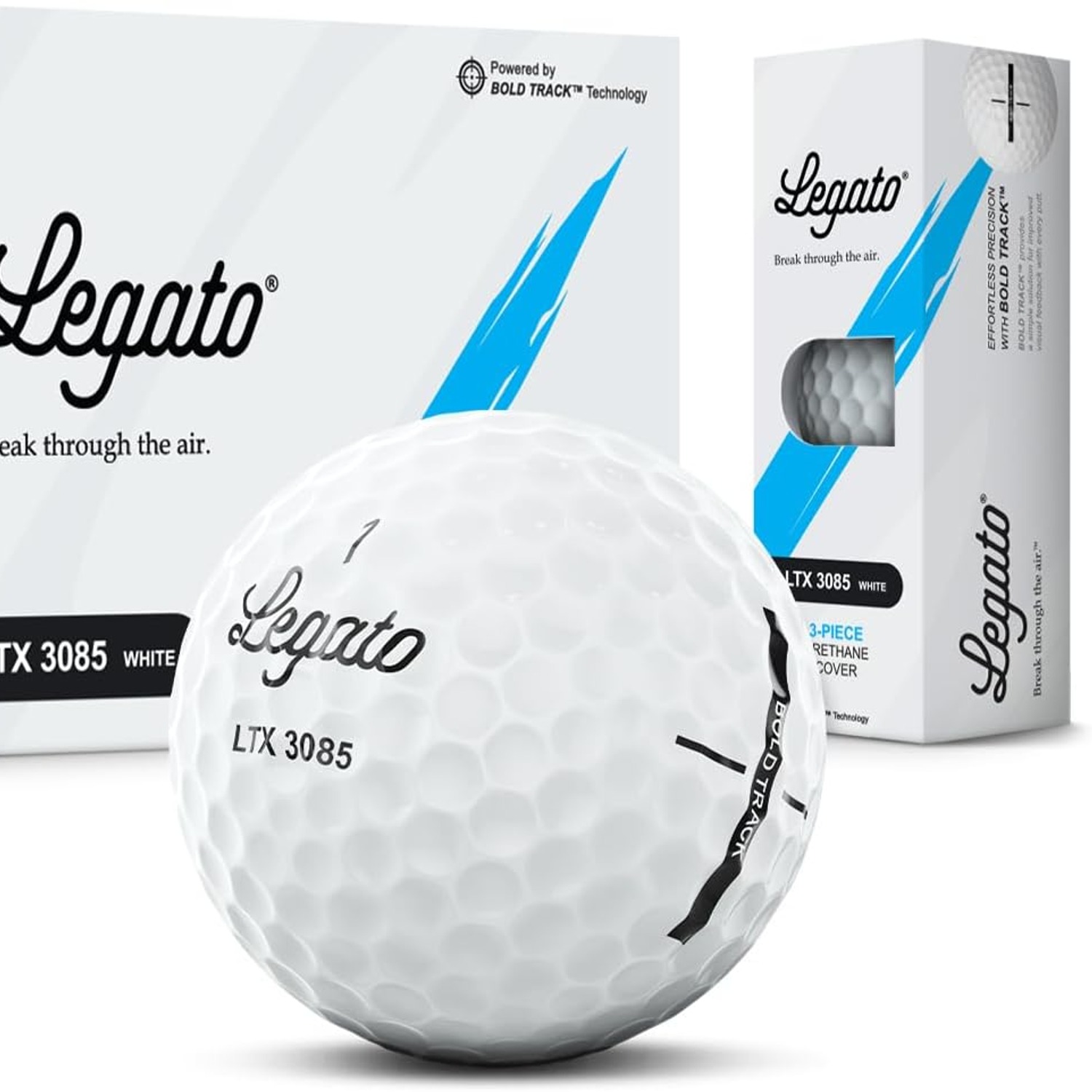
The printed track is a small feature that earns its place on the green. Set the ball down with the line pointing along your intended start line, then set your putter face square to the line. Once you are over the ball you can stop worrying about aim and think about speed instead, which is where most putts are actually won and lost.
Some players find the line distracting and turn it away. That is fine. It is a tool, not an obligation. On the tee, the same line can help you aim, especially on a hole where the view pulls your eye away from the fairway.
Care and storage
Golf balls are tough but not immortal. Wash them with warm water and a soft cloth after a round, then dry them before they go back in the box. Skip solvents, petrol-based cleaners and abrasive scourers, which dull the cover and can affect how it behaves.
For storage, room temperature indoors is all you need. The thing to avoid is baking a dozen in a car boot through a hot summer, or leaving them somewhere damp for months. Treated sensibly, a boxed dozen stays in good condition for years, so buying a couple of boxes at once is a reasonable move if you have found a ball you like.
The short version
The point of this construction is balance. You get a ball that goes a respectable distance off the tee without giving up the greenside spin that lets you attack pins. The mid compression suits the swing speeds most club golfers actually have, rather than the speeds in the adverts.
If you have been playing a firm two-piece ball and wondering why your pitches run out to the back of the green, this is the kind of ball that answers that question. Play one for three or four rounds before you judge it, and pay attention to what happens inside 100 yards. That is where you will notice the difference.