
The complete guide
Golf Head Covers for Woods, A Practical Buyer's Guide
The problem nobody warns you about
You spend real money on a driver. You take it home, you hit it well, and for the first few weeks it looks superb. Then one morning you pull it out of the bag and there is a small bright scar on the crown, right where the sun catches it.
Nobody dropped it. Nobody hit a tree. The club simply spent twenty rounds rattling against the shafts and heads of everything else in the bag, plus a few car boot journeys on top. That is how almost all cosmetic damage happens, not in one dramatic moment but in hundreds of tiny ones.
Golf head covers exist to take those hundreds of tiny hits instead of your clubs. It is a small, boring bit of gear that does one job very well, and it is the difference between a four year old driver that looks four years old and one that still looks fresh.
How a head cover actually works
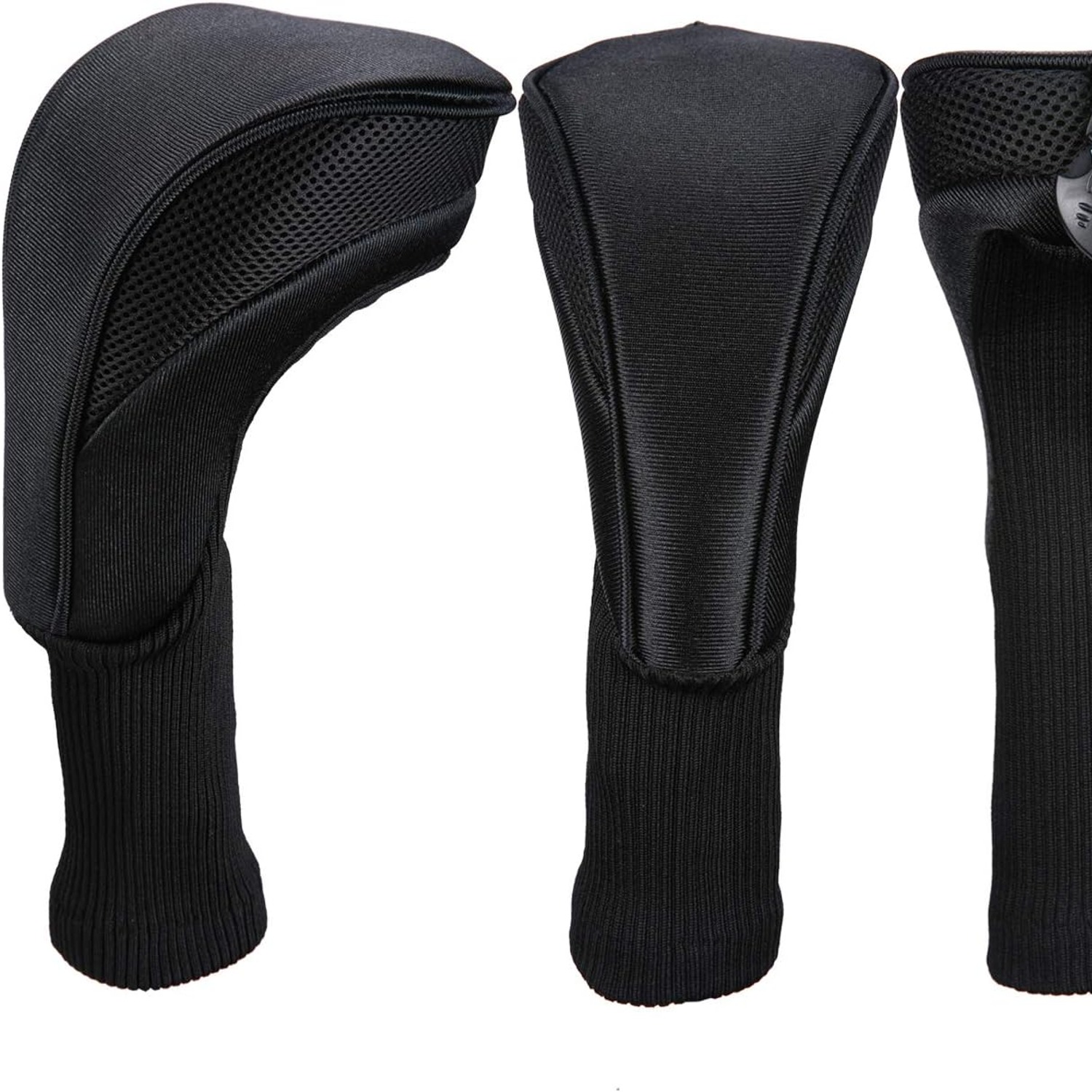
The idea is simple. A soft, padded sleeve slips over the head of the club. When the clubs move and touch, the cover absorbs the contact. Nothing hard meets anything hard.
The material does most of the work here. Neoprene is the common pick because it has three useful properties at once. It stretches, so the cover slides on without being forced. It has a cushioned feel, so it softens impacts rather than passing them through. And it holds its shape, so the cover does not sag off the head after a month.
This set uses a pull-on closure. There is no zip, no velcro tab and no magnet to line up. You grab the neck and pull. That matters more than it sounds. Covers with fiddly fastenings get abandoned, because when you are on the tee with three people waiting behind you, you are not going to stand there wrestling a zip. The best golf head covers are the ones you actually bother to put back on.
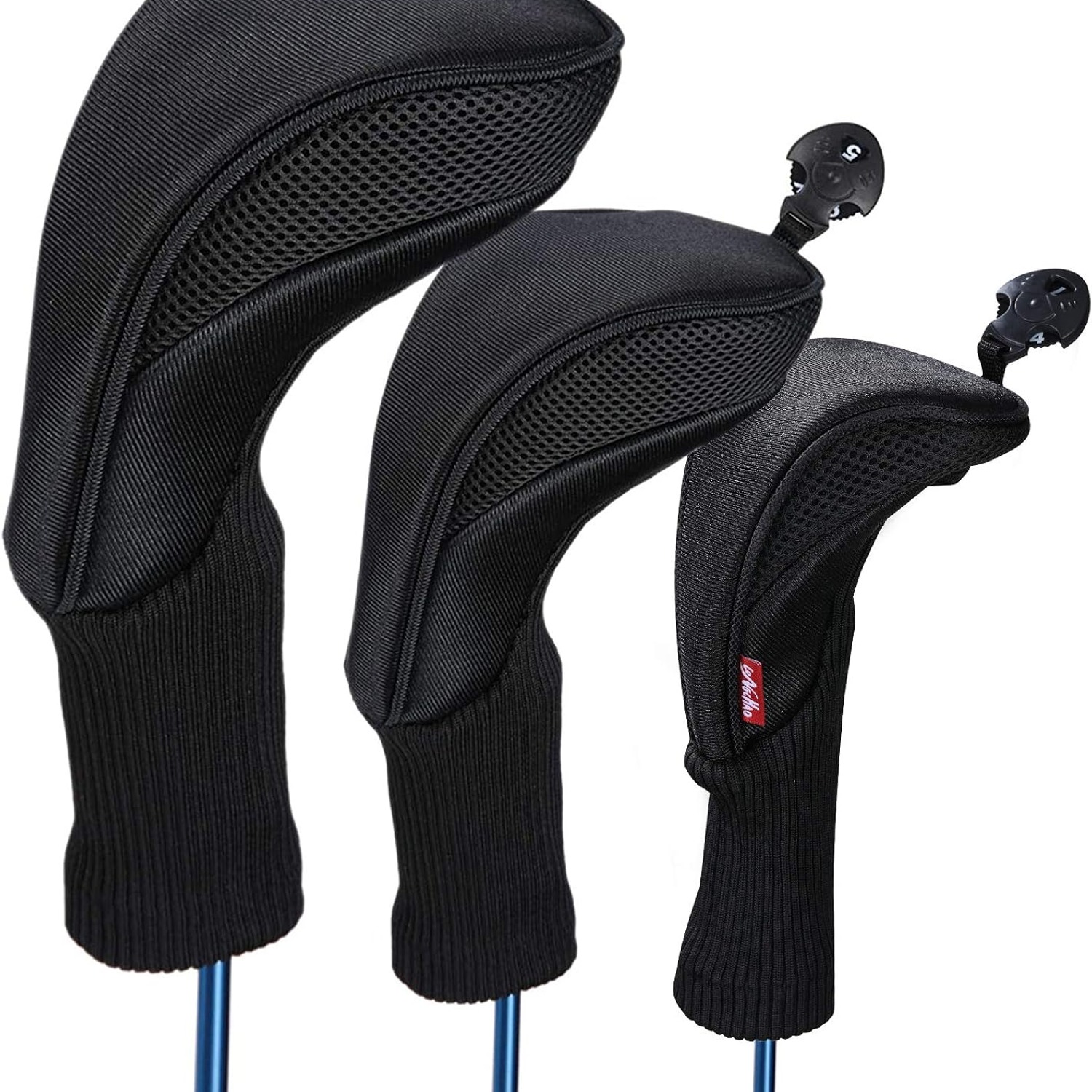
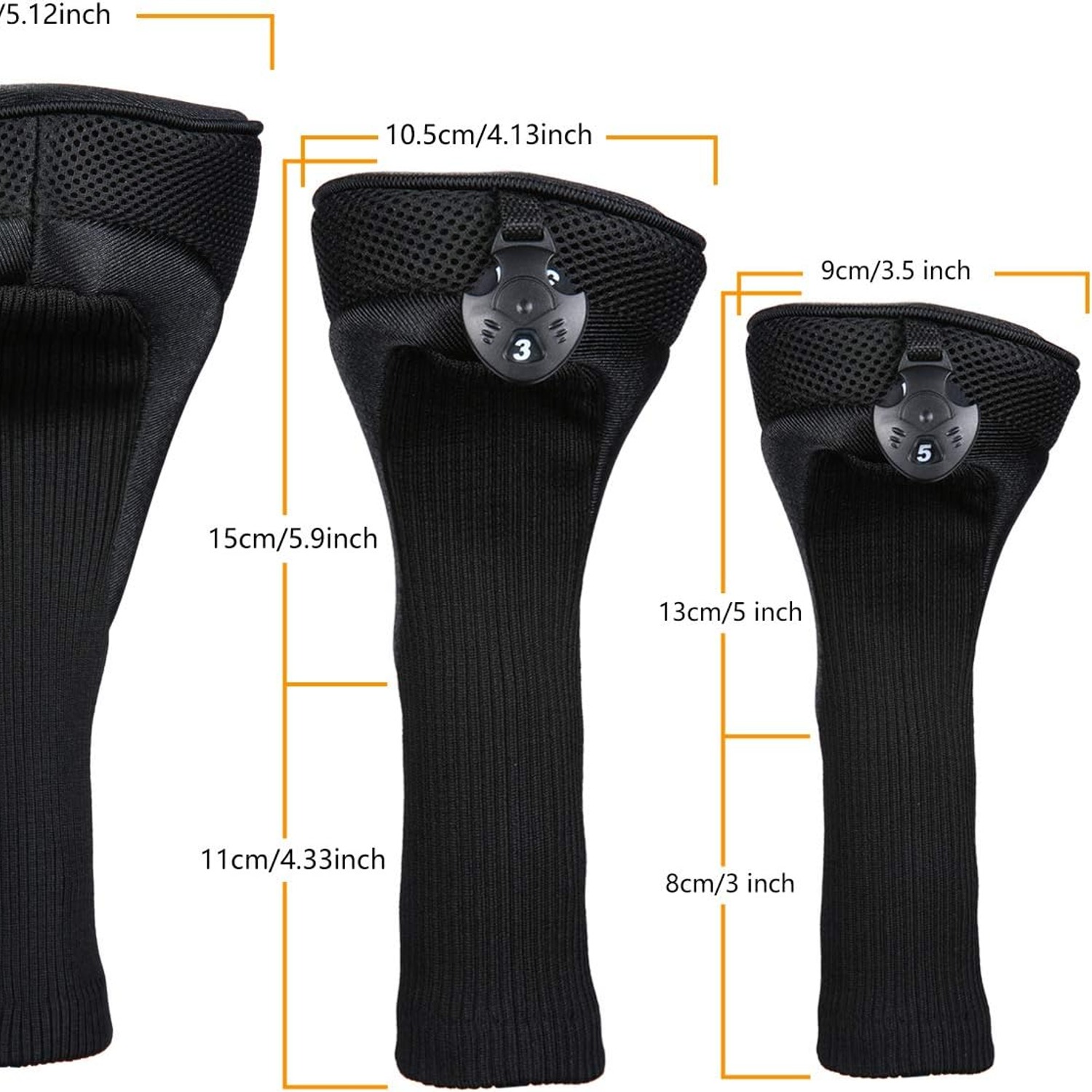
The long neck is the second piece of the design. A short cover sits only on the head. A long neck reaches down the shaft, which does two things. It shields the top of the shaft from rubbing, and it gives the cover a longer grip so it is less likely to slide off when the bag gets jostled. On this set the neck carries a mesh outer layer, which is the harder-wearing surface for the part that does the most rubbing.
Why numbers on the cover matter
If every cover in your bag looks identical, you end up lifting two or three of them to find the club you want. That is fine at home. On a cold, windy fairway with a cart waiting, it is annoying.
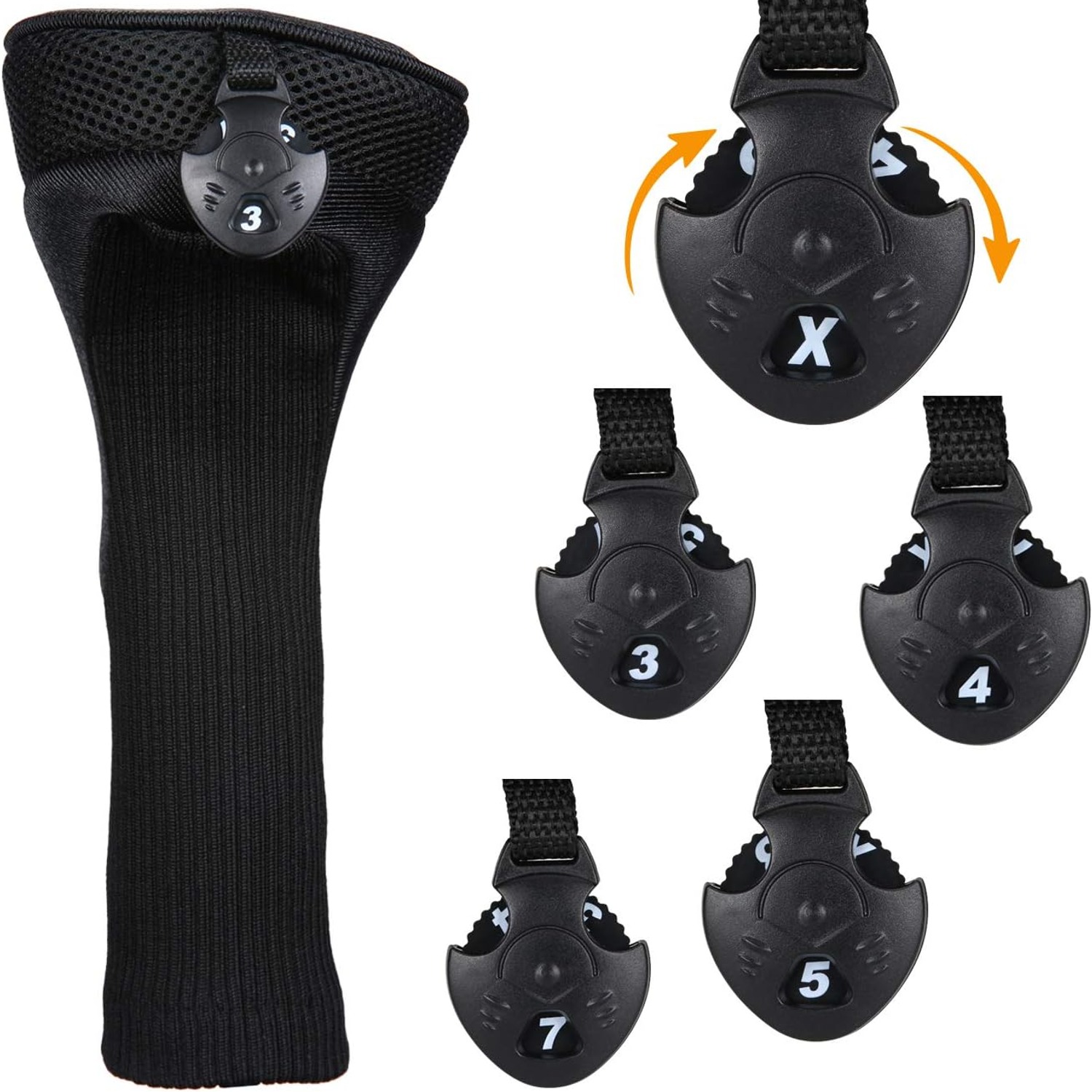
Embroidered numbering solves it. You look down, see the number, pull one cover. Done. It also helps you put the right cover back on the right club, which keeps the fit snug since driver heads and fairway heads are not the same size.
Numbered golf head covers are one of those features you do not think about when buying and then use every single round.
Who this set suits
This is a three cover set for woods. That makes it a natural fit if your bag holds a driver and two fairway woods, which is the most common setup in amateur golf.
It suits you well if:
- You carry a driver plus one or two fairway woods and want them all covered in one purchase.
- You travel with your clubs, whether that is a car boot each weekend or a flight once a year.
- You want a plain black set that does not clash with the rest of your gear.
- You are buying a gift and do not know the recipient's exact club models, since universal-fit covers are far safer than guessing.
It is less suited to you if your bag is mostly hybrids. These are wood covers, and hybrid heads are a different shape. Hybrids need covers made for them. The same goes for putters and irons, which both have their own style of protection.
How to choose the right head cover
A few things actually matter when you are comparing options.
Head size. Standard wood heads are broadly similar, and a universal cover handles them. If you play an unusually large or oddly shaped head, check before you buy. A cover that will not go on is useless, and one that is too loose will not stay.
Closure type. Pull-on is the quickest and has the fewest parts to fail. Zips and straps look tidy but add steps. Fewer steps means you use it more.
Neck length. Longer is better for travel. Short neck covers look sleek but come off more easily when the bag is moving.
Material. Neoprene gives you stretch and cushioning together. Knitted covers look classic but offer less impact protection. Hard shell covers protect well but are bulky and slow.
Identification. Numbers or clear markings save you time every round. Plain covers look clean and cost you a few seconds each time.
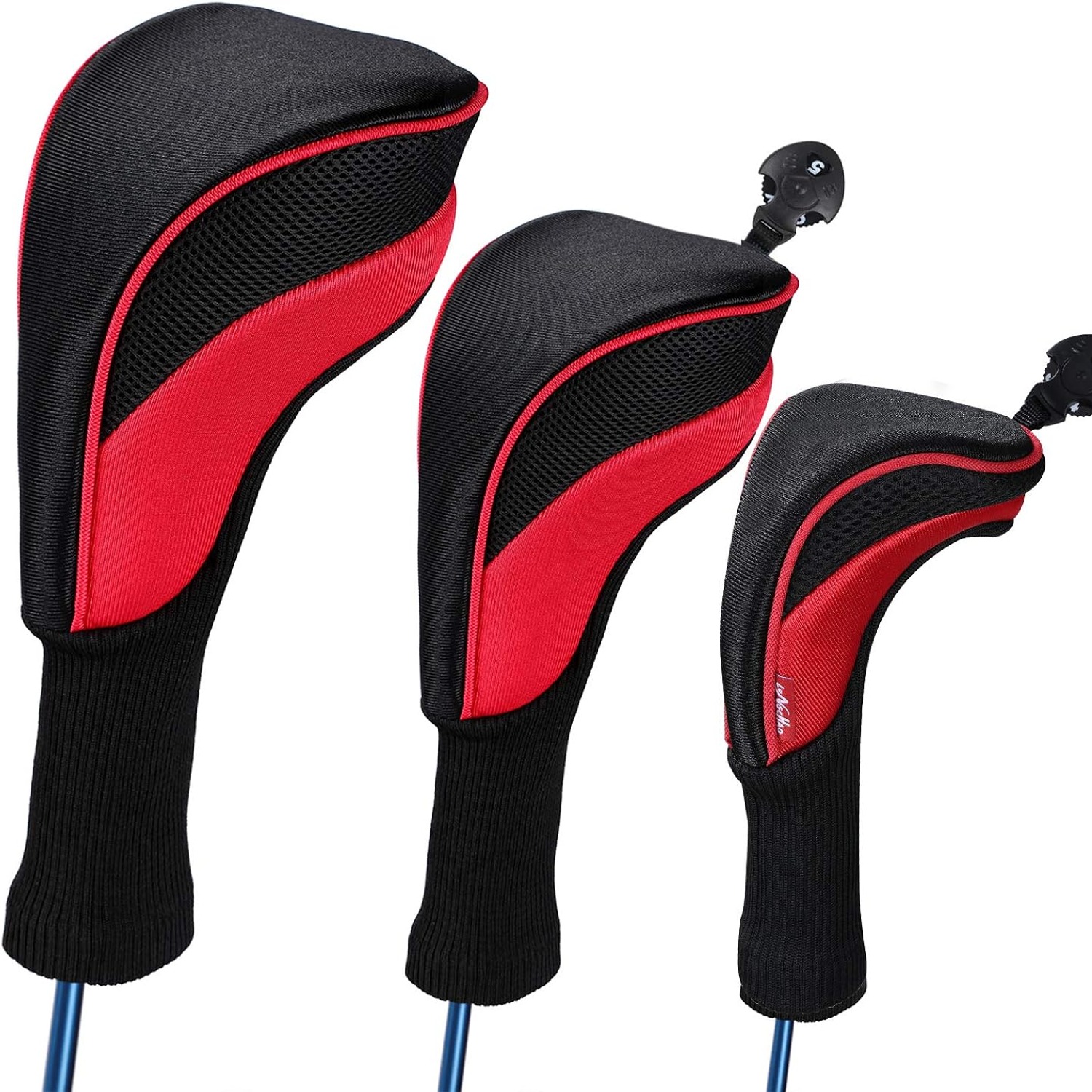
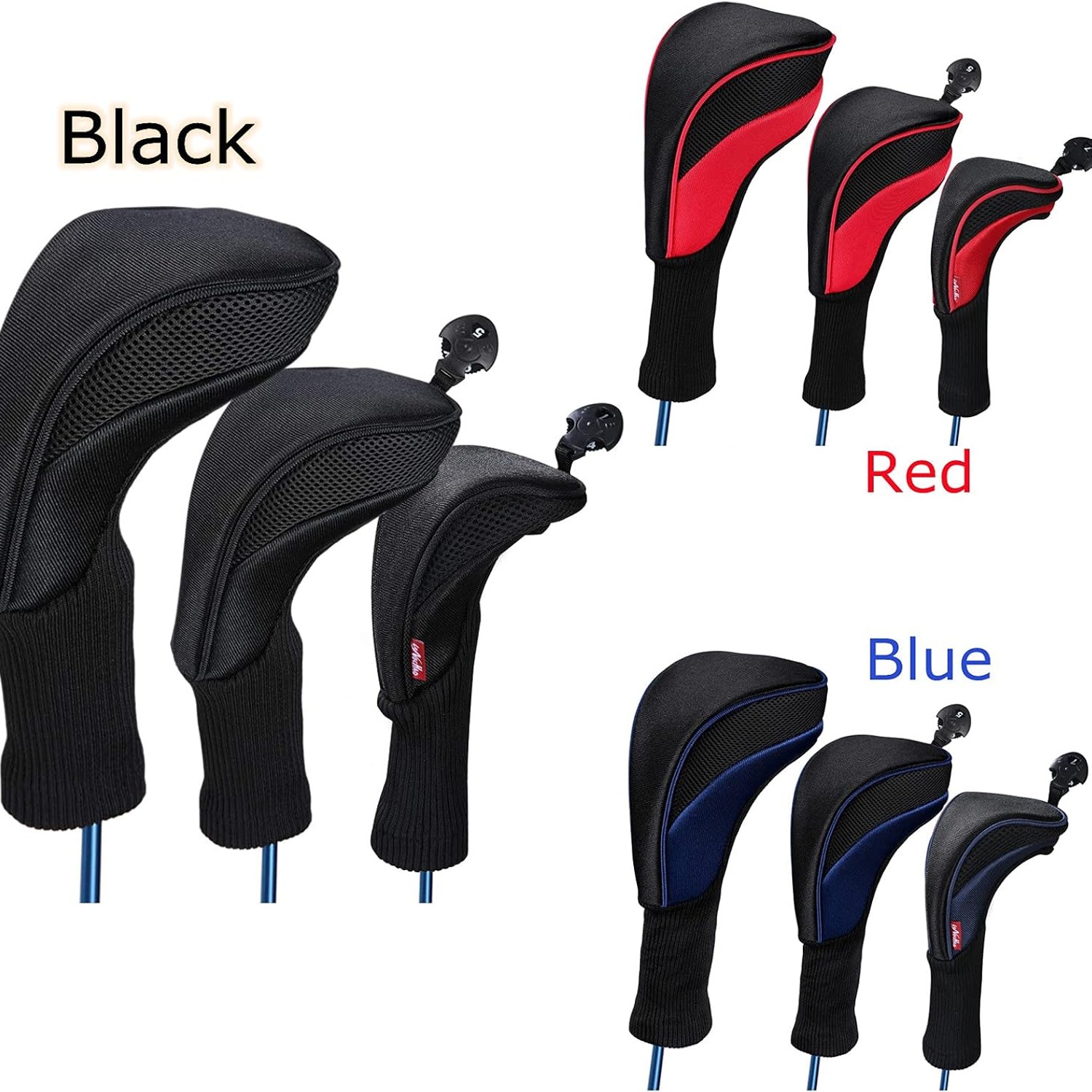
Colour. Black goes with everything. If you want your bag to look coordinated rather than assembled from whatever was on sale, neutral is the safe call. Black neoprene head covers are the default for a reason.
Fitting them properly
Push the cover all the way down until the neck sits flush on the shaft. Most covers that slip off were never pushed fully on in the first place. You want the head seated in the bottom of the cover, not floating halfway up.
When you take it off, grip the neck rather than the top. Pulling from the very top edge stretches the opening over time, and a stretched opening is a loose cover.
Check the fit when you first get them. Try each cover on each club before you head out, and keep the right cover with the right club from then on.
Looking after them
This part is easy. Wipe with a damp cloth and a little mild soap when they get grubby. Rinse the soap off and let them air dry somewhere out of direct heat.
Skip the washing machine. Heat and agitation are hard on neoprene and on embroidered stitching, and a cover that comes out misshapen will never sit right again. Same goes for the tumble dryer, bleach and the iron.
The one habit worth building is this. If you play in the rain, take the covers off when you get home and let both the covers and the club heads dry before you put them back together. A damp cover sitting on a club head for a week is the one scenario where a head cover can cause a problem instead of preventing one.
A note on what covers can and cannot do
Be realistic about the job. A padded neoprene cover is excellent at stopping the everyday wear, the taps, the rubs and the small dings that build up inside a bag. That is where almost all cosmetic damage comes from, so this is the useful bit.
What it will not do is survive a drop onto concrete or a bag thrown badly by a baggage handler. For flying, you still want a proper travel bag, with head covers on inside it. The two work together.
The short version
Golf head covers are cheap insurance on expensive clubs. This set gives you three neoprene covers for woods, in black, with a pull-on fit, a long neck with mesh on the outside, and embroidered numbers so you can grab the right club first time.
They suit a standard bag with a driver and two fairway woods. They are quick to use, which means you will actually use them. And they keep the finish on your woods looking the way it did when you bought them, which is the whole point.
If your driver crown is already picking up marks, this is the fix, and it takes about ten seconds a round.